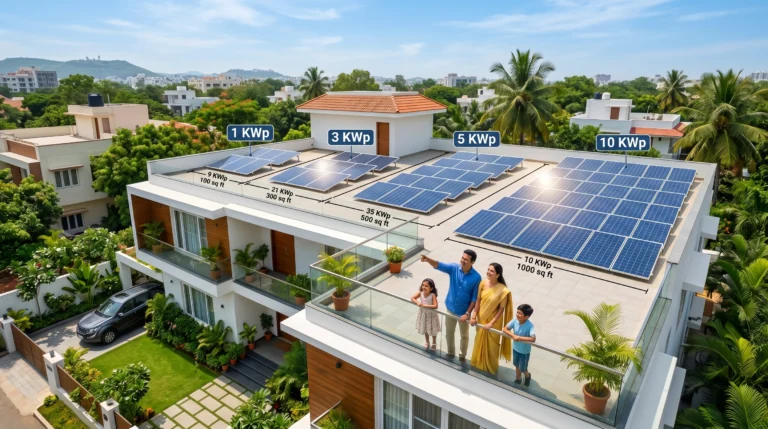
One of the most common questions homeowners ask before installing rooftop solar is:
“Do I have enough roof space for solar panels?”
The good news is that most residential homes in Hyderabad and across India have sufficient roof space to install a solar system capable of significantly reducing electricity bills.
However, the exact solar roof space requirement depends on several factors, including:
Understanding your roof space requirements is crucial because it directly affects how many solar panels can be installed and how much electricity your system can generate.
In this guide, we’ll explain exactly how much roof area is required for different solar system sizes and what factors influence rooftop solar installation.
Solar panels need adequate space to:
The more efficiently your roof is utilized, the better your solar system performs.
Modern solar panels are becoming more efficient, reducing the amount of roof space needed.
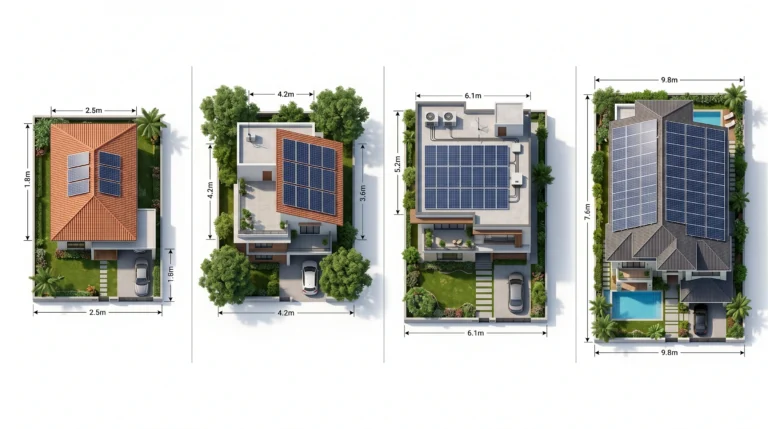
Solar System Size | Approximate Roof Space Required |
1KW | 80–100 sq.ft. |
2KW | 150–200 sq.ft. |
3KW | 180–300 sq.ft. |
5KW | 300–500 sq.ft. |
8KW | 500–700 sq.ft. |
10KW | 600–1,000 sq.ft. |
The actual requirement depends on the type and efficiency of solar panels selected.
Suitable For
Space Requirement
Approximately:
80–100 sq.ft.
Typical Generation
4–5 Units Per Day
Appliances Supported
Suitable For
Space Requirement
Approximately:
180–300 sq.ft.
Typical Generation
12–15 Units Per Day
Monthly Consumption Coverage
300–450 Units
Appliances Supported
Suitable For
Space Requirement
Approximately:
300–500 sq.ft.
Typical Generation
20–25 Units Per Day
Monthly Consumption Coverage
600–750 Units
Appliances Supported
Suitable For
Space Requirement
Approximately:
600–1,000 sq.ft.
Typical Generation
40–50 Units Per Day
Monthly Consumption Coverage
1,200–1,500 Units
Appliances Supported
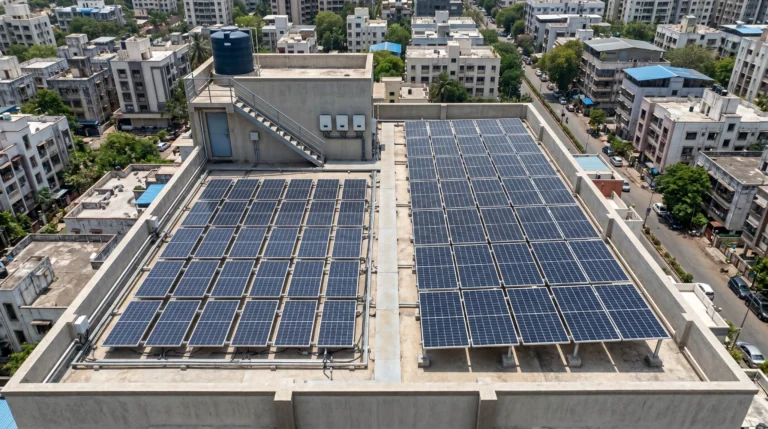
The number of solar panels depends on:
Example
For a 5KW Solar System:
Using 550W Solar Panels:
Approximately:
9–10 Solar Panels
Using 450W Solar Panels:
Approximately:
11–12 Solar Panels
Higher-efficiency panels reduce the number of panels required.
1. Solar Panel Efficiency
High-efficiency panels generate more electricity per square foot.
Benefits
Premium solar panels are often recommended where roof space is limited.
2. Roof Design
Different roof designs impact installation capacity.
Flat Roofs
Advantages:
Sloped Roofs
Advantages:
Limitations:
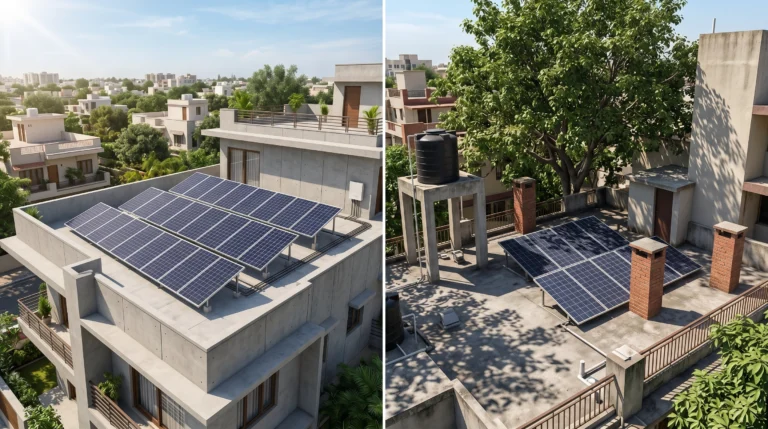
3. Shading Conditions
Shade from:
can reduce available installation space and overall system performance.
4. Safety Clearance Requirements
Solar installations require space for:
Not every square foot of rooftop area can be covered with panels.
5. Local Building Constraints
Some buildings may have:
that affect solar panel placement.
Limited roof space doesn’t necessarily mean you cannot install solar.
Solutions include:
Generate more power from less area.
Professional layout optimization can maximize generation.
Even smaller systems can significantly reduce electricity bills.
Many systems can be expanded later if additional roof space becomes available.
The best rooftops generally have:
✔ Maximum sunlight exposure
✔ Minimal shading
✔ Strong structural integrity
✔ Adequate usable area
✔ Easy access for maintenance
Hyderabad’s climate and solar irradiation levels make rooftop solar highly effective for residential and commercial properties.
Yes, in certain cases.
Installation options depend on:
Apartment owners may also explore community solar or shared solar solutions where applicable.
Generally:
Larger Roof
More panels
Higher generation
Greater savings
Smaller Roof
Fewer panels
Lower generation
Partial bill reduction
Even a smaller rooftop can deliver substantial long-term electricity savings when designed correctly.
Assuming the Entire Roof Is Usable
Water tanks, staircases, and shading reduce usable space.
Ignoring Future Requirements
Future additions such as:
may increase electricity demand.
Choosing Low-Efficiency Panels
High-efficiency panels often provide better value when space is limited.
Skipping Professional Site Assessment
Every roof is unique and should be evaluated by experienced solar professionals.
Areas such as:
benefit from:
This makes solar one of the most rewarding investments for homeowners in the region.
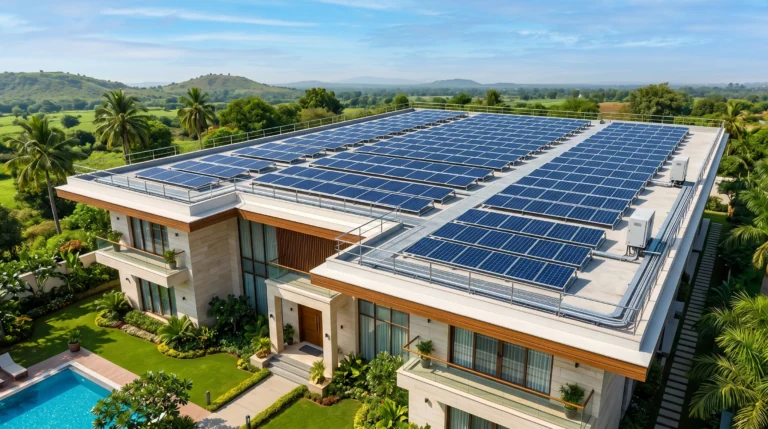
How much roof space is required for a 3KW solar system?
Typically 180–300 sq.ft., depending on panel efficiency and installation layout.
How much roof space is needed for a 5KW solar system?
Most 5KW systems require approximately 300–500 sq.ft. of usable roof area.
Can I install solar if my roof is small?
Yes. High-efficiency panels and optimized designs can help maximize available space.
Does shading affect roof space requirements?
Yes. Shaded areas often cannot be effectively utilized for solar panel installation.
Can solar panels be installed on sloped roofs?
Yes. Solar panels can be installed on both flat and sloped roofs.
What happens if I don’t have enough roof space?
You may install a smaller system, use higher-efficiency panels, or explore future expansion options.
How do I know if my roof is suitable for solar?
A professional site survey can determine roof suitability, available space, shading conditions, and expected solar generation.
At Roof Rays Solar, we conduct detailed site assessments to determine the ideal solar system size based on your roof space and electricity consumption.
Our Services
✅ Residential Solar Installation
✅ Commercial Solar Solutions
✅ Rooftop Space Assessment
✅ Solar System Design
✅ Subsidy Assistance
✅ Net Metering Support
✅ Professional Installation
✅ Long-Term Maintenance
Our experts help homeowners maximize energy generation even when roof space is limited.
Phone
Address
📍 HUDA Complex, Tellapur, Hyderabad
Contact our solar experts today for a free consultation and personalized solar savings estimate.
Understanding the Solar Roof Space Requirement is one of the first steps toward a successful rooftop solar installation.
Most residential homes can accommodate systems ranging from 3KW to 10KW, depending on available roof area and panel efficiency.
With proper planning, professional design, and high-quality solar components, even limited rooftop space can generate substantial electricity savings for decades to come.
© 2025 Roof Rays Solar Solutions. All Rights Reserved. | Designed by MANI
Check whether your property qualifies for rooftop solar subsidy support.
