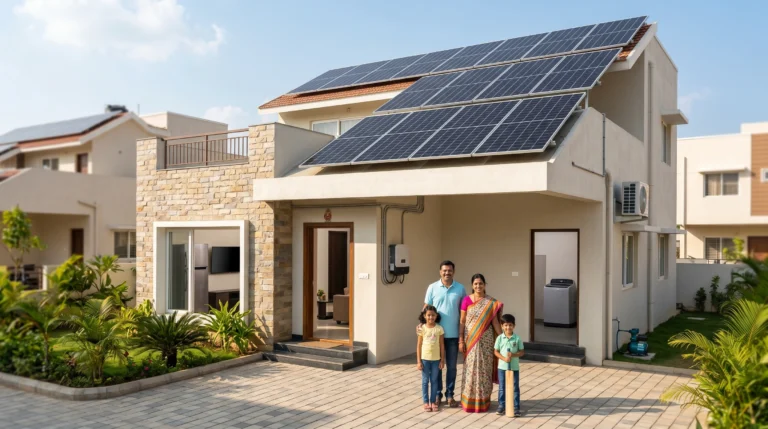
One of the biggest questions homeowners ask before installing solar is:
“Can solar actually run my air conditioner, refrigerator, TV, washing machine, and other household appliances?”
The simple answer is:
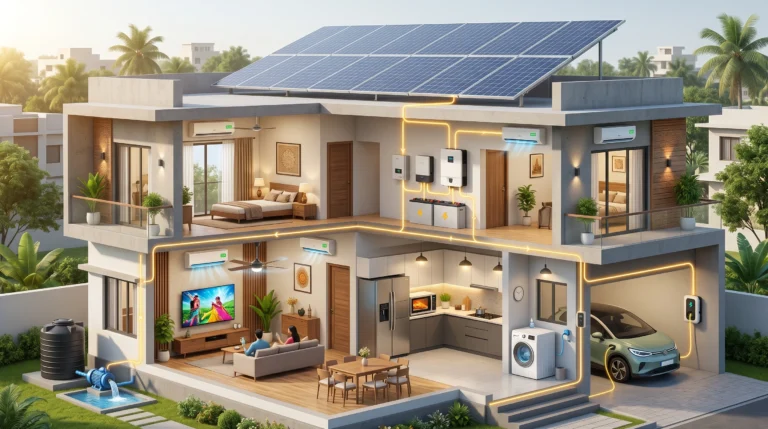
In fact, a properly sized rooftop solar system can power everything from lights and fans to refrigerators, air conditioners, water pumps, televisions, laptops, and even electric vehicle chargers.
However, the real question isn’t whether solar can run appliances—it’s whether your solar system is properly sized for your home’s electricity consumption.
In this guide, we’ll explain exactly how solar powers household appliances, how much electricity common appliances consume, and what size solar system is best for your home.
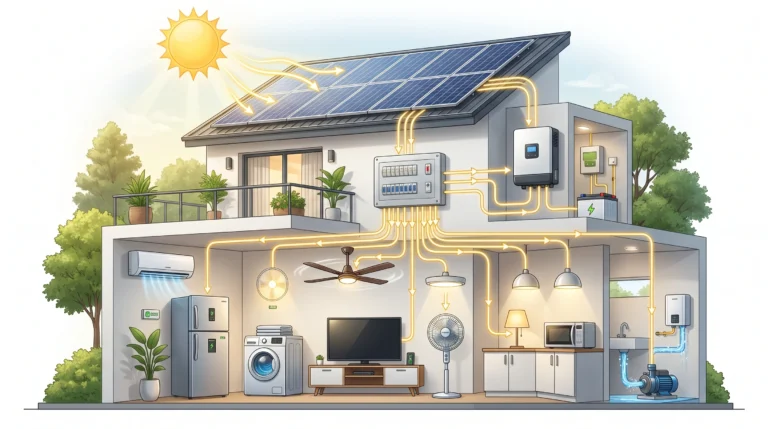
Solar panels generate electricity from sunlight.
The electricity produced is converted by a solar inverter into usable AC power for your home.
When solar energy is available:
From the appliance’s perspective, there is no difference between electricity from solar and electricity from the grid.
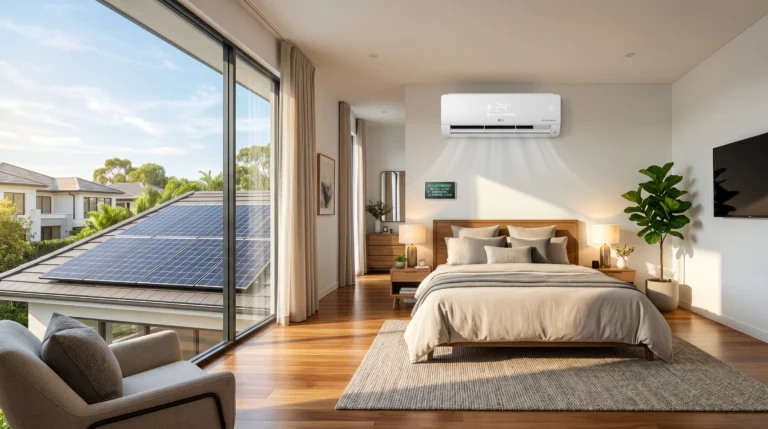
Yes, Absolutely.
Air conditioners are among the most common appliances homeowners want to power using solar energy.
Since ACs consume a significant amount of electricity, they are often one of the biggest contributors to high electricity bills.
Typical AC Power Consumption
Air Conditioner Type | Approximate Power Consumption |
1 Ton Inverter AC | 700–1200 Watts |
1.5 Ton Inverter AC | 1000–1800 Watts |
2 Ton Inverter AC | 1500–2500 Watts |
Actual consumption depends on:
For One AC
Recommended Solar System:
3KW – 5KW
For Two ACs
Recommended Solar System:
5KW – 8KW
For Multiple ACs
Recommended Solar System:
8KW – 10KW+
Yes.
Refrigerators are among the easiest appliances for solar systems to support.
Modern refrigerators are energy efficient and operate intermittently rather than continuously at full power.
Typical Refrigerator Consumption
Appliance | Power Consumption |
Single Door Refrigerator | 100–200 Watts |
Double Door Refrigerator | 150–400 Watts |
Large Refrigerators | 300–600 Watts |
A refrigerator can easily operate on a properly designed residential solar system.
Yes.
Most washing machines consume power only during active wash cycles.
Typical Consumption
Appliance | Power Consumption |
Semi-Automatic Washing Machine | 300–500 Watts |
Fully Automatic Washing Machine | 500–1000 Watts |
Even smaller solar systems can comfortably support washing machine usage.
Yes.
Modern LED televisions consume relatively little electricity.
Average TV Consumption
Television Size | Approximate Power |
32 Inch LED TV | 30–60 Watts |
43 Inch LED TV | 50–100 Watts |
55 Inch Smart TV | 80–150 Watts |
TVs are among the least demanding appliances from a solar perspective.
Absolutely.
Fans and LED lighting are ideal loads for solar systems.
Average Consumption
Appliance | Power Consumption |
Ceiling Fan | 50–80 Watts |
LED Bulb | 5–15 Watts |
LED Tube Light | 15–25 Watts |
A small rooftop solar system can easily support dozens of lights and fans.
Yes.
Solar systems can power domestic water pumps.
Typical Water Pump Consumption
Pump Type | Approximate Power |
Small Water Pump | 500–1000 Watts |
Medium Pump | 1000–2000 Watts |
Large Pump | 2000+ Watts |
The required solar capacity depends on operating hours and pump size.
Yes.
However, electric water heaters consume significant power.
Typical Consumption
Appliance | Power Consumption |
Geyser | 1500–3000 Watts |
Homes using multiple geysers may require larger solar systems.
Yes.
Average Consumption
Appliance | Power Consumption |
|---|---|
Microwave Oven | 800–1500 Watts |
Because microwaves operate for short durations, they generally do not create major solar sizing challenges.
Yes.
As EV adoption increases, many homeowners are installing larger solar systems specifically to support vehicle charging.
Typical EV Charging Consumption
Depends on:
Many EV owners choose:
for maximum savings.
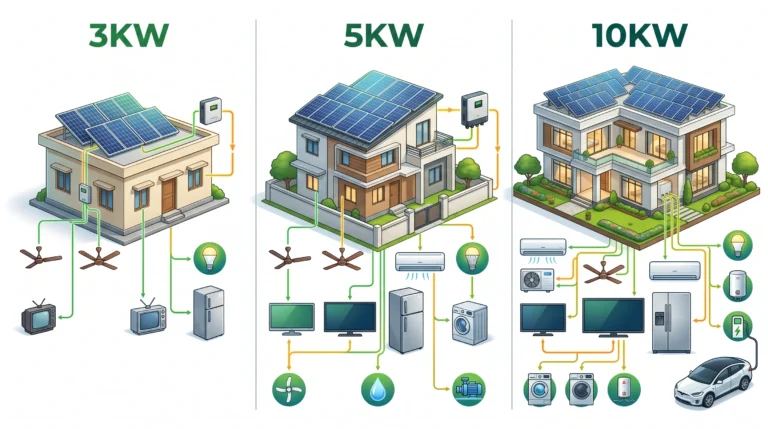
3KW Solar System
Suitable For:
✔ Lights
✔ Fans
✔ Refrigerator
✔ Television
✔ Washing Machine
✔ One Small AC
Ideal For:
2 BHK Homes
5KW Solar System
Suitable For:
✔ Multiple Fans
✔ Multiple TVs
✔ Refrigerator
✔ Washing Machine
✔ Water Pump
✔ Microwave
✔ 1–2 Air Conditioners
Ideal For:
3 BHK Homes
10KW Solar System
Suitable For:
✔ Multiple ACs
✔ Refrigerators
✔ Geysers
✔ Water Pumps
✔ Home Office Equipment
✔ EV Charging
✔ Complete Household Loads
Ideal For:
Large Homes & Villas
Let’s assume a household uses:
Typical daily electricity consumption:
18–25 Units
Recommended Solar System:
5KW to 8KW Solar System
This would cover a significant portion of the home’s electricity needs.
Solar System Size
Proper sizing is essential.
Undersized systems may not offset enough electricity usage.
Sunlight Availability
Solar generation depends on sunlight conditions.
Hyderabad’s climate provides excellent solar generation potential.
Appliance Efficiency
Energy-efficient appliances reduce overall power requirements.
Usage Patterns
Running high-power appliances during daylight hours can maximize solar utilization.
Myth: Solar Cannot Run Air Conditioners
Reality
Solar can easily power air conditioners when the system is properly sized.
Myth: Solar Only Works for Lights and Fans
Reality
Modern rooftop solar systems can power nearly all household appliances.
Myth: Heavy Appliances Damage Solar Systems
Reality
The system is designed based on expected electrical loads.
Myth: Solar Cannot Support Modern Homes
Reality
Thousands of homes across India run multiple ACs and high-consumption appliances using solar power.
Homeowners across:
are adopting rooftop solar to offset:
Can solar run an air conditioner all day?
Yes. A properly sized solar system can support air conditioner usage throughout the day, depending on system capacity and sunlight availability.
How many ACs can a 5KW solar system run?
A 5KW system can generally support 1–2 air conditioners along with regular household appliances.
Can solar run a refrigerator 24/7?
Yes. Refrigerators are commonly powered by residential solar systems.
Can solar run a washing machine and microwave?
Yes. Both appliances can be powered by a properly designed rooftop solar system.
Can solar power my entire home?
Yes. With the correct system size, solar can offset most or all household electricity consumption.
Do I need batteries to run appliances?
Not necessarily. On-grid solar systems power appliances directly while the grid acts as backup. Batteries are typically required only for backup power needs.
Which solar system is best for a home with ACs?
Most homes with 1–2 ACs benefit from a 5KW solar system, while larger homes may require 8KW–10KW systems.
At Roof Rays Solar, we design solar systems based on your actual appliance usage and electricity consumption.
Our Services
✅ Residential Solar Installation
✅ Commercial Solar Solutions
✅ On-Grid Solar Systems
✅ Hybrid Solar Systems
✅ Solar Consultation & Load Analysis
✅ Subsidy Assistance
✅ Net Metering Support
✅ Professional Installation
Our experts calculate your appliance load and recommend the ideal solar system for maximum savings and performance.
Phone
Address
📍 HUDA Complex, Tellapur, Hyderabad
Contact our solar experts today for a free consultation and personalized solar savings estimate.
The answer is simple: Yes, solar can run air conditioners, refrigerators, washing machines, TVs, water pumps, and most other household appliances.
The key is choosing the right solar system size based on your energy consumption.
Whether you’re looking to power a small apartment or a large villa with multiple ACs, a professionally designed rooftop solar system can significantly reduce your electricity bills while providing reliable clean energy for decades.
© 2025 Roof Rays Solar Solutions. All Rights Reserved. | Designed by MANI
Check whether your property qualifies for rooftop solar subsidy support.
