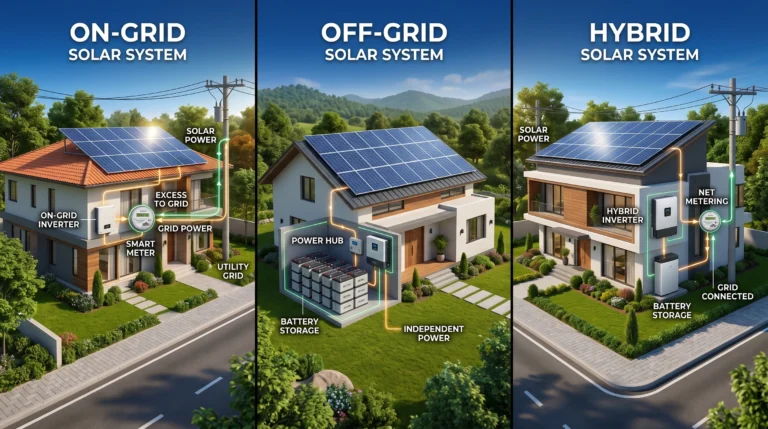
If you’re planning to install a rooftop solar system, one of the first decisions you’ll need to make is choosing between:
While all three generate electricity using solar panels, they differ significantly in how they store energy, interact with the electricity grid, provide backup power, and impact your overall investment.
Choosing the wrong system can result in unnecessary costs or unmet energy expectations.
In this comprehensive guide, we’ll compare On-Grid vs Off-Grid vs Hybrid Solar System options to help you select the best solution for your home, business, or commercial property.
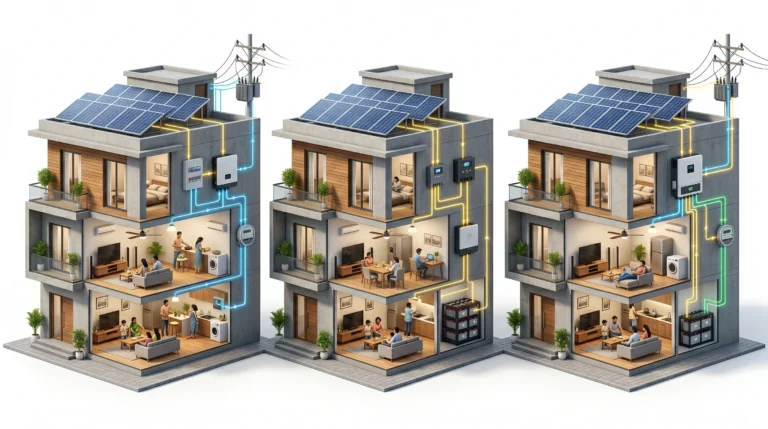
Before comparing them, let’s understand how each system works.
On-Grid Solar System
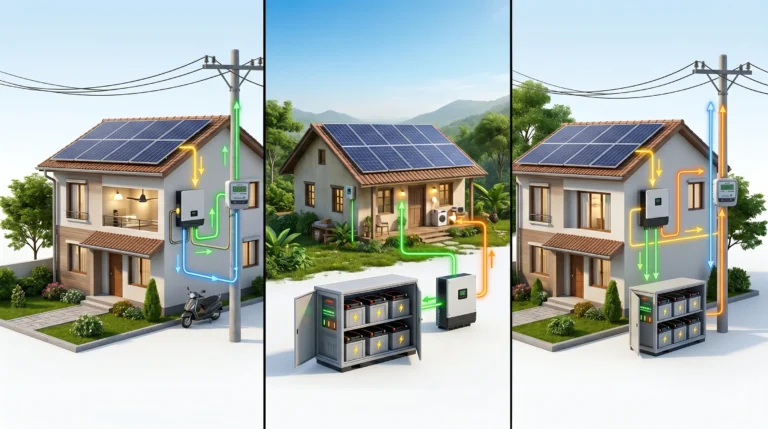
An On-Grid Solar System is connected directly to the electricity grid.
It generates electricity during the day and supplies power to your home. If excess electricity is generated, it can be exported to the grid through net metering.
When solar production is insufficient, electricity is imported from the grid.
Main Components
No Batteries Required
This is one of the biggest reasons On-Grid systems are the most popular and cost-effective choice.
Off-Grid Solar System
An Off-Grid Solar System operates independently of the utility grid.
All electricity generated must either be consumed immediately or stored in batteries for later use.
Main Components
No Grid Dependency
Even during grid failures, the system continues operating because it relies on battery storage.
Hybrid Solar System
A Hybrid Solar System combines the features of both On-Grid and Off-Grid systems.
It remains connected to the utility grid while also using batteries for backup power.
Main Components
This setup provides maximum flexibility and energy security.
Feature | On-Grid | Off-Grid | Hybrid |
Connected to Grid | Yes | No | Yes |
Battery Required | No | Yes | Yes |
Backup During Power Cuts | No | Yes | Yes |
Net Metering | Yes | No | Yes |
Initial Cost | Lowest | Highest | Higher |
Maintenance | Low | High | Medium |
Electricity Bill Savings | Excellent | Excellent | Excellent |
Suitable for Urban Areas | Yes | Limited | Yes |
Suitable for Remote Areas | No | Yes | Yes |
During daylight hours:
Advantages of On-Grid Solar Systems
Lowest Installation Cost
Since batteries are not required, the initial investment is lower.
Maximum ROI
More savings and lower maintenance costs often result in faster payback periods.
Net Metering Benefits
Excess electricity can be exported, increasing savings.
Minimal Maintenance
Without batteries, maintenance requirements are relatively low.
Disadvantages of On-Grid Solar Systems
No Backup During Power Outages
For safety reasons, most On-Grid systems shut down during grid failures.
Grid Dependency
The system depends on grid availability when solar generation is insufficient.
In an Off-Grid system:
Advantages of Off-Grid Solar Systems
Complete Energy Independence
No dependence on utility companies.
Power During Grid Failures
Electricity remains available even when the grid is unavailable.
Ideal for Remote Locations
Perfect for areas without reliable grid access.
Disadvantages of Off-Grid Solar Systems
Higher Initial Investment
Battery banks significantly increase costs.
Battery Maintenance
Batteries require monitoring and eventual replacement.
More Complex System Design
Accurate sizing is essential to ensure reliable power availability.
Hybrid systems combine solar panels, batteries, and grid connectivity.
During the day:
At night:
Advantages of Hybrid Solar Systems
Backup Power During Outages
A major advantage over On-Grid systems.
Reduced Grid Dependency
Stored solar energy can be used after sunset.
Better Energy Management
Provides greater flexibility and energy security.
Net Metering Benefits
Many Hybrid systems can still utilize net metering.
Disadvantages of Hybrid Solar Systems
Higher Cost
Battery storage increases investment requirements.
Additional Maintenance
Battery systems require periodic monitoring and maintenance.
Choose On-Grid Solar If:
✔ Reliable grid electricity is available
✔ Your goal is maximum bill savings
✔ You want the lowest investment cost
✔ You want faster ROI
✔ You do not require backup power
Best For
Most urban homes in Hyderabad and surrounding areas.
Choose Off-Grid Solar If:
✔ Grid electricity is unavailable
✔ You live in a remote area
✔ Energy independence is your top priority
✔ Frequent power outages occur
Best For
Remote locations and rural properties.
Choose Hybrid Solar If:
✔ Frequent power cuts affect your area
✔ You want battery backup
✔ You want to reduce grid dependency
✔ You need uninterrupted power supply
Best For
Homes requiring backup power and energy security.
On-Grid Solar System
Cost Level
Lowest
Battery Cost
Not Required
Maintenance Cost
Low
Off-Grid Solar System
Cost Level
Highest
Battery Cost
Significant
Maintenance Cost
Higher
Hybrid Solar System
Cost Level
Moderate to High
Battery Cost
Required
Maintenance Cost
Medium
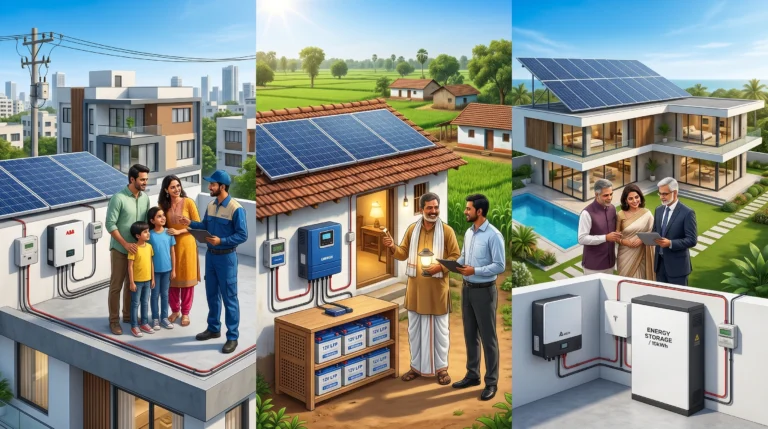
For most homeowners:
On-Grid Solar System
Typically offers:
This is why it remains the most popular choice across urban India.
For homeowners in:
an On-Grid Solar System is usually the most cost-effective option because:
However, homeowners experiencing frequent outages may prefer a Hybrid Solar System.
Myth: Off-Grid Is Always Better
Reality
Off-Grid systems are more expensive and are not necessary for most urban homeowners.
Myth: Hybrid Systems Eliminate Electricity Bills
Reality
Hybrid systems reduce bills significantly but system sizing determines actual savings.
Myth: On-Grid Solar Works During Power Cuts
Reality
Most standard On-Grid systems shut down during grid outages unless backup systems are installed.
Myth: Batteries Last Forever
Reality
Batteries have a limited lifespan and eventually require replacement.
Which solar system is best for homes?
For most urban homeowners, an On-Grid Solar System offers the best combination of affordability and savings.
Do I need batteries for solar?
Only Off-Grid and Hybrid systems require batteries.
Can Hybrid Solar Systems provide backup power?
Yes. Hybrid systems store electricity in batteries and can supply power during outages.
Which system is the most affordable?
On-Grid Solar Systems are generally the most affordable option.
Is net metering available with Hybrid systems?
In many cases, yes, depending on local regulations and system configuration.
Which system has the fastest ROI?
On-Grid Solar Systems typically provide the fastest return on investment.
Can I upgrade from On-Grid to Hybrid later?
Yes. Many homeowners upgrade their systems later by adding battery storage and compatible equipment.
At Roof Rays Solar, we help homeowners choose the right solar system based on their:
Our Services
✅ On-Grid Solar Installation
✅ Hybrid Solar Solutions
✅ Commercial Solar Systems
✅ Solar Consultation & Site Survey
✅ Subsidy Assistance
✅ Net Metering Support
✅ Professional Installation
✅ After-Sales Maintenance
Our experts analyze your energy requirements and recommend the most suitable solar solution for maximum savings and reliability.
Phone
Address
📍 HUDA Complex, Tellapur, Hyderabad
Contact our solar experts today for a free consultation and personalized solar savings estimate.
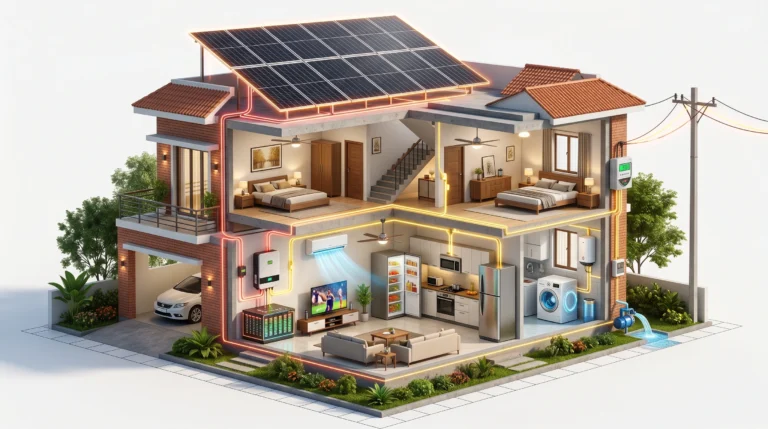
Choosing between an On-Grid, Off-Grid, or Hybrid Solar System depends on your electricity usage, location, budget, and backup power needs.
A professional solar assessment from Roof Rays Solar can help you select the most efficient and cost-effective system for your home or business.
© 2025 Roof Rays Solar Solutions. All Rights Reserved. | Designed by MANI
Check whether your property qualifies for rooftop solar subsidy support.