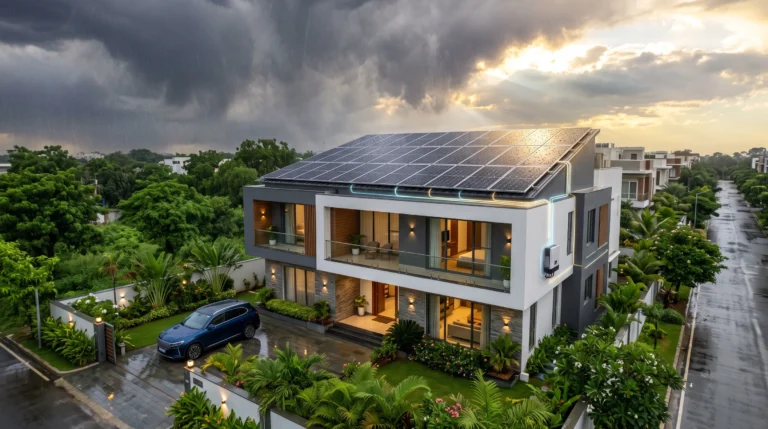
One of the biggest concerns homeowners have before investing in rooftop solar is:
“Will my solar panels generate electricity during cloudy weather or the rainy season?”
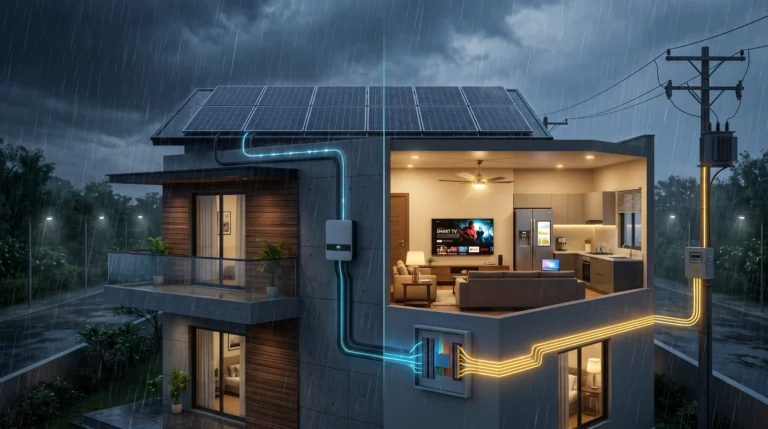
It’s a common misconception that solar panels stop working whenever the sun disappears behind clouds. In reality, modern solar panels continue producing electricity even on cloudy days—they simply generate less power compared to bright sunny conditions.
India enjoys abundant sunshine throughout the year, making rooftop solar a reliable investment despite seasonal weather changes. Cities like Hyderabad receive excellent annual solar irradiation, allowing homeowners to achieve significant electricity savings even during the monsoon season.
In this guide, we’ll explain how solar panels perform during cloudy days, what happens during monsoon months, how weather affects electricity generation, and why rooftop solar continues to deliver long-term value.
Before discussing weather conditions, it’s important to understand how solar panels actually work.
Solar panels generate electricity using sunlight, not heat.
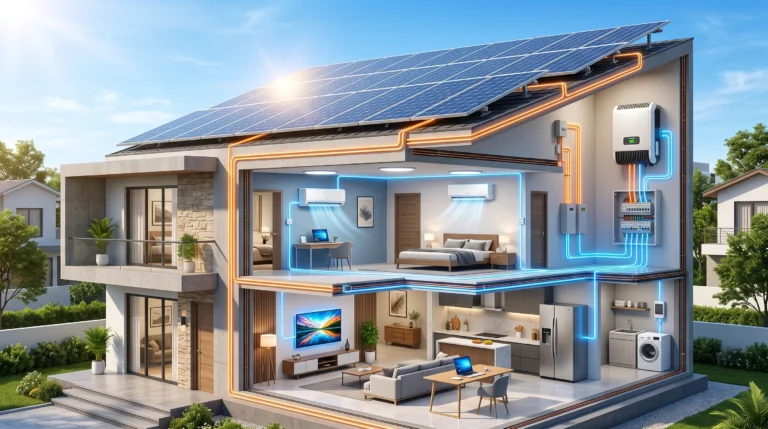
Photovoltaic (PV) cells inside the panels convert sunlight into direct current (DC) electricity. A solar inverter then converts this DC electricity into alternating current (AC), which powers your home’s electrical appliances.
This means:
Unlike popular belief, solar panels do not require extremely hot weather to function efficiently.
Yes—Solar Panels Continue Generating Electricity
Clouds reduce the intensity of sunlight reaching the panels, but they do not completely block it.
Modern rooftop solar systems continue generating electricity throughout cloudy weather.
Typical electricity generation during cloudy conditions ranges from 20% to 80% of normal output, depending on cloud density and weather conditions.
Factors influencing generation include:
During the monsoon season:
A professionally designed rooftop solar system is planned using annual sunlight data rather than individual weather events.
This ensures consistent long-term performance.
Season | Solar Generation |
Summer | Excellent |
Winter | Very Good |
Cloudy Days | Moderate |
Monsoon | Good |
Rainy Days | Reduced but Continuous |
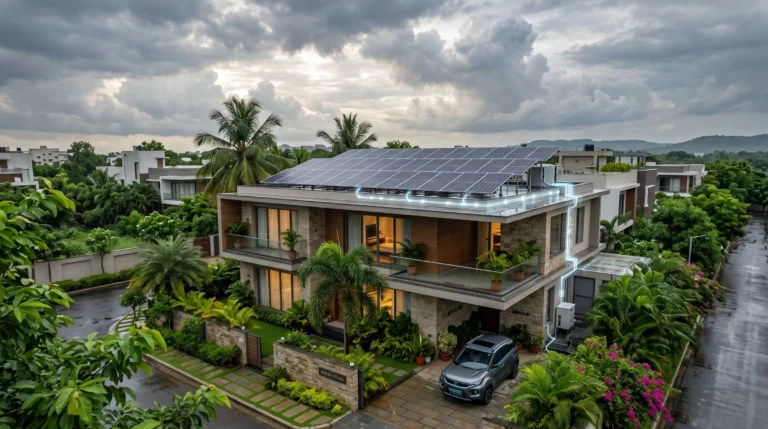
Although monsoon weather lasts for several weeks, India experiences abundant sunshine for most of the year.
Hyderabad, in particular, enjoys:
This makes rooftop solar highly productive despite seasonal rainfall.
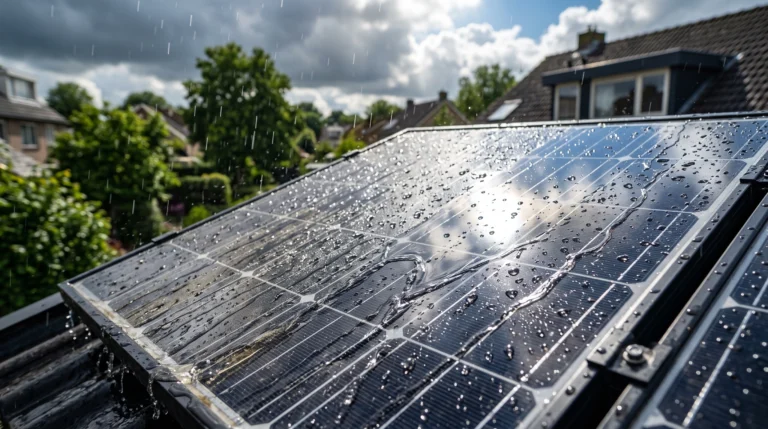
Many homeowners are surprised to learn that rain can improve solar panel performance.
Rain helps:
This natural cleaning effect often results in better performance once the weather clears.
No.
Quality rooftop solar panels are engineered to withstand:
Most premium solar panels undergo rigorous testing to ensure long-term durability in challenging weather conditions.
During days with continuous rainfall:
There is no manual switching required.
Not significantly over the long term.
Solar system performance is measured annually rather than daily.
While a few cloudy days reduce daily output, months with strong sunshine compensate for seasonal variations.
Over the course of a year, homeowners continue enjoying substantial reductions in electricity bills.
With an on-grid solar system:
During sunny periods:
During cloudy or rainy periods:
Net metering helps balance seasonal fluctuations and maximizes long-term savings.
1. Solar Panel Efficiency
High-efficiency panels capture more diffused sunlight.
2. Roof Orientation
South-facing roofs generally achieve better performance.
3. Roof Tilt
Proper tilt improves year-round energy generation.
4. Shade
Trees, neighboring buildings, and water tanks can reduce output.
5. Installation Quality
Professional system design maximizes energy production in all seasons.
Myth: Solar Panels Stop Working on Cloudy Days
Reality:
They continue generating electricity using diffused sunlight.
Myth: Rain Damages Solar Panels
Reality:
Modern panels are weather-resistant and designed for outdoor use.
Myth: Solar Is Not Suitable for Areas with Heavy Rainfall
Reality:
Many regions with frequent rainfall successfully use rooftop solar throughout the year.
Myth: Monsoon Eliminates Electricity Savings
Reality:
Annual solar generation remains strong, and long-term savings continue.
Homeowners across:
continue choosing rooftop solar because of:
Do solar panels work during cloudy weather?
Yes. Solar panels continue generating electricity during cloudy weather, although output may be lower than on bright sunny days.
Do solar panels work during the monsoon?
Yes. Solar panels generate electricity throughout the monsoon season using available sunlight.
Does rain improve solar panel performance?
Rain naturally cleans solar panels, helping improve efficiency after rainfall.
Will my electricity bill increase during the rainy season?
Electricity generation may reduce temporarily, but annual savings remain significant.
Can cloudy weather damage solar panels?
No. Cloudy weather does not damage properly installed solar panels.
Are batteries required for cloudy days?
Not necessarily. On-grid systems use grid electricity as backup, while hybrid and off-grid systems use batteries.
Is Hyderabad suitable for rooftop solar despite the monsoon?
Yes. Hyderabad receives abundant annual sunshine, making rooftop solar highly effective throughout the year.
At Roof Rays Solar, we design rooftop solar systems that deliver reliable performance throughout every season.
Our Services
✅ Residential Solar Installation
✅ On-Grid Solar Systems
✅ Hybrid Solar Systems
✅ Professional Site Assessment
✅ PM Surya Ghar Subsidy Assistance
✅ Net Metering Support
✅ Expert Installation
✅ Long-Term Maintenance
Our experienced team evaluates your roof, electricity consumption, and local weather conditions to design a solar system that maximizes energy generation and long-term savings.
Phone
Address
📍 HUDA Complex, Tellapur, Hyderabad
Contact our solar experts today for a free consultation and personalized solar savings estimate.
Cloudy days and the monsoon season may temporarily reduce solar power generation, but they do not stop your solar panels from producing electricity. Modern rooftop solar systems are engineered to perform efficiently under varying weather conditions and are designed using annual sunlight data rather than seasonal fluctuations.
With abundant sunshine, improving solar technology, and professional system design, homeowners across India can confidently invest in rooftop solar and enjoy reliable clean energy, lower electricity bills, and long-term financial savings throughout every season.
© 2025 Roof Rays Solar Solutions. All Rights Reserved. | Designed by MANI
Check whether your property qualifies for rooftop solar subsidy support.
