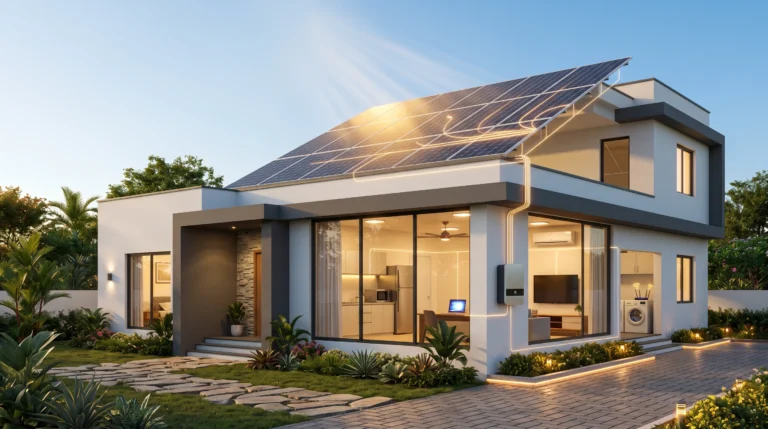
If you’re considering rooftop solar, one of the first questions that may come to mind is:
“How do solar panels actually work?”
Many homeowners know that solar panels produce electricity from sunlight, but few understand the process behind it. Fortunately, the technology is simpler than it appears.
Modern rooftop solar systems quietly convert sunlight into usable electricity every day, helping power everything from lights and fans to refrigerators, air conditioners, televisions, washing machines, and even electric vehicle chargers.
Understanding how solar panels work will help you make informed decisions about system size, electricity savings, and the right solar solution for your home.
In this guide, we’ll explain the entire process in simple language—from sunlight hitting the panels to electricity powering your appliances.
Solar panels are devices that convert sunlight into electricity using photovoltaic (PV) cells.
Each solar panel contains multiple solar cells made primarily from high-purity silicon. When sunlight strikes these cells, it creates an electric current through a process known as the photovoltaic effect.
Unlike generators, solar panels:
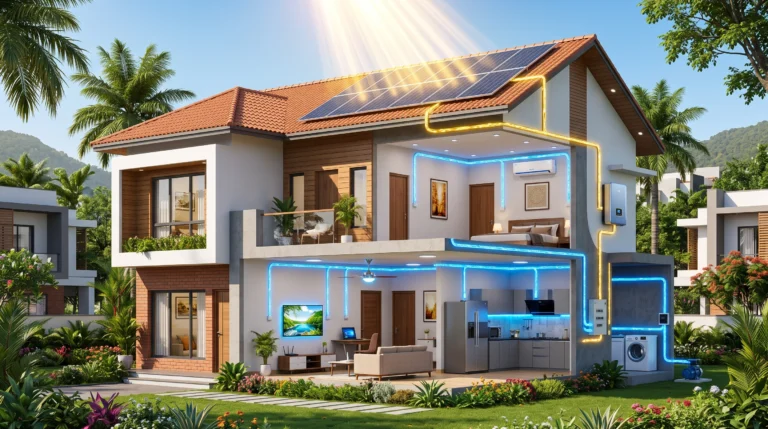
The journey from sunlight to usable electricity happens in a few simple steps.
Step 1: Sunlight Reaches the Solar Panels
Solar panels are installed on rooftops where they receive maximum sunlight throughout the day.
When sunlight falls on the photovoltaic cells, the energy from sunlight excites electrons inside the silicon material.
This movement of electrons creates direct current (DC) electricity.
Step 2: Solar Panels Generate DC Electricity
At this stage, the electricity produced is Direct Current (DC).
Most household appliances cannot use DC electricity directly.
This is why another important component is required—the solar inverter.
Step 3: The Solar Inverter Converts DC into AC
The solar inverter is often called the “brain” of a solar system.
Its primary job is to convert the DC electricity generated by the panels into Alternating Current (AC), which is the type of electricity used by homes.
After conversion, the electricity is ready to power household appliances safely and efficiently.
Step 4: Your Home Uses Solar Electricity First
Once converted into AC electricity, the power flows to your home’s electrical distribution board.
Your appliances automatically consume solar-generated electricity before drawing power from the utility grid.
This process happens seamlessly without any manual intervention.
Common appliances powered by solar include:
LED lights
Ceiling fans
Refrigerators
Televisions
Washing machines
Water pumps
Air conditioners
Computers and laptops
Kitchen appliances
Step 5: Excess Electricity Is Exported (On-Grid Systems)
If your solar panels generate more electricity than your home is consuming, the excess power does not go to waste.
With net metering, surplus electricity is exported to the utility grid.
These exported units are credited against the electricity you import later, helping reduce your overall electricity bill.
Step 6: Grid Electricity Is Used When Needed
At night or during periods of low solar generation:
Your home automatically imports electricity from the utility grid (on-grid systems), or
Uses stored battery energy (hybrid or off-grid systems).
This ensures a continuous and reliable power supply.
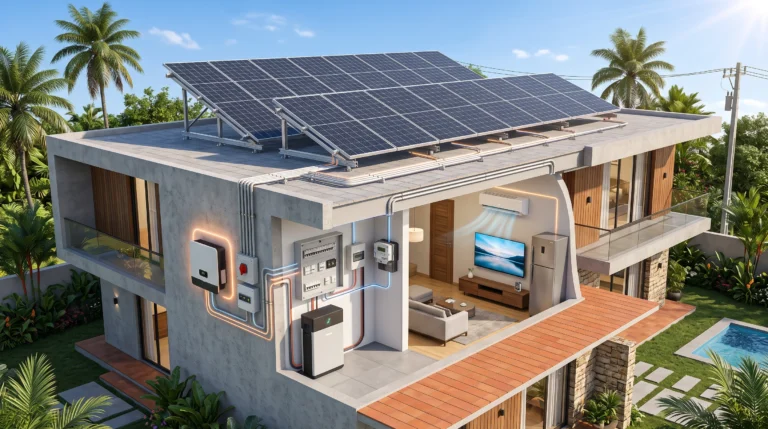
A modern rooftop solar system consists of several essential components.
Solar Panels
Capture sunlight and generate DC electricity.
Solar Inverter
Converts DC electricity into usable AC electricity.
Mounting Structure
Secures the solar panels to the rooftop at the optimal angle for maximum sunlight exposure.
Electrical Wiring
Transfers electricity safely between the panels, inverter, distribution board, and utility grid.
Net Meter
Measures electricity imported from and exported to the utility grid (for on-grid systems).
Battery (Optional)
Stores excess solar energy for use during power outages or at night.
Batteries are typically included in hybrid and off-grid solar systems.
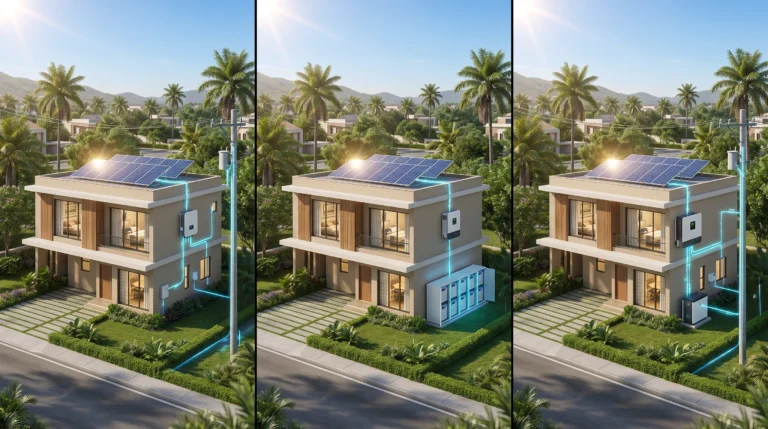
On-Grid Solar System
Connected to the utility grid.
No batteries required
Net metering supported
Lowest installation cost
Excellent return on investment
Best for homes with reliable grid electricity.
Off-Grid Solar System
Completely independent of the utility grid.
Battery storage required
Suitable for remote locations
Provides complete energy independence
Hybrid Solar System
Combines grid connectivity with battery storage.
Backup during power outages
Net metering support (where applicable)
Greater energy flexibility
Ideal for homeowners who want both savings and backup power.
During daylight hours:
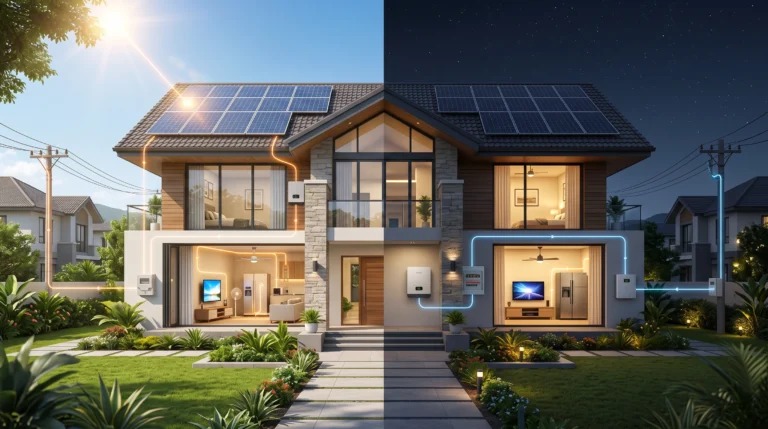
At night, solar panels stop generating electricity because there is no sunlight.
Your home then:
Yes.
Solar panels generate electricity from sunlight—not heat.
Although electricity production decreases during cloudy weather, modern panels continue generating power using diffused sunlight.
India’s abundant annual sunshine allows rooftop solar systems to deliver strong long-term performance despite seasonal weather changes.
Yes.
A properly sized rooftop solar system can power:
The exact capacity required depends on your household’s electricity consumption.
Approximate daily generation:
Solar System Size | Daily Generation |
1KW | 4–5 Units |
2KW | 8–10 Units |
3KW | 12–15 Units |
5KW | 20–25 Units |
10KW | 40–50 Units |
Actual generation depends on:
Knowing how solar works helps homeowners:
Myth: Solar Panels Need Heat to Work
Reality
Solar panels use sunlight—not heat—to generate electricity.
Myth: Solar Stops Working During Cloudy Weather
Reality
Panels continue producing electricity, although at reduced levels.
Myth: Solar Only Powers Lights and Fans
Reality
Properly sized systems can power most household appliances, including air conditioners and refrigerators.
Myth: Solar Systems Require Constant Attention
Reality
Modern systems operate automatically with minimal maintenance.
Homeowners in:
benefit from:
These factors make Hyderabad one of the best locations for residential solar adoption.
How do solar panels generate electricity?
Solar panels convert sunlight into direct current (DC) electricity using photovoltaic cells. A solar inverter then converts it into AC electricity for household use.
Do solar panels work without sunlight?
No. Solar panels require sunlight to generate electricity. At night, homes use electricity from the grid or battery storage.
What does a solar inverter do?
A solar inverter converts the DC electricity generated by solar panels into AC electricity used by household appliances.
Can solar panels power an entire house?
Yes. A properly designed solar system can supply electricity for most or all household appliances, depending on system size and energy consumption.
Do solar panels generate electricity on cloudy days?
Yes. Modern solar panels continue generating electricity using diffused sunlight, although production is lower than on clear sunny days.
How long do solar panels last?
Most high-quality solar panels have a lifespan of 25 years or more, with gradual performance degradation over time.
Do I need batteries for rooftop solar?
Not necessarily. On-grid systems do not require batteries, while hybrid and off-grid systems use batteries for backup power and energy storage.
At Roof Rays Solar, we simplify solar for homeowners by designing efficient rooftop solar systems based on your electricity usage, roof space, and future energy goals.
Our Services
✅ Residential Solar Installation
✅ PM Surya Ghar Subsidy Assistance
✅ Net Metering Support
✅ Professional Installation
✅ Long-Term Maintenance
Our experts guide you through every stage—from understanding how solar works to selecting the right system for maximum long-term savings.
Phone
Address
📍 HUDA Complex, Tellapur, Hyderabad
Contact our solar experts today for a free consultation and personalized solar savings estimate.
Solar panels work by converting sunlight into electricity through photovoltaic technology, allowing homeowners to power their homes with clean, renewable energy. Whether you’re looking to reduce electricity bills, increase energy independence, or invest in a sustainable future, understanding how solar panels work is the first step toward making an informed decision.
With professional system design, quality components, and abundant sunshine across India, rooftop solar continues to be one of the smartest long-term investments for homeowners seeking reliable and cost-effective electricity.
© 2025 Roof Rays Solar Solutions. All Rights Reserved. | Designed by MANI
Check whether your property qualifies for rooftop solar subsidy support.
