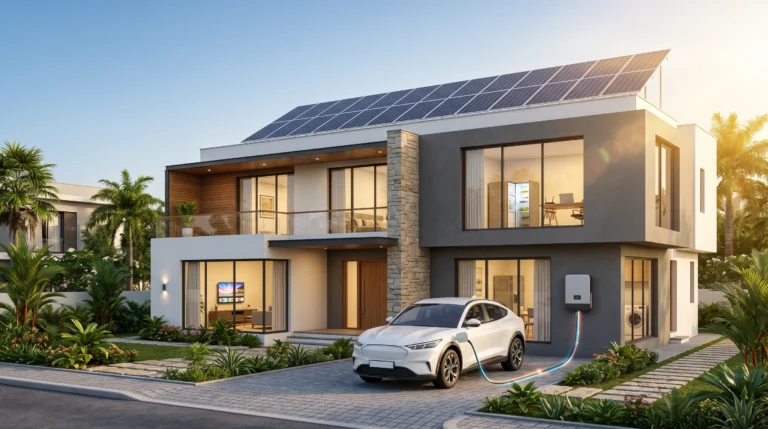
As electric vehicles (EVs) become increasingly popular across India, many homeowners are asking:
“Can I charge my electric vehicle using solar panels?”
The answer is Yes.
A properly designed rooftop solar system can generate enough electricity to charge your EV while also powering your household appliances. Combining solar energy with an electric vehicle allows homeowners to significantly reduce both electricity and fuel expenses while embracing a cleaner, more sustainable lifestyle.
Instead of relying entirely on grid electricity, you can use the power generated from your rooftop to charge your EV during the day. This not only lowers your charging costs but also increases your return on investment from your solar system.
In this guide, we’ll explain how solar charging works, what size solar system you need, the factors that affect charging efficiency, and why combining solar with an EV is becoming one of the smartest investments for modern homeowners.
Yes, Absolutely.
Solar panels generate electricity that can be used to power your home and charge your electric vehicle.
The process is simple:
If solar generation is insufficient, the remaining electricity is automatically supplied by the utility grid.
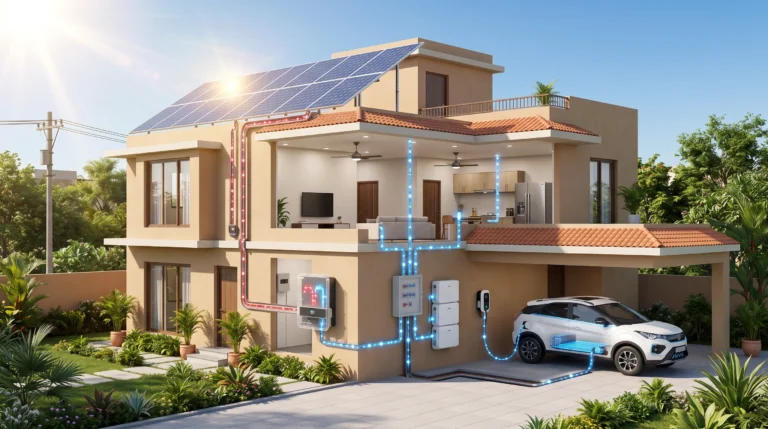
The charging process involves several key components.
Step 1: Solar Panels Generate Electricity
During daylight hours, rooftop solar panels capture sunlight and generate DC electricity.
Step 2: Solar Inverter Converts the Power
The inverter converts DC electricity into AC electricity suitable for household appliances and EV chargers.
Step 3: Home Appliances Use Solar Power
Your home’s electrical loads consume solar-generated electricity first.
Step 4: The EV Charger Charges Your Vehicle
The EV charger supplies electricity to your vehicle’s battery.
Whenever sufficient solar power is available, much of the charging energy comes directly from your rooftop solar system.
Step 5: Grid or Battery Provides Backup
If:
Solar generation decreases,
It’s nighttime,
Or electricity demand exceeds solar production,
your EV continues charging using:
Utility grid electricity (On-Grid Systems)
Battery storage (Hybrid Systems)
Yes, provided your solar system is appropriately sized.
Whether your EV can be charged entirely from solar depends on:
Many homeowners successfully charge their EV primarily using rooftop solar.
Electricity consumption varies depending on:
Typical EV energy consumption ranges from:
12–18 kWh per 100 km
This means driving 100 km generally requires about 12–18 units of electricity.
Daily Household Usage | EV Charging Requirement | Recommended Solar System |
Small Home + EV | Occasional Charging | 5KW |
Medium Home + EV | Daily Charging | 8KW |
Large Home + EV | Multiple EVs | 10KW–15KW+ |
Actual system sizing should be based on your home’s total electricity consumption.
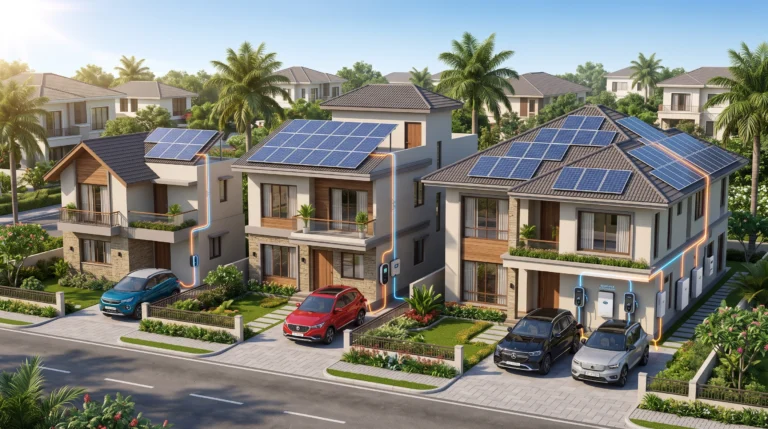
Household Consumption
600 Units per month
EV Driving Distance
1,000 km per month
EV Electricity Consumption
Approximately 150 Units per month
Total Monthly Consumption
750 Units
Recommended Solar System
5KW–8KW Rooftop Solar System
This system can significantly offset both household and EV electricity usage.
The most efficient charging time is:
Morning to Afternoon
During these hours:
Daytime charging maximizes direct solar utilization.
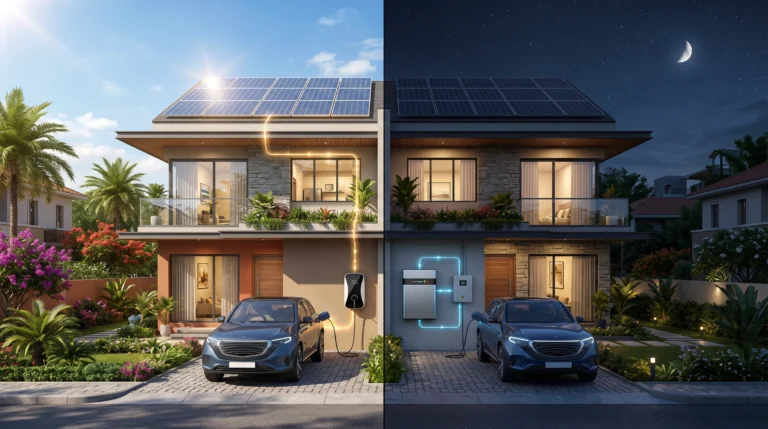
Yes.
At night, charging power comes from:
On-Grid System
Utility grid electricity.
Hybrid Solar System
Stored battery energy first, followed by the grid if required.
Off-Grid System
Battery storage charged during the day.
Combining rooftop solar with an electric vehicle offers several advantages.
Lower Running Costs
Charging with solar reduces electricity expenses compared to relying entirely on the grid.
Reduced Fuel Expenses
Replacing petrol or diesel with solar-powered charging lowers long-term transportation costs.
Faster Solar ROI
Using more of your self-generated electricity increases the value of your solar investment.
Reduced Carbon Emissions
Driving an EV charged by solar creates a cleaner and more sustainable transportation solution.
Energy Independence
Generate your own electricity while reducing dependence on external energy sources.
Not necessarily.
On-Grid Solar System
Most homeowners charge their EV directly using solar during the day and use the utility grid when required.
Hybrid Solar System
Batteries provide:
Nighttime charging support
Backup during power outages
Greater energy independence
Yes.
Many homeowners expand their existing rooftop solar systems after purchasing an EV.
Possible upgrades include:
Professional system evaluation is recommended before expansion.
Factors to consider include:
A certified EV charger ensures safe and efficient charging.
Myth: Solar Cannot Fully Charge an EV
Reality
A properly sized solar system can generate sufficient electricity to charge many electric vehicles while also powering household appliances.
Myth: You Need Batteries to Charge an EV
Reality
Most on-grid homeowners charge their vehicles directly from solar during daylight hours without batteries.
Myth: EV Charging Requires Huge Solar Systems
Reality
The ideal system size depends on household consumption and driving habits—not every homeowner needs a large installation.
Myth: Solar Charging Is Too Slow
Reality
Charging speed depends primarily on the EV charger and vehicle, not the solar panels themselves.
For many homeowners, the answer is Yes.
Solar-powered EV charging offers:
As EV adoption continues to grow, rooftop solar becomes an even more valuable investment.
Residents across:
are increasingly investing in rooftop solar because of:
Can solar panels charge an electric vehicle?
Yes. A properly designed rooftop solar system can generate electricity to charge an EV while also supplying household appliances.
How many solar panels are needed to charge an EV?
The number depends on your vehicle’s battery size, driving distance, household electricity consumption, and the wattage of the solar panels used. Most homeowners with EVs benefit from 5KW–8KW solar systems.
Can I charge my EV using solar without batteries?
Yes. On-grid solar systems can charge EVs during daylight hours without battery storage.
Is solar charging cheaper than grid charging?
Yes. Charging your EV using self-generated solar electricity significantly reduces long-term charging costs.
Can I charge my EV at night using solar?
Yes, with a hybrid or off-grid solar system that includes battery storage. Otherwise, an on-grid system uses utility electricity at night.
Can I expand my existing solar system after buying an EV?
Yes. Many homeowners upgrade their solar systems by adding more panels, batteries, or a larger inverter to accommodate EV charging.
Is rooftop solar a good investment for EV owners?
Absolutely. Combining rooftop solar with an electric vehicle increases energy independence, lowers operating costs, and improves the overall return on your solar investment.
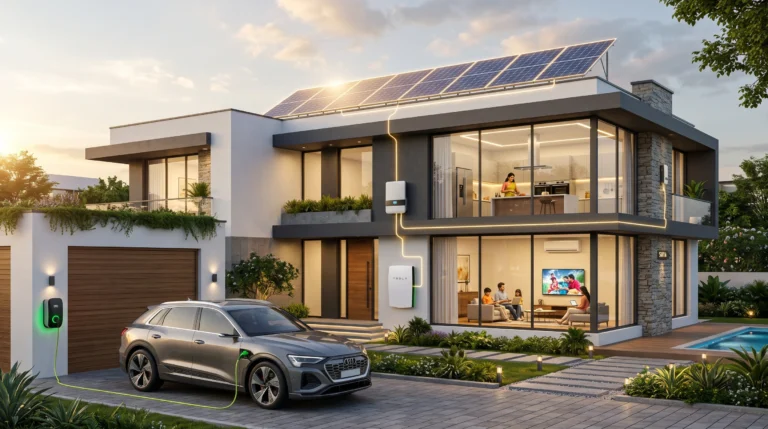
At Roof Rays Solar, we design future-ready rooftop solar systems that support both household electricity needs and electric vehicle charging.
Our Services
✅ Residential Solar Installation
✅ EV Charging Consultation
✅ On-Grid Solar Systems
✅ Hybrid Solar Systems
✅ Solar System Expansion
✅ PM Surya Ghar Subsidy Assistance
✅ Net Metering Support
✅ Professional Installation
Our experts evaluate your electricity consumption, driving habits, and future energy goals to recommend the ideal solar solution for your home and EV.
Phone
Address
📍 HUDA Complex, Tellapur, Hyderabad
Contact our solar experts today for a free consultation and personalized solar savings estimate.
Electric vehicles and rooftop solar are a perfect combination for homeowners seeking lower energy costs and a more sustainable lifestyle. A properly designed solar system can efficiently power your household while charging your EV, reducing dependence on grid electricity and fossil fuels.
Whether you’re planning to buy your first electric vehicle or already own one, investing in rooftop solar today can help you maximize savings, increase energy independence, and prepare your home for the future of clean transportation.
© 2025 Roof Rays Solar Solutions. All Rights Reserved. | Designed by MANI
Check whether your property qualifies for rooftop solar subsidy support.