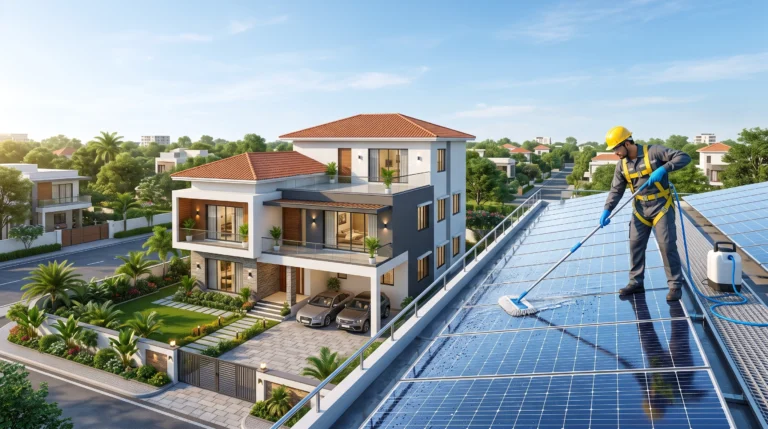
One of the biggest advantages of rooftop solar is that it requires very little maintenance compared to most household systems. However, like any long-term investment, solar panels perform best when they are kept clean and inspected regularly.
Many homeowners wonder:
“Do solar panels need regular cleaning?”
“How often should I maintain my solar system?”
The answer is simple: Yes, but maintenance is minimal.
Dust, bird droppings, leaves, pollution, and other debris can gradually reduce the amount of sunlight reaching your solar panels, affecting electricity generation. Fortunately, with proper cleaning and occasional inspections, your solar system can continue operating efficiently for 25 years or more.
In this guide, we’ll explain how to clean solar panels safely, how often maintenance is required, common mistakes to avoid, and best practices for maximizing electricity generation.
Solar panels work by absorbing sunlight and converting it into electricity.
When dust, dirt, leaves, or bird droppings accumulate on the surface, they block sunlight and reduce energy production.
Regular cleaning helps:
A clean solar panel produces more electricity than a heavily soiled one.
Yes—but much less than many homeowners expect.
Unlike generators or other electrical equipment, solar panels:
Routine maintenance generally includes:
Cleaning frequency depends on your location and environmental conditions.
Location | Recommended Frequency |
Residential Areas | Every 2–3 Months |
Dusty Locations | Every 1–2 Months |
Near Construction Sites | Monthly |
Heavy Bird Activity | As Required |
After Dust Storms | Immediate Inspection |
During the monsoon season, rainfall naturally removes much of the accumulated dust, but periodic inspections are still recommended.
Your panels may need cleaning if you notice:
Monitoring your inverter’s performance data can help identify unexpected reductions in energy production.
The ideal time is:
Avoid cleaning during the hottest part of the day.
Why?
Cold water applied to hot glass may cause thermal stress, and working on a hot rooftop can be unsafe.
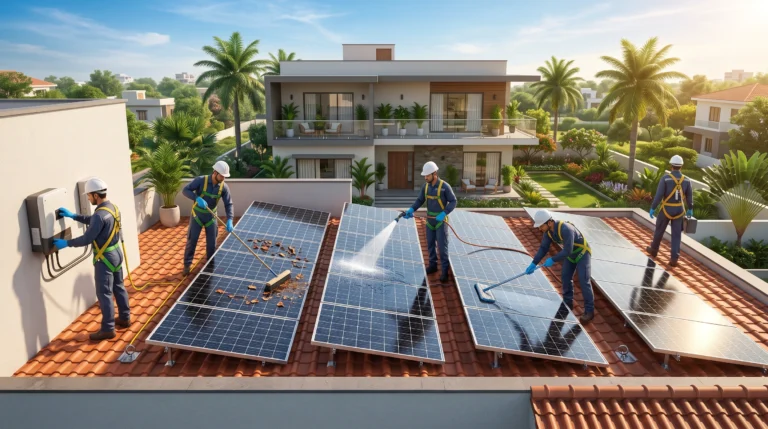
Step 1: Turn Off the Solar System
For safety, switch off the solar system following the manufacturer’s instructions before beginning any cleaning.
Step 2: Remove Loose Debris
Use a soft brush or blower to remove:
Avoid using sharp tools.
Step 3: Wash with Clean Water
Use:
Do not use high-pressure water jets.
Step 4: Gently Clean the Surface
If required, gently wipe the panel using a soft cloth.
Avoid:
Step 5: Allow Panels to Dry Naturally
Once cleaned, allow the panels to air dry before restarting the system.
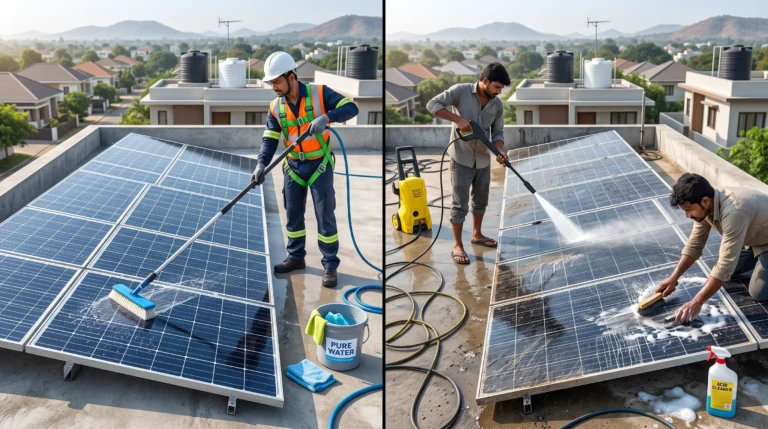
Never use:
These can scratch the tempered glass or damage protective coatings.
Rain helps remove:
However, rain alone usually cannot remove:
Periodic manual cleaning is still beneficial.
A complete maintenance program also includes:
Electrical Inspection
Check:
Inverter Inspection
Ensure:
Mounting Structure Inspection
Inspect:
Bolts
Clamps
Corrosion
Structural stability
Performance Monitoring
Compare current electricity generation with historical performance.
Unexpected drops may indicate:
Dirt accumulation
Shading
Equipment issues
Reduced generation may result from:
Regular inspections help identify these issues early.
Always prioritize safety.
Recommendations include:
Professional maintenance is recommended when:
Professionals have the proper equipment and expertise to safely inspect and maintain your system.
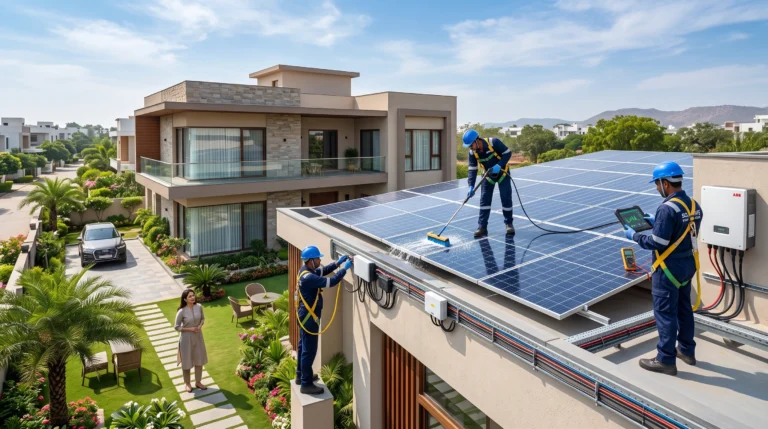
Professional servicing helps:
Myth: Solar Panels Never Need Cleaning
Reality
While maintenance is minimal, occasional cleaning improves efficiency.
Myth: Rain Cleans Everything
Reality
Rain removes loose dust but cannot eliminate stubborn dirt or bird droppings.
Myth: Harsh Chemicals Clean Better
Reality
Strong chemicals may damage protective coatings and reduce panel lifespan.
Myth: Solar Systems Need Monthly Servicing
Reality
Most residential systems only require periodic cleaning and routine inspections.
Homes in:
experience:
Routine cleaning helps maximize electricity generation throughout the year.
How often should solar panels be cleaned?
Most residential systems should be cleaned every 2–3 months, although dusty environments may require more frequent cleaning.
Can I clean solar panels myself?
Yes, if they are safely accessible. For high or steep rooftops, professional cleaning is recommended.
Does rain clean solar panels completely?
No. Rain removes light dust but may not remove bird droppings, pollution residue, or stubborn dirt.
Can dirty solar panels reduce electricity generation?
Yes. Dirt accumulation blocks sunlight and can lower overall system performance.
Is pressure washing safe for solar panels?
No. High-pressure water can damage panel seals and protective coatings.
Do solar panels require annual servicing?
Yes. An annual professional inspection helps ensure optimal performance and identifies potential issues early.
Does cleaning improve electricity generation?
Yes. Clean panels absorb more sunlight, helping maximize energy production and long-term savings.
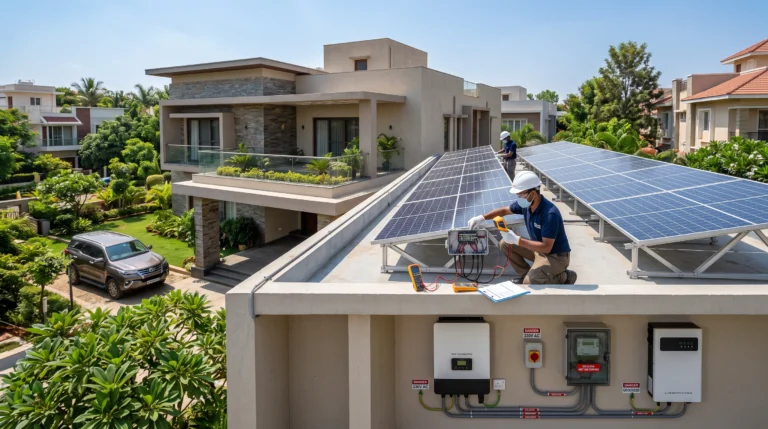
At Roof Rays Solar, we provide comprehensive maintenance services to keep your rooftop solar system performing at its best.
Our Services
✅ Residential Solar Installation
✅ Professional Solar Panel Cleaning
✅ Preventive Maintenance
✅ Performance Inspection
✅ Inverter Health Check
✅ Net Metering Support
Our experienced technicians use safe cleaning methods and detailed inspections to maximize system performance and extend the life of your solar investment.
Phone
Address
📍 HUDA Complex, Tellapur, Hyderabad
Contact our solar experts today for a free consultation and personalized solar savings estimate.
Regular cleaning and routine maintenance play an important role in maximizing the efficiency, reliability, and lifespan of your rooftop solar system. While solar panels require very little upkeep compared to many other energy systems, periodic cleaning, inspections, and professional servicing help ensure consistent electricity generation and long-term savings.
By following proper maintenance practices and addressing minor issues early, homeowners can enjoy dependable clean energy, lower electricity bills, and optimal solar performance for 25 years or more.
© 2025 Roof Rays Solar Solutions. All Rights Reserved. | Designed by MANI
Check whether your property qualifies for rooftop solar subsidy support.