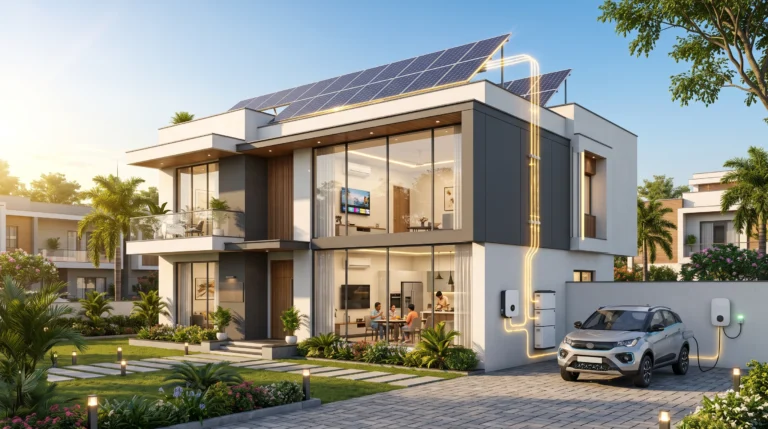
The way we power our homes and vehicles is changing rapidly. Rising electricity costs, increasing fuel prices, government incentives, and growing environmental awareness are encouraging more homeowners to adopt cleaner and smarter energy solutions.
One of the most exciting developments is the combination of rooftop solar systems and electric vehicles (EVs).
Imagine a home where your rooftop generates electricity during the day, powers your household appliances, charges your electric vehicle, and even stores excess energy for later use. This is no longer a concept of the future—it’s becoming a reality for thousands of homeowners across India.
A Solar + EV Smart Home not only reduces electricity and transportation costs but also increases energy independence and supports a more sustainable lifestyle.
In this guide, we’ll explain how solar and electric vehicles work together, why this combination is becoming increasingly popular, and how homeowners can prepare for the future of smart living.
A Solar + EV Smart Home is a residence that combines:
These systems work together to generate, manage, and utilize clean electricity efficiently.
Instead of relying entirely on the electricity grid and fossil fuels, homeowners produce their own renewable energy and use it to power both their home and their vehicle.
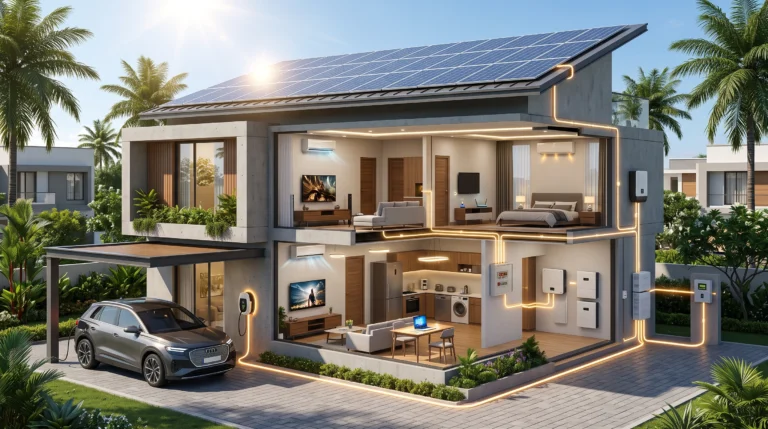
Solar panels generate electricity during daylight hours.
Electric vehicles require electricity to recharge their batteries.
When combined:
This creates an efficient energy ecosystem with lower operating costs and greater energy independence.
The process is simple and automatic.
Step 1: Solar Panels Generate Electricity
During the day, rooftop solar panels convert sunlight into electricity.
Step 2: The Solar Inverter Converts Power
The inverter converts DC electricity into AC electricity for household use.
Step 3: Household Appliances Use Solar Energy
Lights, fans, refrigerators, air conditioners, televisions, washing machines, and other appliances use solar-generated electricity first.
Step 4: The EV Charger Charges Your Vehicle
When your electric vehicle is connected, the home charger uses available solar electricity to recharge the EV battery.
Step 5: Excess Electricity Is Managed Efficiently
Depending on your system:
Exported to the grid (On-Grid Solar)
Stored in batteries (Hybrid Solar)
Used for later consumption
Everything happens automatically without manual switching.
1. Lower Electricity Bills
Your home consumes self-generated electricity before importing power from the grid.
This significantly reduces monthly electricity costs.
2. Lower Vehicle Running Costs
Charging an EV using rooftop solar costs much less than purchasing petrol or diesel.
The savings continue throughout the life of both the solar system and the vehicle.
3. Better Return on Investment
An EV increases daytime electricity consumption.
Instead of exporting excess solar energy, homeowners use more of their own generated electricity, improving the overall return on investment.
4. Greater Energy Independence
Generating electricity at home reduces dependence on:
Utility companies
Fuel price fluctuations
Rising electricity tariffs
5. Reduced Carbon Footprint
Both rooftop solar and electric vehicles contribute to:
Lower greenhouse gas emissions
Cleaner air
Sustainable energy use
This helps homeowners reduce their environmental impact.
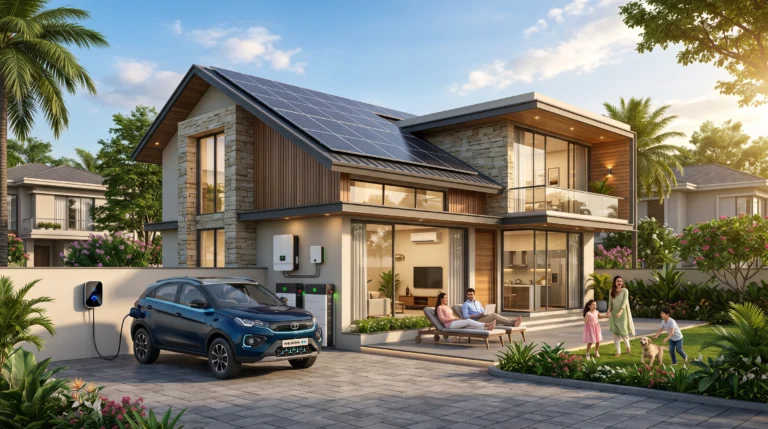
The ideal system depends on:
Home Type | Recommended Solar System |
Small Family + EV | 5KW |
Medium Family + EV | 8KW |
Large Home + EV | 10KW–15KW+ |
A professional energy assessment ensures accurate system sizing.
Battery storage is optional but offers additional advantages.
Benefits of Hybrid Solar Batteries
For homeowners in areas with frequent power cuts, hybrid systems provide greater flexibility.
Modern smart homes often include energy monitoring systems that allow homeowners to:
Many systems provide real-time data through mobile apps.
As electricity consumption increases over time, many households add:
Installing a scalable solar system today makes future expansion easier and more cost-effective.
Homes equipped with:
often become more attractive to buyers.
Benefits include:
Myth: Solar Cannot Charge an EV
Reality
A properly sized rooftop solar system can efficiently charge an electric vehicle while also powering household appliances.
Myth: Only Luxury Homes Need Solar + EV
Reality
Homeowners with apartments, independent houses, and villas can all benefit from appropriately designed systems.
Myth: Smart Homes Are Extremely Expensive
Reality
Many smart energy solutions are now affordable and offer substantial long-term savings.
Myth: Batteries Are Always Required
Reality
Many homeowners successfully charge EVs during the day using on-grid solar systems without battery storage.
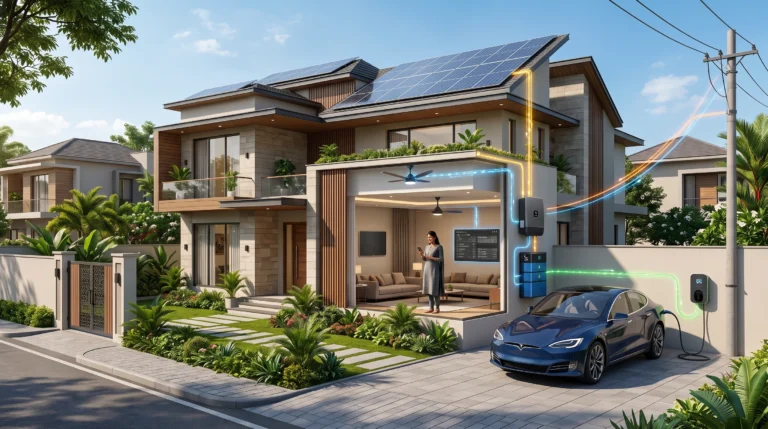
For many homeowners, the answer is Yes.
Combining rooftop solar with an electric vehicle provides:
As electricity and fuel prices continue to rise, the financial benefits become even more significant.
Residents across:
are increasingly investing in rooftop solar and EV charging because of:
Can rooftop solar charge an electric vehicle?
Yes. A properly designed rooftop solar system can generate electricity to charge your EV while also powering household appliances.
Do I need batteries to charge my EV with solar?
Not necessarily. On-grid systems can charge EVs during daylight hours using solar power, while hybrid systems use batteries for additional flexibility and backup.
What size solar system is suitable for an EV?
Most homeowners with one EV benefit from a 5KW–8KW solar system, depending on household electricity usage and driving distance.
Can I install an EV charger later?
Yes. Many homeowners first install rooftop solar and later add a compatible EV charger as their transportation needs evolve.
Does charging an EV with solar reduce electricity bills?
Yes. Using self-generated solar electricity reduces the amount of electricity purchased from the utility grid, lowering overall energy costs.
Is a Solar + EV Smart Home a good investment?
Absolutely. It combines clean energy generation, lower transportation expenses, increased energy independence, and long-term financial savings.
Can my existing solar system be upgraded for EV charging?
Yes. Many systems can be expanded with additional panels, upgraded inverters, battery storage, or dedicated EV charging equipment, depending on available roof space and system capacity.
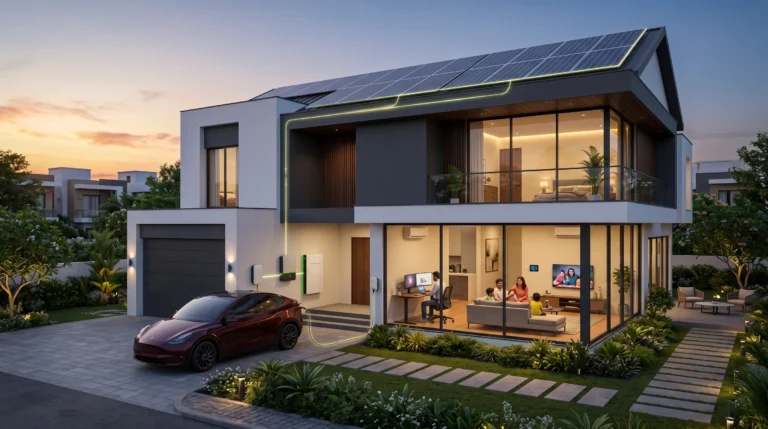
At Roof Rays Solar, we design future-ready energy solutions that combine rooftop solar with electric vehicle charging for maximum efficiency and long-term savings.
✅ Residential Solar Installation
✅ Smart Home Energy Planning
✅ On-Grid Solar Systems
✅ Hybrid Solar Systems
✅ Battery Storage Solutions
✅ PM Surya Ghar Subsidy Assistance
✅ Net Metering Support
✅ Professional Installation
Our experts assess your current and future energy needs to recommend a customized solar solution that powers both your home and your electric vehicle efficiently.
Phone
Address
📍 HUDA Complex, Tellapur, Hyderabad
Contact our solar experts today for a free consultation and personalized solar savings estimate.
The combination of rooftop solar and electric vehicles is redefining how modern homes generate, consume, and manage energy. By producing clean electricity, powering household appliances, and charging EVs from the same renewable source, homeowners can significantly reduce operating costs while increasing energy independence.
As solar technology, battery storage, and electric mobility continue to advance, Solar + EV Smart Homes are becoming the new standard for sustainable living. Investing in this integrated solution today helps future-proof your home, maximize long-term savings, and contribute to a cleaner, smarter, and more energy-efficient future.
© 2025 Roof Rays Solar Solutions. All Rights Reserved. | Designed by MANI
Check whether your property qualifies for rooftop solar subsidy support.