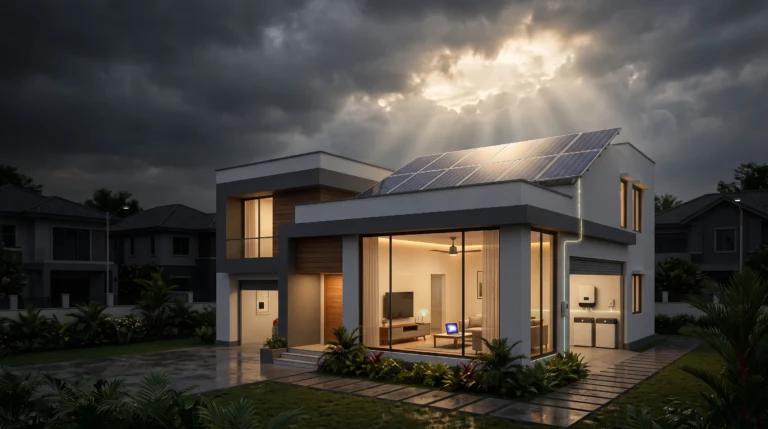
One of the most frequently asked questions by homeowners considering rooftop solar is:
“If there is a power cut, will my solar panels continue to supply electricity?”
Many people assume that because solar panels generate electricity from sunlight, they should automatically keep their home powered during a grid outage.
However, the answer depends on the type of solar system installed.
Understanding this difference is essential before investing in rooftop solar. Choosing the right system ensures you achieve the balance of electricity savings, backup power, and long-term return on investment that best suits your home.
In this guide, we’ll explain how different solar systems behave during power cuts, why grid-connected systems shut down, and which solar solution is ideal for your energy needs.
Solar panels generate electricity whenever sunlight reaches the photovoltaic (PV) cells.
The electricity produced is:
Once electricity reaches your home’s distribution board, it powers lights, fans, air conditioners, refrigerators, televisions, washing machines, and other appliances.
However, whether this electricity remains available during a power outage depends on the type of inverter and solar system installed.
Do Solar Panels Work During Power Cuts?
Yes—but not all solar systems behave the same way.
Solar System Type | Works During Power Cuts? |
On-Grid Solar System | ❌ No |
Off-Grid Solar System | ✅ Yes |
Hybrid Solar System | ✅ Yes (Backup Circuits) |
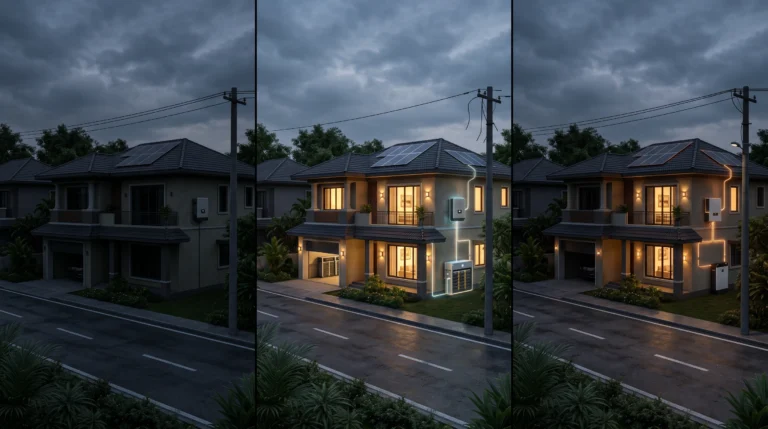
This surprises many homeowners.
Although the sun is shining and your solar panels continue generating electricity, a standard On-Grid Solar System automatically shuts down during a utility power outage.
This happens because of an important safety feature called Anti-Islanding Protection
Anti-islanding is a built-in safety feature in grid-connected solar inverters.
Its purpose is to protect:
If the inverter continued exporting electricity into damaged power lines during an outage, it could create a serious safety hazard.
Therefore, when the utility grid fails, the inverter immediately disconnects the solar system.
This automatic shutdown is required by electrical safety standards and grid regulations.
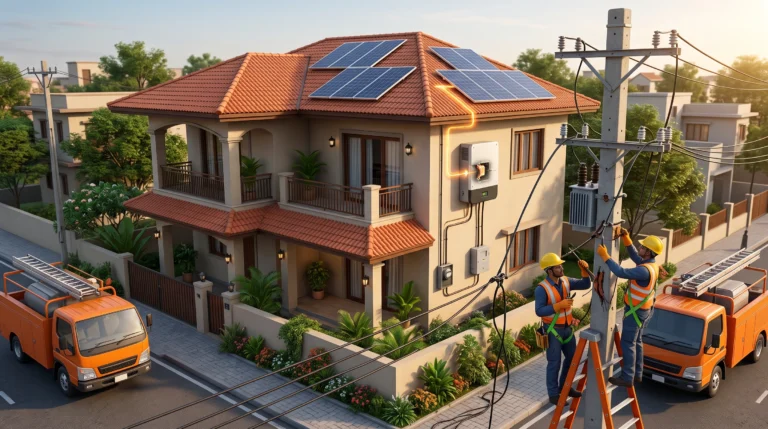
When the grid fails:
This process usually happens within seconds.
Yes.
The solar panels themselves continue producing electricity whenever sunlight is available.
However, without a compatible backup system, that electricity cannot be safely used inside your home.
The limitation is not the solar panels—it is the inverter’s safety design.
An Off-Grid Solar System operates independently of the utility grid.
Its main components include:
During the day:
At night or during cloudy weather:
Since there is no dependency on the grid, power remains available during outages.
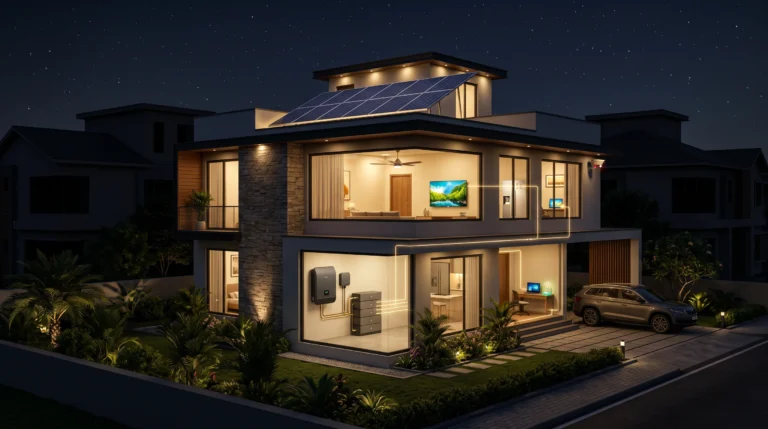
A Hybrid Solar System combines the benefits of on-grid and off-grid systems.
Main Components
During Normal Operation
Solar powers household appliances.
Excess energy charges batteries.
Additional surplus can be exported through net metering.
During a Power Cut
The hybrid inverter automatically isolates your home from the grid.
Stored battery power supplies designated backup circuits.
Solar panels continue charging the batteries while sunlight is available.
This provides uninterrupted electricity for essential household loads.
The answer depends on the size of your battery system.
Typical Backup Loads
Larger battery systems can also support:
Yes.
Hybrid and off-grid systems continue charging batteries during daylight hours, allowing homeowners to extend backup time even while the grid remains unavailable.
Backup duration depends on:
Example
Battery Size | Typical Backup Duration* |
5 kWh | 4–8 Hours |
10 kWh | 8–15 Hours |
Larger Systems | Custom Based on Load |
*Actual backup duration varies with appliance usage.
Feature | On-Grid | Off-Grid | Hybrid |
Grid Connection | Yes | No | Yes |
Battery Required | No | Yes | Yes |
Works During Power Cuts | No | Yes | Yes |
Net Metering | Yes | No | Yes (where permitted) |
Electricity Bill Savings | Excellent | Excellent | Excellent |
Backup Power | No | Yes | Yes |
Initial Cost | Lowest | Highest | Moderate to High |
Choose a Hybrid Solar System if you:
✔ Experience frequent outages
✔ Need uninterrupted power
✔ Want electricity bill savings
✔ Prefer battery backup
Choose an On-Grid Solar System if:
✔ Grid reliability is good
✔ Your priority is reducing electricity bills
✔ You do not require backup power
Choose an Off-Grid Solar System if:
✔ No utility grid is available
✔ You live in a remote location
✔ Complete energy independence is required
Myth: Solar Always Works During a Power Cut
Reality
Only hybrid and off-grid systems continue supplying electricity during outages.
Myth: Solar Panels Stop Producing Electricity
Reality
Solar panels continue generating electricity whenever sunlight is available.
Myth: Installing Batteries Is Mandatory
Reality
On-grid systems operate without batteries but cannot provide backup during outages.
Myth: Hybrid Systems Are Only for Commercial Buildings
Reality
Hybrid systems are increasingly popular for residential homes seeking backup power and lower electricity bills.
Homeowners across:
are increasingly choosing hybrid systems because they offer:
Do solar panels work during a power cut?
Only hybrid and off-grid solar systems provide electricity during a power outage. Standard on-grid systems automatically shut down for safety.
Why do on-grid solar systems switch off?
They include anti-islanding protection to prevent electricity from flowing into the utility grid during maintenance or outages.
Can solar panels charge batteries during a blackout?
Yes. Hybrid and off-grid systems continue charging batteries whenever sunlight is available.
Which solar system provides backup power?
Hybrid and off-grid solar systems are designed to provide backup electricity during grid failures.
Do I need batteries with rooftop solar?
Only if you require backup power during outages. Standard on-grid systems typically do not require batteries.
Can I upgrade my on-grid system later?
Yes. Many homeowners upgrade to a hybrid system by adding compatible batteries and a hybrid inverter, subject to system design.
Is a hybrid solar system worth the extra investment?
If your area experiences frequent power cuts or you need uninterrupted electricity for essential appliances, a hybrid system can provide excellent long-term value.
At Roof Rays Solar, we help homeowners select the right solar solution based on their electricity usage, backup requirements, and budget.
Our Services
✅ Residential Solar Installation
✅ Battery Backup Design
✅ PM Surya Ghar Subsidy Assistance
✅ Net Metering Support
✅ Professional Installation
✅ Long-Term Maintenance
Our experts assess your home’s energy requirements and recommend the most suitable solar system for maximum savings and reliable performance.
Phone
Address
📍 HUDA Complex, Tellapur, Hyderabad
Contact our solar experts today for a free consultation and personalized solar savings estimate.
Whether solar panels work during a power cut depends on the type of solar system installed. While standard on-grid systems automatically shut down during outages for safety, hybrid and off-grid systems continue supplying electricity using battery storage.
If your goal is maximum electricity bill savings and reliable grid power, an on-grid system is often the most cost-effective option. If uninterrupted power during outages is important, investing in a hybrid solar system can provide both backup power and long-term savings.
Choosing the right system ensures your home remains energy-efficient, resilient, and prepared for future electricity needs.
© 2025 Roof Rays Solar Solutions. All Rights Reserved. | Designed by MANI
Check whether your property qualifies for rooftop solar subsidy support.
