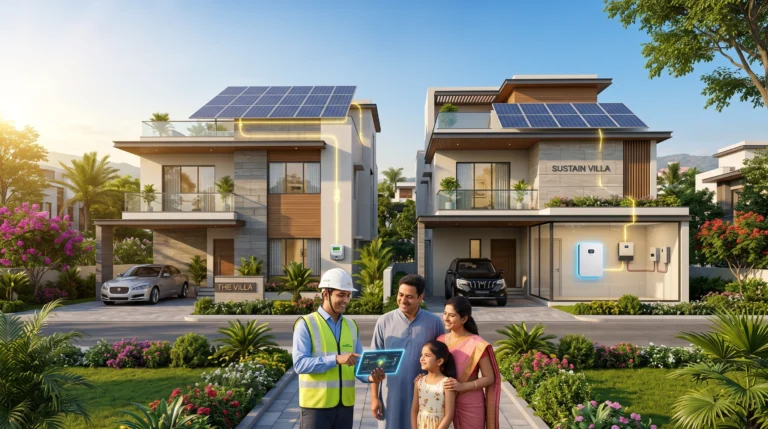
Choosing the right solar system is one of the most important decisions homeowners make before investing in rooftop solar. While solar panels help reduce electricity bills and promote clean energy, many Hyderabad homeowners are unsure whether they should install a traditional on-grid solar system or invest in a battery storage (hybrid) solar system.
The answer isn’t the same for everyone. Some homeowners want the lowest installation cost and maximum savings on their electricity bills, while others prioritize uninterrupted power during outages and greater energy independence. Your budget, electricity usage, frequency of power cuts, future plans, and long-term goals all play an important role in determining which system is the better choice.
Hyderabad enjoys abundant sunshine throughout the year, making it one of India’s most suitable cities for rooftop solar. Combined with increasing electricity tariffs and growing awareness of renewable energy, many families are exploring solar solutions that offer both financial savings and reliable power.
In this guide, we’ll compare Battery Storage vs On-Grid Solar in detail, explain how each system works, discuss their advantages and limitations, and help you determine which option is the best fit for your home in Hyderabad.
For most Hyderabad homeowners, an on-grid solar system is the better choice if the primary goal is to reduce electricity bills with a lower upfront investment and the local electricity supply is generally reliable.
A battery storage (hybrid) solar system is a better option for homeowners who:
The right choice depends on your:
A professional site survey helps determine which system best matches your property’s requirements.
Before comparing the two systems, it’s important to understand how each one operates.
What Is an On-Grid Solar System?
An on-grid solar system is directly connected to the utility electricity grid and is the most commonly installed rooftop solar solution for homes in Hyderabad.
Unlike hybrid systems, an on-grid system does not include battery storage.
How It Works
Key Features
Because Hyderabad generally has a stable electricity supply in many residential areas, on-grid solar remains the preferred choice for many homeowners.
What Is a Battery Storage (Hybrid) Solar System?
A battery storage solar system, also known as a hybrid solar system, combines solar panels with battery storage while remaining connected to the utility grid.
The batteries store excess electricity generated during the day so it can be used later when solar production is low or unavailable.
How It Works
Key Features
Hybrid systems are especially attractive for homeowners who experience frequent power interruptions or require uninterrupted electricity for essential appliances.
Feature | On-Grid Solar | Battery Storage (Hybrid) Solar |
Initial Investment | Lower | Higher due to battery storage |
Electricity Bill Savings | Excellent for reducing daytime grid consumption | Good savings with additional flexibility for stored energy |
Backup During Power Cuts | Generally not available | Available for supported backup loads, depending on system design |
Battery Requirement | Not required | Required |
Maintenance | Low | Moderate, with battery care and periodic checks |
System Complexity | Simpler | More advanced due to battery integration |
Space Requirement | Lower | Additional indoor/outdoor space needed for batteries |
Grid Dependence | Higher | Lower because stored energy can be used when needed |
Energy Independence | Moderate | Higher |
Scalability | Easier to expand solar capacity, subject to design | Expansion may require consideration of both panels and battery capacity |
Long-Term Maintenance | Lower | Higher because batteries have a finite service life |
Best For | Homes with reliable grid supply and a focus on reducing electricity bills | Homes requiring backup power and greater energy independence |
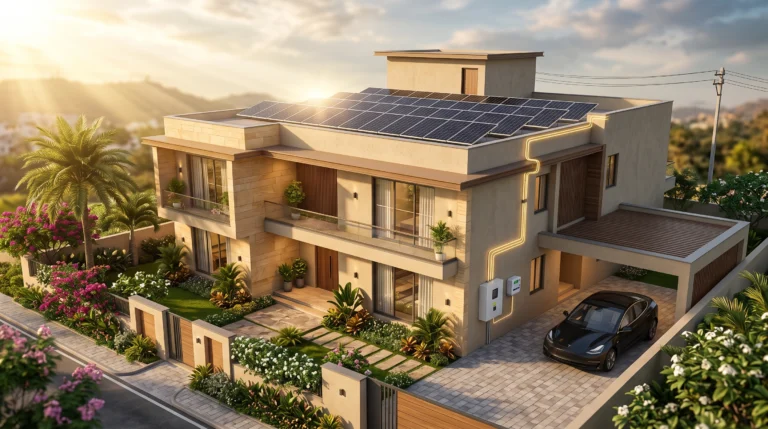
For many Hyderabad households, on-grid solar offers the best balance between affordability, efficiency, and long-term savings.
Lower Installation Cost
Without battery storage, the overall system cost is generally lower, making rooftop solar more accessible for homeowners.
Excellent Return on Investment
Since batteries are not included, a larger portion of the investment goes directly toward electricity generation, which can improve the long-term financial return for many households.
Minimal Maintenance
On-grid systems have fewer components, making them easier to maintain over their lifespan.
Routine maintenance usually includes:
Simple and Reliable Design
With fewer components than hybrid systems, on-grid solar systems are straightforward to operate and monitor.
Eligible Net Metering Benefits
Where permitted under current DISCOM regulations, surplus electricity generated by an eligible on-grid system may be exported to the utility grid through net metering, improving the utilization of the electricity your system produces.
Ideal for Urban Hyderabad Homes
For neighborhoods with a stable electricity supply, on-grid solar is often the most practical and cost-effective solution for reducing electricity bills.
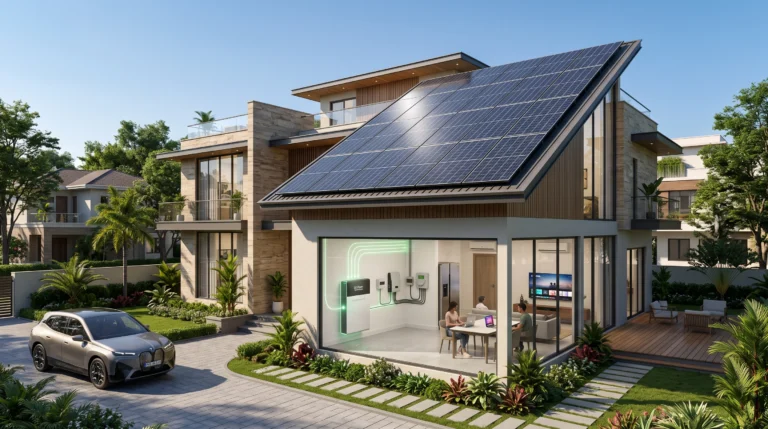
Battery storage offers additional flexibility and resilience beyond what a standard on-grid system provides.
Backup Power During Outages
One of the biggest advantages of hybrid solar is the ability to supply electricity to selected household loads during grid outages, depending on the system configuration.
This is particularly useful for:
Greater Energy Independence
By storing surplus solar energy for later use, homeowners can reduce their reliance on grid electricity, especially during the evening and at night.
Better Utilization of Solar Energy
Instead of immediately exporting all surplus electricity, hybrid systems can store part of the generated energy for later consumption.
This allows homeowners to make greater use of the electricity generated by their own solar panels.
Improved Energy Management
Modern hybrid systems intelligently manage:
This helps optimize energy consumption throughout the day.
The ideal choice depends on your property’s location, electricity usage, and lifestyle.
Independent Houses
For most independent houses with reliable grid power, on-grid solar is often the most economical choice for reducing electricity bills. If frequent power outages are a concern or backup power is essential, a hybrid system may be a better fit.
Villas
Villas typically have higher electricity consumption due to larger living spaces, multiple air conditioners, and additional appliances. Homeowners who value uninterrupted power for comfort and convenience may benefit from battery storage, while those primarily focused on savings may find an on-grid system sufficient.
Apartments
Apartment owners usually have limited roof space. Where rooftop solar is feasible—often through apartment associations for common-area loads—on-grid systems are generally the more practical solution because of their lower cost and simpler installation.
Gated Communities
Gated communities can use rooftop solar to offset electricity used in common facilities such as lifts, lighting, water pumps, and clubhouses. Depending on the community’s need for backup power, either on-grid or hybrid systems may be appropriate.
Rural Properties
Homes in areas with less reliable electricity supply may benefit from hybrid solar systems, which can provide stored energy for essential loads during grid interruptions.
Work-From-Home Families
Families working remotely often depend on uninterrupted electricity for computers, internet routers, and office equipment. A hybrid system with battery storage can help maintain productivity during power outages.
If you plan to purchase or already own an electric vehicle, it’s worth discussing future charging needs during your site survey. Depending on your charging schedule and backup requirements, either an expanded on-grid system or a hybrid system may be the most suitable option.
Factors to Consider Before Choosing
Every home has different energy needs, so the best solar solution depends on your lifestyle, electricity consumption, and future plans. Before deciding between an on-grid solar system and a battery storage (hybrid) solar system, consider the following factors.
Your Budget
Budget is one of the biggest deciding factors.
Instead of choosing the lowest-priced option, consider the overall value, long-term performance, and future energy needs.
Monthly Electricity Bills
Review your electricity bills for the past 6–12 months.
This helps determine:
A professional energy assessment ensures the recommended system matches your actual requirements.
Frequency of Power Cuts
Ask yourself:
If uninterrupted power is essential, a hybrid system with battery storage may be worth considering.
If your neighborhood has a stable electricity supply, an on-grid system is often sufficient.
Roof Space
Available rooftop area affects:
A professional site survey ensures maximum utilization of your available roof space.
Future EV Charging
If you plan to buy an electric vehicle in the coming years, your electricity consumption will likely increase.
Discuss future EV charging requirements with your installer so the system can be designed with expansion in mind.
Home Office Requirements
Many Hyderabad families now work remotely.
If uninterrupted internet, computers, and office equipment are critical, battery backup can provide additional peace of mind during power outages.
Family Size
Growing families usually consume more electricity over time.
Consider future requirements such as:
Planning ahead helps avoid expensive upgrades later.
Backup Power Needs
Consider which appliances you want operating during an outage.
Examples include:
Hybrid systems can provide backup for selected loads, depending on system design and battery capacity.
Long-Term Energy Goals
Ask yourself what matters most.
Do you want:
Your answers will help determine the most suitable solar system.
Cost Considerations
Cost should be evaluated over the entire life of the system rather than focusing only on the initial installation expense.
On-Grid Solar
Generally offers:
Battery Storage (Hybrid)
Battery storage increases the overall project cost because of:
However, homeowners who value backup power and greater energy independence may find the additional investment worthwhile.
Battery Replacement
Solar batteries have a finite service life and may eventually require replacement, depending on the battery technology, usage patterns, and manufacturer specifications.
This should be considered when evaluating the long-term ownership cost of a hybrid system.
Total Cost of Ownership
Instead of comparing installation prices alone, consider:
A quality installation often delivers better value over its lifetime than choosing the lowest initial quotation.
Myth: Battery Storage Always Saves More Money
Fact: Battery storage provides backup power and greater energy independence, but it also increases the initial investment. For many homes with reliable grid supply, an on-grid system may offer a stronger financial return.
Myth: On-Grid Solar Doesn’t Work Well
Fact: On-grid solar systems are the most commonly installed rooftop solar solution in Hyderabad because they efficiently reduce daytime grid electricity consumption and are well suited to areas with reliable electricity supply.
Myth: Hybrid Solar Eliminates Electricity Bills
Fact: Hybrid systems can significantly reduce grid electricity usage, but electricity bills still depend on energy consumption, system size, utility policies, seasonal generation, and applicable charges.
Myth: Solar Batteries Last Forever
Fact: Like all rechargeable batteries, solar batteries have a limited operational lifespan. Their longevity depends on battery chemistry, usage, maintenance, and environmental conditions.
Myth: Everyone Needs Battery Backup
Fact: Not every homeowner requires battery storage. If your area experiences very few power outages and your primary goal is reducing electricity bills, an on-grid system may be the more practical choice.
A family in Tellapur, Hyderabad, wanted to install rooftop solar for their newly constructed villa. Initially, they assumed a battery-backed system was the only suitable option.
During the Roof Rays Solar site survey, the team evaluated their electricity usage, local grid reliability, future energy plans, and budget.
Since the neighborhood experienced only occasional short-duration power interruptions, the homeowners’ main objective was reducing long-term electricity expenses rather than maintaining backup power.
Based on these findings, Roof Rays Solar recommended a 6KW on-grid solar system.
Results
This example demonstrates that the best solar solution is not always the most advanced one—it’s the one that best matches your specific needs.
It depends on your priorities. On-grid solar is generally ideal for reducing electricity bills with a lower upfront investment, while battery storage is better for homeowners who need backup power and greater energy independence.
Not necessarily. Many Hyderabad homes have reliable electricity supply, making on-grid solar a practical option. Batteries are most beneficial if frequent power outages affect your daily activities.
In many cases, yes. However, compatibility depends on the inverter, system design, and available installation space. It’s best to discuss future expansion plans before installation.
Yes. Hybrid systems generally require additional components such as batteries and battery management equipment, increasing the initial project cost.
Properly designed hybrid systems can supply backup power to selected household loads during grid outages, depending on battery capacity and system configuration.
For many homeowners with reliable grid supply, on-grid solar often offers a stronger financial return due to its lower installation cost. The best option depends on your energy needs and priorities.
Battery lifespan varies depending on battery technology, usage patterns, operating conditions, and manufacturer specifications. Your installer can provide guidance based on the battery selected.
Depending on the inverter configuration, applicable regulations, and local DISCOM policies, eligible hybrid systems may export surplus electricity after battery charging requirements are met.
Apartment associations often find on-grid solar suitable for common-area electricity needs because it is simpler and generally more cost-effective.
The best choice depends on the villa’s electricity consumption, backup power requirements, and future plans. A professional site survey helps determine whether an on-grid or hybrid system is more appropriate.
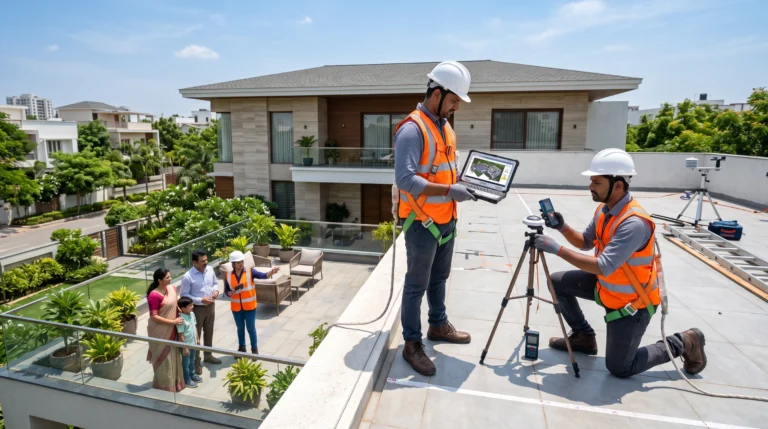
Choosing between an on-grid and battery-backed solar system requires more than comparing features—it requires expert guidance based on your property’s unique energy needs. At Roof Rays Solar, we provide honest recommendations that prioritize long-term value, performance, and customer satisfaction.
Our experts design customized solar solutions based on your electricity consumption, roof space, and future energy goals—helping you maximize savings and achieve the best possible return on investment.
Phone
Address
📍 HUDA Complex, Tellapur, Hyderabad
Contact our solar experts today for a free consultation and personalized solar savings estimate.
Book Your Free Site Survey Today
Not sure whether an on-grid solar system or a battery storage (hybrid) system is the right choice for your home? Book a free consultation and site survey with Roof Rays Solar. Our experts will assess your electricity usage, roof conditions, backup power requirements, and future energy plans to recommend the solar solution that best fits your lifestyle and budget.
There is no universal answer to the Battery Storage vs On-Grid Solar debate because the right solution depends on your home’s unique requirements. For many Hyderabad homeowners with a reliable electricity supply, an on-grid solar system offers an excellent balance of affordability, simplicity, and long-term electricity bill savings. On the other hand, battery storage (hybrid) systems are well suited to households that prioritize backup power, greater energy independence, and uninterrupted electricity for essential appliances during outages.
The best way to make the right decision is through a professional site survey and energy assessment. By evaluating your electricity consumption, roof space, budget, and future energy goals, Roof Rays Solar can help you choose a system that delivers dependable performance, long-term value, and peace of mind for years to come.
© 2025 Roof Rays Solar Solutions. All Rights Reserved. | Designed by MANI
Check whether your property qualifies for rooftop solar subsidy support.