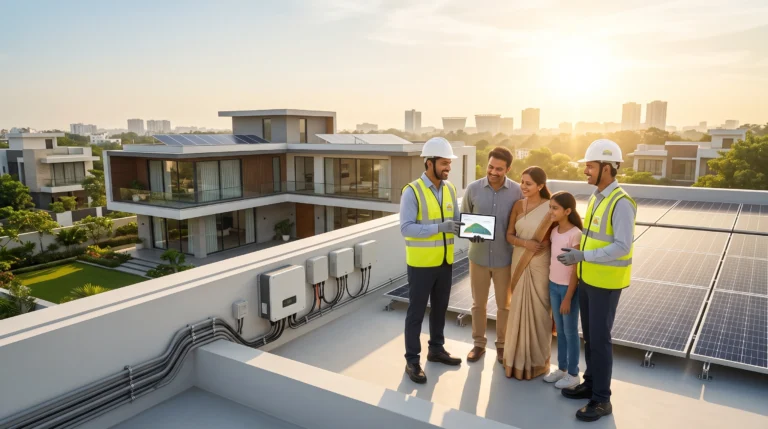
Installing a solar power system is one of the most effective ways to reduce electricity bills, increase energy independence, and invest in a cleaner future. However, achieving maximum performance depends not only on choosing quality solar panels but also on following a professional installation process.
A well-planned solar installation ensures that your system generates the highest possible electricity, operates safely, complies with local regulations, and delivers reliable performance for more than 25 years. Every stage—from the initial site survey to system commissioning—plays a crucial role in maximizing efficiency and long-term savings.
Hyderabad’s excellent solar potential, combined with increasing electricity costs and growing awareness of renewable energy, has encouraged more homeowners, businesses, factories, and commercial establishments to adopt rooftop solar. Whether you’re installing a 3KW residential system or a 500KW industrial rooftop solar plant, the installation process follows a structured approach to ensure optimal results.
This guide explains the complete solar installation process in Hyderabad, helping you understand what happens at each stage, how long the installation takes, and what you should expect from a professional solar installation company.
A solar power system is expected to generate electricity reliably for decades. Even the highest-quality solar panels can underperform if they are not installed correctly.
Professional installation ensures:
Choosing an experienced solar installation company helps protect your investment while ensuring dependable long-term performance.
Complete Solar Installation Process in Hyderabad
Every solar project follows a series of carefully planned steps. Although timelines may vary depending on system size and project complexity, the overall process remains similar for residential, commercial, and industrial installations.
Step 1: Initial Consultation
The journey begins with an initial consultation to understand your energy requirements and project goals.
During this discussion, the solar expert gathers information such as:
This helps determine whether solar is suitable for your property and identifies the most appropriate system capacity.
Step 2: Site Survey
A detailed site survey is one of the most important stages of the installation process.
The installation team visits your property to evaluate:
Accurate site measurements ensure that the system is designed for maximum energy generation.
Step 3: Electricity Consumption Analysis
The installer reviews your previous electricity bills to understand your energy usage patterns.
This analysis considers:
The goal is to recommend a system that meets your energy needs without unnecessary oversizing or undersizing.
Step 4: Rooftop Inspection & Structural Assessment
Not every roof is identical. A structural assessment ensures that the rooftop can safely support the solar installation.
Engineers inspect:
This evaluation helps determine the most suitable mounting structure and installation method.
Step 5: Customized Solar System Design
Based on the site survey and energy analysis, engineers prepare a customized solar solution.
The design typically includes:
Every design is optimized to maximize energy production while making efficient use of available roof space.
Step 6: Proposal & Quotation
After completing the technical assessment, the installation company provides a detailed proposal.
A professional quotation should include:
Transparent quotations allow customers to compare solutions based on quality and value rather than price alone.
Step 7: Government Approvals & Documentation
Depending on the type of installation and applicable regulations, certain approvals and documentation may be required before commissioning the system.
An experienced solar company can assist with:
Professional support helps simplify the documentation process and reduces delays.
Step 8: Equipment Procurement
Once the proposal is approved, the required equipment is sourced for the project.
Typical components include:
Using high-quality, genuine components improves system reliability and long-term performance.
Step 9: Mounting Structure Installation
Before installing the solar panels, the mounting structure is securely fixed to the rooftop.
The mounting system is designed to:
Proper installation of the mounting structure forms the foundation of a safe and efficient solar system.
Step 10: Solar Panel Installation
After the mounting structure is ready, technicians carefully install the solar panels according to the approved engineering layout.
During installation, attention is given to:
Accurate panel placement maximizes sunlight exposure and improves electricity generation.
Step 11: Inverter Installation
The solar inverter is installed at a suitable location with adequate ventilation and easy maintenance access.
The inverter performs the critical function of converting the DC electricity generated by the solar panels into AC electricity that can be used by your home or business.
Modern inverters also provide:
Choosing the right inverter and installing it correctly is essential for long-term system efficiency.
Step 12: Electrical Wiring & Safety Installation
The final installation stage involves connecting all electrical components while ensuring compliance with safety standards.
This includes:
Proper electrical installation protects both the solar system and your property while ensuring safe operation for many years.
Step 13: Net Metering Process
For on-grid solar systems, net metering is an important step after the installation is complete. Net metering allows your solar system to export excess electricity to the utility grid and receive credits based on the applicable regulations.
The process generally includes:
A professional solar installation company will guide you through the documentation and coordinate with the relevant authorities to help ensure a smooth process.
Note: Net metering policies and eligibility may vary over time based on government and utility regulations.
Step 14: System Testing & Commissioning
Before the solar system is handed over, engineers conduct comprehensive testing to verify that every component is functioning correctly and safely.
The commissioning process typically includes:
Only after successful testing is the system officially commissioned and made ready for daily operation.
Step 15: System Monitoring & Customer Handover
Once commissioning is complete, the installation team explains how the system works and provides guidance on monitoring its performance.
During handover, customers usually receive:
Modern solar systems often include mobile apps or web portals that allow users to monitor:
These tools help customers track energy savings and identify any issues promptly.
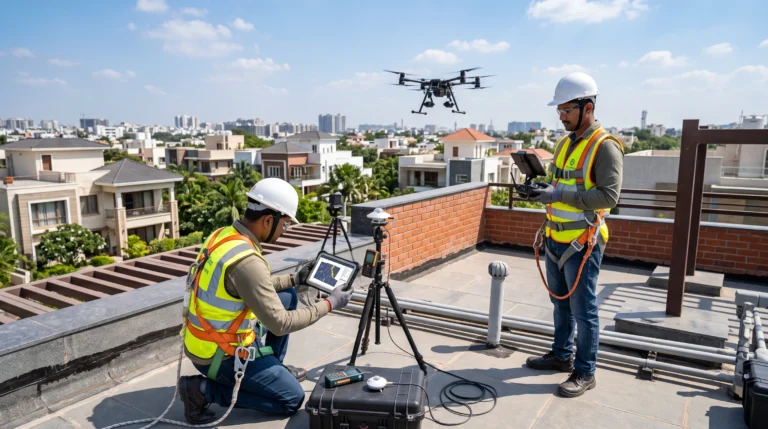
The duration of a solar installation depends on factors such as system size, roof conditions, project complexity, equipment availability, and approval timelines.
Installation Stage | Typical Duration |
Initial Consultation | 1 Day |
Site Survey | 1 Day |
System Design & Proposal | 1–3 Days |
Quotation Approval | Customer Decision |
Equipment Procurement | 3–10 Days |
Mounting Structure Installation | 1–3 Days |
Solar Panel Installation | 1–3 Days |
Electrical Wiring & Safety Checks | 1 Day |
Testing & Commissioning | 1 Day |
Net Metering & Final Approvals* | Varies |
Note: Timelines are approximate and may vary depending on project size, roof type, weather conditions, equipment availability, and utility approval processes.
Residential vs Commercial Solar Installation
Although the installation workflow is similar, residential and commercial projects differ in scale, engineering requirements, and execution.
Residential Solar Installation
Residential systems are designed to reduce household electricity bills while making efficient use of available rooftop space.
Typical Features
Suitable for:
Commercial Solar Installation
Commercial projects are generally larger and require more detailed planning.
Additional Considerations
Suitable for:
Common Solar Installation Mistakes to Avoid
A professionally installed system performs efficiently for decades. Avoid these common mistakes to protect your investment.
Choosing Price Over Quality
Selecting the lowest-priced quotation may result in lower-quality equipment, reduced efficiency, and higher maintenance costs over time.
Skipping a Detailed Site Survey
Every roof has unique characteristics. Proper measurements, shading analysis, and structural evaluation are essential for designing an efficient system.
Installing the Wrong System Size
An undersized system may not meet your electricity needs, while an oversized system can increase costs unnecessarily. System sizing should be based on actual energy consumption.
Using Low-Quality Components
The performance of a solar system depends on all components—not just the panels. Choose high-quality panels, inverters, mounting structures, cables, and safety devices.
Ignoring Maintenance Requirements
Although solar systems require minimal maintenance, periodic cleaning and inspections help maintain long-term performance and energy generation.
Choosing an Inexperienced Installer
Proper engineering, electrical safety, and workmanship are critical. An experienced installation company helps ensure reliable operation and long-term peace of mind.
What Happens After Installation?
The relationship with your solar provider should continue even after the system is operational.
A reliable solar company typically offers:
Routine maintenance helps maximize electricity generation and extends the lifespan of the system.
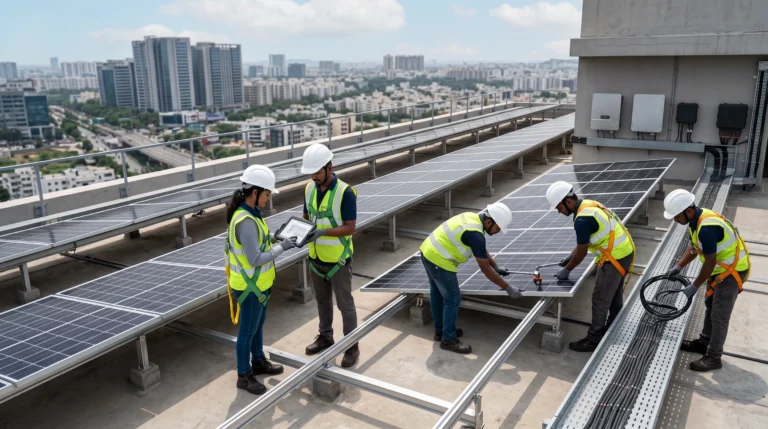
A family in Kompally, Hyderabad, wanted to reduce rising electricity bills while making better use of their rooftop space.
After a detailed site survey and energy assessment, Roof Rays Solar designed a 5KW on-grid solar system tailored to the family’s electricity consumption and roof layout.
The project included a customized system design, professional installation, safety testing, and commissioning.
Results
This example demonstrates how following a structured installation process can deliver dependable performance and long-term savings.
How long does solar installation take in Hyderabad?
Most residential solar installations are completed within a few days after equipment is available. Overall project timelines may vary depending on approvals, system size, and site conditions.
Is a site survey necessary before installation?
Yes. A site survey helps evaluate roof space, structural strength, shading, orientation, and electricity usage to design the most suitable solar system.
What happens during the site survey?
Engineers inspect the roof, measure the available area, assess structural conditions, analyze shading, and review electricity consumption to recommend the appropriate system size.
Can solar panels be installed on any roof?
Most concrete and metal roofs are suitable for solar installations. A structural assessment is performed before installation to ensure safety and compatibility.
Do I need permission before installing rooftop solar?
Depending on the system type and applicable regulations, certain approvals or documentation may be required. Your installation company can assist with the process.
What is net metering?
Net metering allows eligible on-grid solar systems to export excess electricity to the grid and receive credits according to applicable utility regulations.
How often should solar panels be cleaned?
Cleaning frequency depends on dust levels and local environmental conditions. Periodic cleaning helps maintain optimal energy generation.
Does Roof Rays Solar provide complete installation services?
Yes. Roof Rays Solar offers end-to-end solutions, including consultation, site survey, system design, equipment supply, professional installation, commissioning, and after-sales support.
A successful solar project begins with expert planning and ends with reliable long-term performance. At Roof Rays Solar, we deliver end-to-end solar installation services designed to maximize energy generation, safety, and customer satisfaction.
Our experts design customized solar solutions based on your electricity consumption, roof space, and future energy goals—helping you maximize savings and achieve the best possible return on investment.
Phone
Address
📍 HUDA Complex, Tellapur, Hyderabad
Contact our solar experts today for a free consultation and personalized solar savings estimate.
Book Your Free Site Survey Today
Planning a solar installation in Hyderabad? Contact Roof Rays Solar today to schedule a free site survey and expert consultation. Our team will evaluate your roof, analyze your electricity usage, recommend the ideal solar system, and provide a customized solution designed for long-term savings and reliable performance.
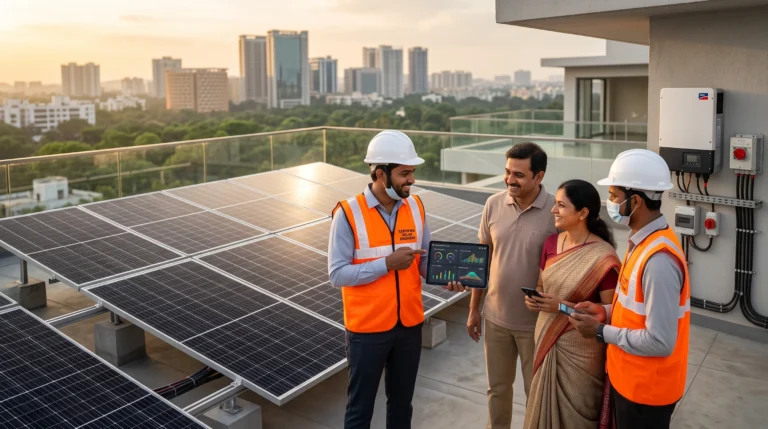
Installing a solar power system is a step-by-step process that requires careful planning, professional engineering, quality equipment, and expert installation. From the initial site survey and customized system design to testing, commissioning, and ongoing support, every stage contributes to the efficiency and longevity of your solar investment.
Whether you’re installing solar for your home, office, commercial building, warehouse, or industrial facility, partnering with an experienced installer helps ensure safe operation, optimal energy generation, and maximum return on investment. Roof Rays Solar proudly serves customers across Hyderabad and Telangana with complete solar installation solutions, delivering dependable clean energy systems backed by expert guidance and long-term customer support.
© 2025 Roof Rays Solar Solutions. All Rights Reserved. | Designed by MANI
Check whether your property qualifies for rooftop solar subsidy support.
