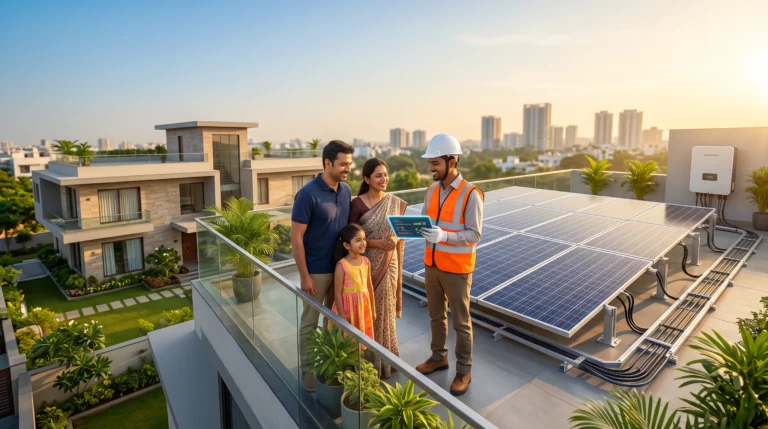
If you’re planning to switch to solar energy, one of the first questions you’ll likely ask is, “What is the solar panel price in Hyderabad?” Understanding the overall cost is essential before making an investment, whether you’re installing solar panels for your home, apartment, office, commercial building, or industrial facility.
The total price of a solar power system depends on several factors, including the required system capacity, the type of solar installation (on-grid, off-grid, or hybrid), panel quality, inverter technology, roof conditions, and government subsidy eligibility. While the initial investment may seem significant, a well-designed solar system can substantially reduce electricity bills and deliver long-term savings.
Hyderabad has become one of India’s leading cities for rooftop solar adoption due to abundant sunlight, increasing electricity tariffs, and supportive government initiatives. Choosing the right system size and working with experienced solar professionals ensures better performance, higher return on investment (ROI), and reliable energy generation for decades.
In this guide, you’ll learn about the latest solar panel prices in Hyderabad (2026), installation costs, system-wise pricing, and the key factors that influence the overall investment.
There isn’t a fixed price for every solar installation. The cost varies because every property has different energy requirements, roof conditions, and system configurations.
Several factors influence the final price, including:
Rather than selecting the lowest quotation, homeowners and businesses should evaluate the overall system quality, warranty, and expected long-term performance.
Solar Panel Price in Hyderabad (2026)
The price of a solar power system generally increases with system capacity. Larger systems produce more electricity and require additional panels, inverters, mounting structures, and installation work.
Estimated Solar System Price in Hyderabad
Solar System Size | Estimated Price Range* | Suitable For |
1KW | ₹55,000 – ₹80,000 | Small homes |
2KW | ₹95,000 – ₹1,35,000 | Small families |
3KW | ₹1,45,000 – ₹2,10,000 | 2–3 BHK homes |
5KW | ₹2,30,000 – ₹3,50,000 | Large homes & villas |
8KW | ₹3,80,000 – ₹5,60,000 | Commercial properties |
10KW | ₹4,80,000 – ₹7,20,000 | Large businesses |
Note: Prices are approximate and may vary depending on component selection, installation requirements, roof conditions, and applicable government incentives.
Solar System Price by Installation Type
Selecting the right type of solar system is just as important as choosing the correct capacity.
System Type | Estimated Investment | Best For |
On-Grid | Lower | Homes with reliable electricity supply |
Off-Grid | Higher | Areas with frequent power outages |
Hybrid | Highest | Homes requiring battery backup and uninterrupted power |
On-Grid Solar System
An on-grid solar system is directly connected to the electricity grid. It is the most popular choice for urban homeowners because it offers lower installation costs and allows excess electricity to be exported through net metering, subject to local utility regulations.
Off-Grid Solar System
Off-grid systems include battery storage, enabling electricity usage during grid failures. They are ideal for locations with unreliable power supply but require a higher initial investment due to battery costs.
Hybrid Solar System
Hybrid systems combine the benefits of both on-grid connectivity and battery backup. They provide greater energy independence and uninterrupted power during outages while also supporting grid interaction where applicable.
Residential, Commercial & Industrial Solar Panel Prices
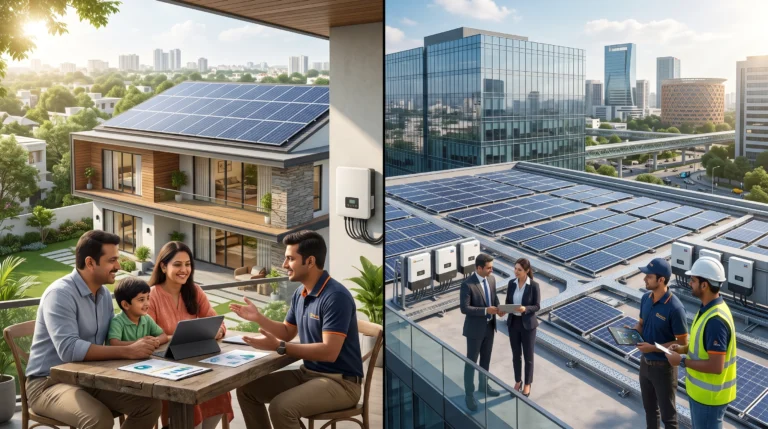
Different property types have different electricity requirements, resulting in different system sizes and installation costs.
Residential Solar
Residential solar systems are designed to reduce household electricity bills and are available in capacities ranging from 1KW to 10KW, depending on monthly energy consumption.
Typical residential applications include:
Commercial Solar
Commercial solar systems help businesses lower operating costs by generating electricity during working hours when energy demand is highest.
Common commercial applications include:
Industrial Solar
Industrial solar installations are generally much larger and are designed to support manufacturing facilities and high-energy operations.
Applications include:
Professional energy assessments help determine the ideal system size based on current and future electricity consumption.
Solar Installation Cost Breakdown
The total cost of a solar project includes much more than just the solar panels. Understanding each component helps property owners compare quotations more effectively.
Typical Cost Components
Component | Purpose |
Solar Panels | Generate electricity from sunlight |
Solar Inverter | Converts DC electricity into usable AC power |
Mounting Structure | Supports panels securely on the rooftop |
DC & AC Wiring | Electrical connectivity |
Safety Devices | System protection and compliance |
Installation Charges | Professional installation and commissioning |
Net Metering Assistance | Utility documentation and approval support |
Additional costs may apply depending on roof design, structural modifications, cable length, or special mounting requirements.
A comprehensive quotation should include equipment specifications, warranty details, installation scope, and after-sales support.
Factors That Affect Solar Panel Prices
Every solar installation is unique. The following factors have the greatest impact on the final project cost.
Larger systems require more solar panels, larger inverters, additional mounting structures, and higher installation effort, increasing the total investment.
Premium solar panels generally offer:
The inverter is one of the most important components of a solar system. Choosing a high-quality inverter improves energy conversion efficiency, monitoring capabilities, and system reliability.
Installation costs can vary based on:
Factors such as shading, cable routing, mounting design, and electrical integration may influence the overall project cost.
Eligible residential consumers may benefit from applicable rooftop solar subsidy schemes, helping reduce the effective upfront investment.
Government Subsidy & Net Metering
Investing in rooftop solar becomes even more attractive when you combine long-term electricity savings with available government incentives. Residential homeowners who meet the eligibility criteria may benefit from rooftop solar subsidy schemes, reducing the initial installation cost.
Government Subsidy
The Government of India promotes residential rooftop solar through initiatives such as the PM Surya Ghar: Muft Bijli Yojana. The subsidy amount depends on the approved system capacity and the latest government guidelines.
Benefits of Installing a Subsidized Solar System
Before applying, homeowners should verify the latest eligibility criteria, documentation requirements, and approved installation process, as government policies may be updated periodically.
Net Metering
Net metering allows eligible on-grid solar system owners to export surplus electricity generated during the day to the electricity grid. The exported energy is adjusted against the electricity consumed from the grid, helping reduce monthly electricity bills.
Advantages of Net Metering
Electricity Bill Savings & Return on Investment (ROI)
One of the primary reasons homeowners and businesses choose solar energy is the opportunity to reduce long-term electricity expenses.
Although actual savings depend on system size, electricity consumption, local tariffs, weather conditions, and energy usage patterns, a properly designed solar system can significantly offset monthly electricity bills.
Estimated Savings by System Size
Solar System | Typical Monthly Consumption | Ideal For |
1KW | Up to 150 Units | Small homes |
2KW | 150–300 Units | Small families |
3KW | 300–450 Units | 2–3 BHK homes |
5KW | 500–700 Units | Large homes |
8KW | 700–1,000 Units | Commercial buildings |
10KW+ | 1,000+ Units | Large commercial & industrial facilities |
Long-Term Financial Benefits
For most property owners, solar is a long-term investment that continues generating savings for decades.
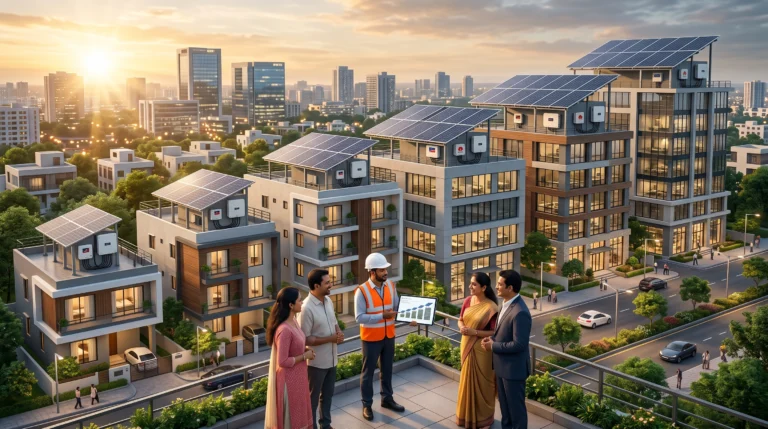
Selecting the correct system size is essential for achieving maximum savings and efficient energy generation. Installing a system that is too small may not meet your electricity requirements, while an oversized system can increase the initial investment unnecessarily.
General Recommendation
Monthly Electricity Consumption | Recommended Solar System |
Up to 150 Units | 1KW |
150–300 Units | 2KW |
300–450 Units | 3KW |
500–700 Units | 5KW |
700–1,000 Units | 8KW |
Above 1,000 Units | 10KW+ |
When selecting a system, also consider:
A professional energy assessment ensures your system is appropriately sized for both current and future needs.
Common Mistakes to Avoid
Installing a solar system is a long-term investment. Avoiding these common mistakes can improve performance, reliability, and financial returns.
Choosing Price Over Quality
The lowest quotation isn’t always the best value. High-quality panels, reliable inverters, and professional installation often deliver better long-term performance.
Ignoring Future Electricity Needs
Many households increase their electricity usage over time by adding new appliances or electric vehicles. Planning ahead can reduce the need for costly upgrades later.
Not Assessing Roof Conditions
A detailed roof inspection helps identify shading, structural limitations, and the most suitable panel layout before installation.
Selecting an Incorrect System Size
A properly sized system based on actual electricity consumption maximizes savings and improves return on investment.
Example: Solar Installation for a Hyderabad Home
Consider a homeowner in Kondapur, Hyderabad with the following energy requirements:
Recommended Solution
Expected Benefits
Actual results vary depending on electricity usage patterns, roof orientation, weather conditions, and applicable utility regulations.
What is the average solar panel price in Hyderabad?
The total cost depends on the system size, installation type, component quality, and project requirements. Smaller residential systems are more affordable than large commercial installations.
Which solar system is best for homes?
For most urban homes with reliable electricity supply, an on-grid solar system is generally the preferred option due to its lower installation cost and compatibility with net metering.
How many years do solar panels last?
High-quality solar panels typically have a performance life of 25 years or more, while inverters may require replacement depending on the model and usage.
Is government subsidy available?
Eligible residential rooftop solar installations may qualify for financial assistance under applicable government schemes, subject to current eligibility criteria.
Can solar panels reduce my electricity bill?
Yes. A properly sized solar system can significantly reduce dependence on grid electricity, leading to substantial long-term savings.
How much roof space is required?
The required roof space depends on the system capacity and panel efficiency. Higher-capacity systems require more installation area.
Can I expand my solar system later?
Yes. Many solar systems can be expanded later if the inverter capacity, electrical design, and available roof space permit future additions.
Which is better: On-Grid, Off-Grid, or Hybrid?
The right choice depends on your electricity usage, power backup requirements, and budget. An experienced solar installer can recommend the most suitable option after assessing your property.
At Roof Rays Solar, we understand that every property has unique energy requirements. Instead of offering standard packages, we design customized solar solutions based on your electricity consumption, roof space, and future energy goals.
Our experts design customized solar solutions based on your electricity consumption, roof space, and future energy goals—helping you maximize savings and achieve the best possible return on investment.
Phone
Address
📍 HUDA Complex, Tellapur, Hyderabad
Contact our solar experts today for a free consultation and personalized solar savings estimate.
Planning to install solar for your independent house in Hyderabad? Contact Roof Rays Solar today to schedule a free site survey and receive a customized solar proposal designed for your home’s energy requirements, roof space, and budget.
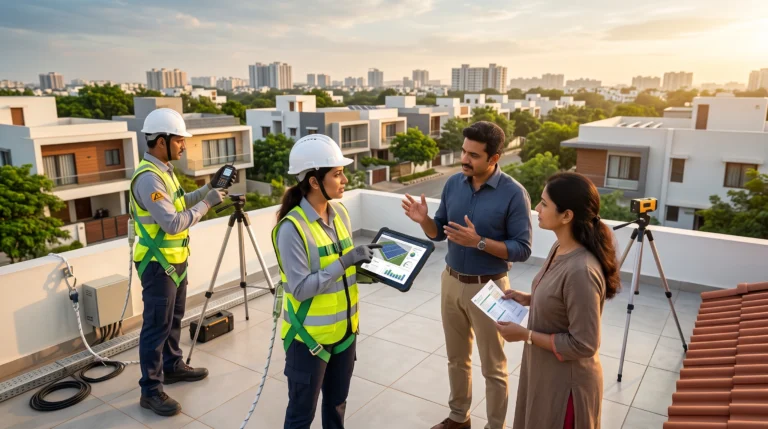
Installing solar for independent houses in Hyderabad is a smart long-term investment that helps reduce electricity bills, increase energy independence, and enhance the value of your property. With abundant sunlight, available government incentives, and modern solar technology, homeowners can enjoy reliable, clean energy for decades.
By choosing the right system size, understanding installation costs, and working with an experienced solar installation partner, you can maximize the performance and return on your investment. Roof Rays Solar is committed to delivering customized rooftop solar solutions with expert guidance, premium-quality components, and professional installation services across Hyderabad and Telangana.
© 2025 Roof Rays Solar Solutions. All Rights Reserved. | Designed by MANI
Check whether your property qualifies for rooftop solar subsidy support.
