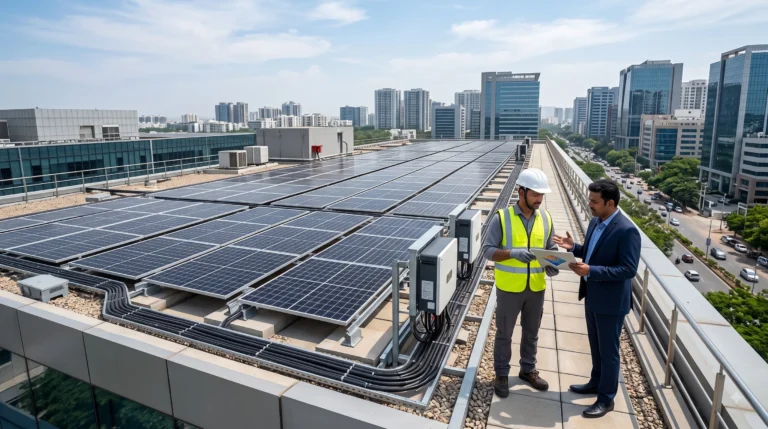
Madhapur is one of Hyderabad’s major business and technology hubs, with offices, commercial buildings, retail establishments, restaurants, clinics, and other businesses operating with substantial electricity requirements. For these properties, rooftop solar can provide an opportunity to generate electricity on-site and reduce dependence on conventional grid power.
However, choosing solar installation in Madhapur requires more than selecting panels and comparing quotations. A commercial solar system should be planned around the property’s electricity consumption, daytime load, available rooftop area, shading, electrical infrastructure, future expansion, and operational requirements.
For offices that use electricity primarily during working hours, daytime solar generation can be particularly relevant. Businesses can also evaluate whether an on-grid system meets their needs or whether battery storage is justified for backup requirements.
This guide explains the key considerations for businesses and offices planning rooftop solar in Madhapur, from electricity bill analysis and system selection to site assessment, installation, cost factors, and professional installation.
Before installing rooftop solar, a business should evaluate:
For a business with reliable grid electricity and significant daytime consumption, an on-grid solar system may be a practical option. Businesses requiring backup power can consider a hybrid system with battery storage.
A professional site survey and electricity consumption analysis should be completed before selecting the final system.
Key Takeaways
Compare equipment, installation quality, warranties, project scope, and after-sales service—not simply the lowest quotation.
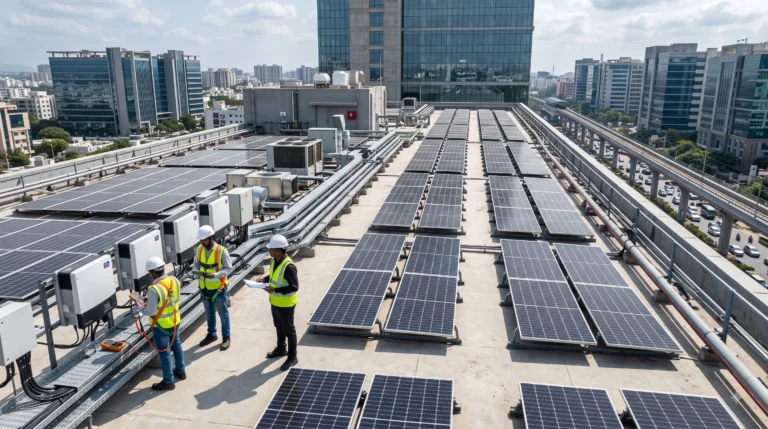
Reduce Dependence on Grid Electricity
Solar panels generate electricity during daylight hours. A business can use this generated electricity for its operations, potentially reducing the amount of electricity it needs to purchase from the grid.
The actual reduction depends on system capacity, solar generation, electricity consumption, and applicable utility arrangements.
Manage Long-Term Energy Costs
Electricity is a significant operating expense for many commercial properties. Rooftop solar can help businesses generate part of their electricity requirement themselves and potentially improve long-term energy cost management.
Actual financial benefits depend on the property’s consumption, tariff structure, solar generation, system cost, and applicable regulations.
Make Productive Use of Commercial Rooftops
Suitable commercial rooftops can be used for solar generation rather than remaining unused.
Before installation, the roof should be assessed for:
Prepare for Future Energy Requirements
Business electricity consumption can change as operations expand.
Future loads may include:
Including foreseeable requirements during initial planning can help create a more suitable solar system.
Commercial Solar Solutions for Madhapur Offices & Businesses
Different commercial properties have different electricity consumption patterns. A solar system should therefore be designed around the specific property’s requirements.
IT and Corporate Offices
Offices can have substantial daytime electricity demand from:
Because many offices operate during daylight hours, their consumption pattern can be an important consideration during solar system design.
Co-Working Spaces
Co-working facilities can have changing occupancy and electricity demand. Historical electricity consumption and operating schedules should be analyzed before determining the solar capacity.
Retail Establishments
Retail stores can consider rooftop solar based on their operating hours, electricity consumption, roof availability, and electrical infrastructure.
Restaurants and Hospitality Properties
Air conditioning, refrigeration, kitchen equipment, lighting, and other loads can contribute significantly to electricity consumption. A detailed energy assessment can help determine whether rooftop solar is suitable.
Clinics and Other Commercial Facilities
Clinics, educational facilities, and other businesses can evaluate rooftop solar based on their electricity requirements, operating schedules, available roof space, and applicable regulations.
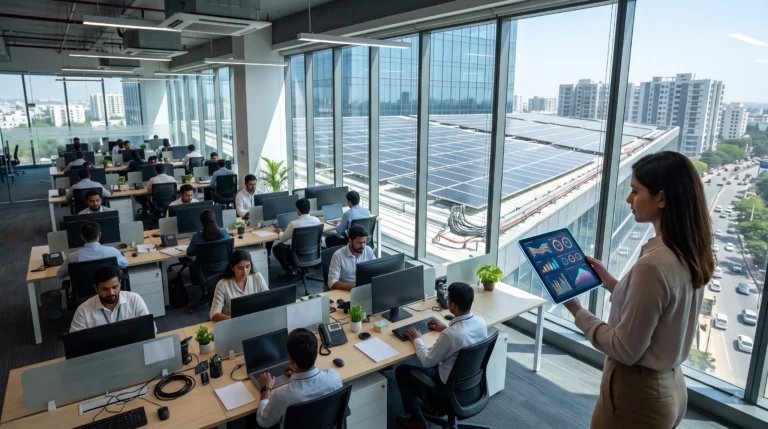
Why Daytime Consumption Matters for Businesses
One of the most important factors in commercial solar planning is when the business uses electricity.
Solar panels generate electricity during daylight hours. An office operating primarily during the day may therefore be able to directly consume a significant portion of its solar generation.
Direct Solar Consumption
When solar electricity is generated and consumed by the business at the same time, it can reduce the amount of electricity that would otherwise need to come from the grid.
Operating Hours Matter
The installer should understand:
This information helps provide a more realistic assessment of how the solar system may interact with the business’s electricity consumption.
Don’t Assume Every Business Has the Same Solar Requirement
Two offices with similar floor areas can have very different electricity consumption.
For example, electricity demand can vary because of:
Therefore, system sizing should be based on actual consumption rather than office size alone.
How to Determine the Right Solar Capacity
The right commercial solar system is not necessarily the largest system that can fit on the roof.
Review 12 Months of Electricity Bills
Historical bills provide information about:
The kWh/unit consumption is particularly useful when evaluating solar requirements.
Analyze Daytime Load
Determine how much electricity the business consumes while the solar system is generating.
This is especially important for offices and businesses operating primarily during daylight hours.
Assess Available Roof Area
The site survey should identify usable space while accounting for:
Consider Future Business Expansion
If the business plans to add equipment, expand operations, or introduce EV charging, those requirements should be discussed before finalizing the system.
On-Grid vs Hybrid Solar for Madhapur Businesses
On-Grid Solar
An on-grid solar system operates alongside the electricity grid and generally does not require battery storage.
It can be suitable for businesses primarily looking for:
Where eligible, surplus electricity may be exported to the grid under applicable net-metering or other utility arrangements. The current rules and approval process should be verified for the specific property.
Hybrid Solar
A hybrid system combines solar generation with battery storage and grid connectivity.
It can be considered when a business requires:
Battery storage increases the initial investment and requires consideration of capacity, usable storage, expected lifecycle, maintenance, and future replacement.
Commercial Solar Installation Process in Madhapur
A professional solar installation in Madhapur generally follows these stages:
Understand the business’s electricity requirements, operating pattern, budget, and objectives.
Review historical consumption and identify seasonal and operational patterns.
Assess roof space, shading, structure, access, and electrical infrastructure.
Understand the property’s current and anticipated electricity requirements.
Develop a solar design based on consumption, roof conditions, and project objectives.
Provide equipment specifications, project scope, pricing, and relevant details.
Complete applicable utility procedures and documentation based on current requirements.
Install mounting structures, panels, inverter, electrical protection, wiring, and related components according to applicable standards and manufacturer guidelines.
Verify system operation and complete required testing before commissioning.
Explain system operation, monitoring, warranty documentation, maintenance, and after-sales support.
What Affects Commercial Solar Installation Cost in Madhapur?
There is no single fixed price for every commercial solar project. The final cost depends on the property’s electricity requirements, roof conditions, equipment specifications, and installation complexity.
System Capacity
Larger systems require more panels, a suitably sized inverter, mounting structures, cables, and installation work.
Solar Panels
Panel technology, efficiency, manufacturer, warranty, and specifications can influence the project cost.
Inverter
Inverter capacity, technology, efficiency, monitoring features, and manufacturer affect the overall system cost.
Mounting Structure
The structure must suit the commercial property’s roof and installation conditions. Material quality and design can affect the final quotation.
Roof & Electrical Conditions
Difficult roof access, multiple roof levels, shading obstacles, cable-routing requirements, or additional electrical work can increase installation complexity.
Battery Storage
Hybrid systems require batteries, which add to the initial investment and introduce additional lifecycle considerations.
Important: A reliable quotation should be prepared after a site assessment rather than relying on a generic online price.
Benefits of Professional Commercial Solar Installation
Professional installation is important for safety, system performance, and long-term reliability.
Correct System Sizing
Electricity consumption, daytime load, roof space, and future requirements are considered before recommending capacity.
Better Rooftop Utilization
A properly planned layout makes efficient use of available space while maintaining suitable access for inspection and maintenance.
Safe Electrical Work
Correct wiring, electrical protection, earthing, isolation, and equipment installation are essential for safe solar operation.
Proper Panel Positioning
Panel placement should account for roof orientation, shading, structural conditions, and the overall rooftop layout.
Quality Cable Management
Proper cable routing and protection help reduce unnecessary physical and environmental stress on the electrical system.
Manufacturer-Compliant Installation
Following manufacturer installation requirements supports reliable operation and applicable warranty conditions.
Professional Commissioning
Testing the complete system before handover helps verify that the installed components are functioning correctly.
Expert Tips for Madhapur Businesses
Annual consumption gives a better picture of the business’s energy requirements than one month’s bill.
For offices, understanding how much electricity is used during working hours is particularly important.
System sizing should consider units consumed in kWh, not simply the rupee amount payable.
Nearby buildings, water tanks, equipment, parapet walls, and other structures can affect solar generation.
If company vehicles or employee EV charging facilities are planned, discuss the additional load during the initial solar design.
Check panel specifications, inverter, mounting structure, installation scope, warranties, documentation, and after-sales support—not just the total price.
Net-metering and grid-connection procedures depend on applicable regulations and utility requirements. Confirm the current process before installation.
Lower upfront cost does not necessarily mean better long-term value. Equipment quality and installation workmanship are equally important.
At-a-Glance Summary
Requirement | What to Consider |
Office Solar | Daytime electricity consumption |
System Size | Annual kWh + future requirements |
Rooftop | Usable area, shading and access |
On-Grid | Grid-connected solar generation |
Hybrid | Solar + battery backup |
Cost | Equipment + structure + installation + electrical work |
Installer | Experience + workmanship + warranty + support |
Illustrative Madhapur Business Scenario
Consider an office in Madhapur with substantial daytime electricity consumption from air conditioning, computers, lighting, and other office equipment.
The business initially considers installing the maximum solar capacity that can fit on its rooftop. Instead, a professional assessment reviews its 12-month electricity consumption, daytime load, usable roof area, shading, and future expansion plans.
The resulting system is designed around the business’s actual requirements rather than simply maximizing rooftop capacity.
Key Lesson
For commercial solar, understanding electricity consumption and daytime load is more important than simply installing the largest possible system.
The cost depends on system capacity, panels, inverter, mounting structure, roof conditions, electrical work, installation complexity, and battery storage if required. A site assessment is needed for an accurate quotation.
Yes. Offices with suitable rooftops can consider solar based on electricity consumption, operating hours, roof space, electrical infrastructure, and applicable requirements.
It depends on your electricity consumption, daytime load, available roof space, solar generation potential, and future energy requirements. Reviewing 12 months of electricity bills is recommended.
Solar panels generate electricity during daylight hours. Understanding how much electricity an office uses during those hours helps evaluate how much solar generation can potentially be used directly by the business.
On-grid solar may suit businesses primarily seeking rooftop generation and reduced grid electricity purchases. Hybrid solar can be considered when battery backup is an important requirement.
The previous 12 months of electricity bills are recommended to identify annual consumption and seasonal variations.
The required area depends on system capacity, panel dimensions, layout, shading, rooftop structures, and maintenance access. A professional site survey provides the most accurate assessment.
Yes. Future EV charging requirements should be discussed during the initial consultation so the additional electricity demand can be considered in system planning.
System capacity, panel and inverter specifications, mounting structure, roof condition, electrical work, installation complexity, battery storage, and project-specific requirements can all affect the final cost.
Contact Roof Rays Solar to arrange a consultation and site survey. The team can review your electricity consumption and property conditions before preparing a customized proposal.
Roof Rays Solar Solutions helps businesses and property owners across Hyderabad and Telangana plan rooftop solar around their actual electricity requirements and property conditions.
Why Customers Choose Roof Rays
Our approach is to understand the property first, recommend an appropriate system, and provide support throughout the project.
Our experts design customized solar solutions based on your electricity consumption, roof space, and future energy goals—helping you maximize savings and achieve the best possible return on investment.
Phone
Address
📍 HUDA Complex, Tellapur, Hyderabad
Contact our solar experts today for a free consultation and personalized solar savings estimate.
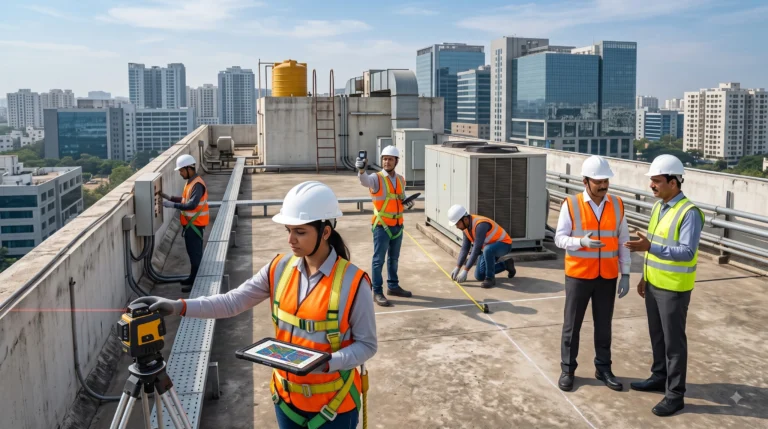
A successful solar installation in Madhapur starts with understanding the business’s actual energy requirements rather than simply choosing the largest system or lowest quotation.
Electricity consumption, daytime load, rooftop space, shading, future expansion, equipment quality, installation workmanship, applicable utility requirements, and after-sales support should all be considered before making a decision.
For offices and businesses, professionally designed rooftop solar can make productive use of available roof space while helping reduce dependence on conventional grid electricity. Roof Rays Solar Solutions provides electricity bill analysis, site assessment, customized system design, professional installation, applicable documentation guidance, and ongoing support for businesses across Madhapur, Hyderabad, and Telangana.
Book Your Free Site Survey Today
© 2025 Roof Rays Solar Solutions. All Rights Reserved. | Designed by MANI
Check whether your property qualifies for rooftop solar subsidy support.