
A rooftop solar system does not always generate exactly the same amount of electricity your home consumes.
During a sunny afternoon, your solar panels may produce more electricity than your appliances need at that moment. This creates excess solar power from home, also called surplus solar generation.
So what happens to that electricity?
For a grid-connected rooftop solar system, surplus electricity can flow to the electricity grid through the approved metering arrangement, while electricity can be imported from the grid when your home’s consumption is greater than solar generation.
In Telangana, the treatment of surplus generation depends on the applicable rooftop-solar regulations and the consumer’s approved arrangement. The Telangana Electricity Regulatory Commission’s 2025 rooftop-solar regulations provide for net-metering and other rooftop-solar arrangements, while the Southern Power Distribution Company of Telangana Limited (TGSPDCL) provides specific guidance for eligible consumers.
Understanding this process is important because solar generation, self-consumption, grid export and bill savings are not necessarily the same thing.
When your rooftop solar system generates more electricity than your home is using at that moment, the surplus can flow to the electricity grid if your system is approved and configured for grid export.
With an eligible net-metering arrangement:
Solar generation > Home consumption → surplus can be exported to the grid
Later, when:
Home consumption > Solar generation → electricity can be imported from the grid
Your bidirectional meter records electricity flowing in both directions.
TGSPDCL’s published FAQ explains that eligible consumers receive a net import/export bill, with net export credited to the consumer’s account under its stated procedures. It also states that a separate bidirectional meter is used for net metering.
Important: The exact settlement, credit and payment treatment depends on the applicable Telangana regulations and your approved connection arrangement.
Key Takeaways
The right system size should be based on electricity consumption, rooftop conditions and the applicable utility arrangement.

Excess solar power is electricity generated by your solar panels that is greater than your home’s electricity demand at that particular moment.
For example, imagine:
The difference is:
5 kW − 2 kW = 3 kW
That surplus can potentially flow to the grid if your rooftop solar system has an approved grid-export arrangement.
This does not mean your home permanently “loses” those 3 kW. The treatment depends on the metering and settlement mechanism applicable to your installation.
How Rooftop Solar Electricity Flows
A grid-connected home can experience three basic situations.
Example:
Solar = 2 kW
Home demand = 4 kW
The solar system supplies part of the demand, while approximately 2 kW must come from the grid.
Example:
Solar = 3 kW
Home demand = 3 kW
The home’s current demand can be met by the solar generation, subject to the system’s actual operation.
There may be little or no instantaneous surplus to export.
Example:
Solar = 5 kW
Home demand = 2 kW
Approximately 3 kW is surplus at that moment and can potentially flow to the grid under an approved export arrangement.
This third situation is where excess solar power from home becomes relevant.
What Is Net Metering?
Net metering is a grid-connected arrangement in which electricity imported from and exported to the grid is measured through a bidirectional meter, with the applicable billing and settlement rules determining how those quantities are accounted for.
TGSPDCL’s published solar FAQ states that eligible consumers receive a net import/export bill. It also explains that in a net-export situation, credited units can be carried forward and adjusted according to its stated procedures, with unadjusted credited units settled at specified intervals under the applicable framework.
Telangana’s regulatory framework has also been updated: TGERC lists Rooftop Solar PV Grid Interactive Systems Regulations, 2025 as Regulation No. 1 of 2025.
Because rules can change, homeowners should verify the current arrangement applicable to their electricity connection before making financial assumptions.
What Is a Bidirectional Meter?
A normal electricity meter primarily measures electricity flowing from the grid to your property.
A rooftop solar system with grid export requires measurement in both directions.
A bidirectional meter records:
TGSPDCL specifically states that an existing energy meter is replaced with a separate bidirectional meter for net metering.
This allows the utility and consumer to account for both directions of electricity flow.
Do You Get Paid for Excess Solar Electricity?
This is an important distinction.
Exporting electricity does not necessarily mean you receive the same retail electricity tariff for every unit exported.
The treatment of surplus generation depends on the applicable Telangana regulatory and utility framework.
TGSPDCL’s published FAQ describes a process where net-export credits are carried forward and unadjusted credited units are settled at specified intervals using the applicable settlement mechanism.
The 2025 TGERC rooftop-solar regulations also contain specific provisions for settlement of excess electricity in certain arrangements.
Therefore, don’t calculate your solar ROI by simply multiplying every exported unit by your household retail tariff.
Can Excess Solar Power Be Stored Instead?
Yes, battery storage provides another option.
Instead of exporting surplus electricity immediately, a hybrid solar system can use surplus solar energy to charge a battery.
Later, stored electricity can be used when:
Grid-Connected Without Battery
Solar → Home → Surplus → Grid
Hybrid With Battery
Solar → Home → Battery → Grid/export when applicable
The exact energy flow depends on system configuration and operating settings.
Battery storage can therefore change when you use your solar electricity, but it does not automatically increase the amount of electricity your panels generate.
Should You Oversize Your Solar System to Export More?
Not necessarily.
A common mistake is to assume:
More panels = more savings
The better approach is to consider:
The appropriate system size should be determined from the property’s actual energy profile rather than simply maximizing export.
Excess Solar Power and Your Electricity Bill
Solar can reduce the amount of electricity you need to purchase from the grid, but it does not necessarily eliminate every component of your electricity bill.
Your bill can depend on:
For example, Telangana’s 2025 rooftop-solar regulations specifically provide that applicable minimum charges can still apply in certain circumstances.
Therefore:
Solar generation ≠ automatic zero electricity bill.
Illustrative Hyderabad Home Example
Consider a Hyderabad home with a rooftop solar system.
At midday:
Approximately:
3 kW is surplus at that moment.
If the system is approved for grid export, that surplus can flow through the approved metering arrangement to the grid.
Later in the evening:
The home may import approximately 3 kW from the grid.
Over the billing period, the applicable metering and settlement mechanism determines how these imports and exports affect the electricity bill.
Key Lesson
The objective of rooftop solar isn’t necessarily to use every unit immediately. A grid-connected system can allow surplus daytime generation and grid electricity to work together under the applicable rules.
Solar Installation Process
A professional rooftop solar project generally includes:
TGSPDCL currently provides a dedicated Net Meter for Solar service for households and apartments through its consumer-service portal.
What Affects Solar Installation Cost?
The cost of a system depends on:
A battery can increase project cost substantially compared with a basic grid-connected system, so homeowners should first determine whether backup power is actually required.
Government Subsidy & Net Metering
Eligible residential consumers may qualify for applicable government rooftop solar financial assistance.
For Telangana homeowners, net-metering and rooftop-solar procedures should be checked against the latest applicable TGERC and DISCOM requirements because regulations and utility procedures can change. TGERC currently lists its 2025 rooftop-solar regulations, while TGSPDCL publishes consumer-facing solar net-metering guidance.
Do not use an outdated subsidy amount, export rate or settlement rule when calculating your expected savings.
Expert Tips
Look at annual consumption, not just one month’s bill.
Higher daytime consumption can increase direct solar utilization.
Export settlement depends on the applicable rules.
Confirm the applicable capacity and connection requirements before installation.
A larger system isn’t automatically a better financial decision.
EV charging, additional ACs and other appliances can change your future requirement.
Battery storage is primarily about energy shifting and backup, not increasing panel generation.
Solar may reduce energy-related charges while other applicable charges remain.
Compare projected solar generation with your annual consumption.
Confirm the latest utility and regulatory requirements before signing the project.
At-a-Glance Guide
Situation | What Happens |
Solar < Home demand | Grid supplies the balance |
Solar = Home demand | Solar can meet current demand |
Solar > Home demand | Surplus can potentially be exported |
Battery available | Surplus can also charge the battery |
Evening/night | Home may use grid or stored energy |
Net export | Treatment follows applicable settlement rules |
High solar generation | Bill may reduce, but applicable fixed/other charges can remain |

For an approved grid-connected system, surplus electricity can flow to the grid through the applicable metering arrangement. The resulting credits or settlement depend on the applicable rules.
Not necessarily. It can be consumed directly, stored in a suitable battery system, or exported to the grid under an approved arrangement.
Not necessarily at your normal retail electricity rate. Export and settlement treatment depends on the applicable Telangana regulatory and utility framework.
It is a grid-connected arrangement that measures electricity imported from and exported to the grid and applies the relevant billing and settlement mechanism.
For net metering, TGSPDCL states that a bidirectional meter is used instead of the existing energy meter.
Yes. A suitably designed hybrid solar system can store surplus electricity in batteries for later use.
Not automatically. System size should be based on consumption, roof conditions, applicable capacity rules and project economics.
Not necessarily. Your bill can still contain applicable fixed charges, minimum charges, taxes and other components.
TGSPDCL publishes net-metering provisions for eligible consumers, while TGERC regulates rooftop-solar arrangements. Eligibility and current requirements should be confirmed for the specific connection.
Roof Rays can assess your electricity consumption, system capacity, daytime load and rooftop conditions to help design a solar system suited to your requirements and applicable grid-connected arrangement.
Roof Rays Solar Solutions helps homeowners across Hyderabad and Telangana evaluate rooftop solar according to their electricity consumption and property conditions.
Why Customers Choose Roof Rays
The focus is on designing a system around actual consumption rather than simply maximizing the number of panels installed.
Our experts design customized solar solutions based on your electricity consumption, roof space, and future energy goals—helping you maximize savings and achieve the best possible return on investment.
Phone
Address
📍 HUDA Complex, Tellapur, Hyderabad
Contact our solar experts today for a free consultation and personalized solar savings estimate.
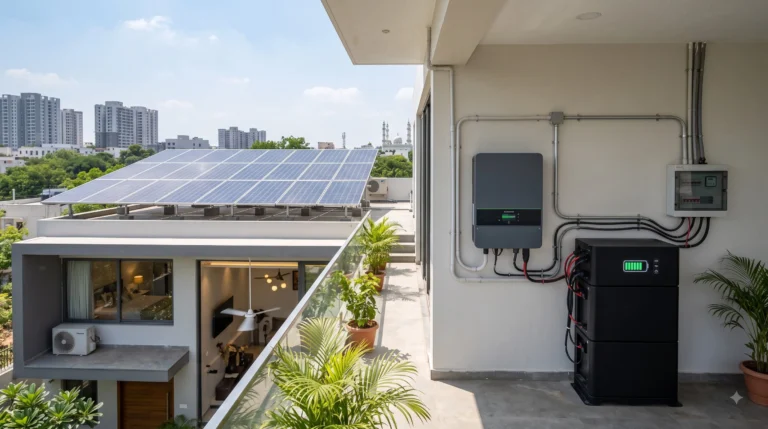
When your rooftop solar system produces more electricity than your home is using at that moment, the surplus does not necessarily have to go unused. With an approved grid-connected arrangement, excess electricity can flow to the grid and be accounted for through the applicable metering and settlement mechanism. A suitably designed battery system can provide another option by storing surplus energy for later use.
For Hyderabad homeowners, the important point is to understand that excess generation, exported electricity, credits and bill savings are different concepts. Telangana’s rooftop-solar framework and utility procedures determine how exported electricity is accounted for.
The right solar system should therefore be designed around your annual electricity consumption, daytime load, rooftop conditions, future requirements and applicable net-metering rules rather than simply maximizing panel capacity.
Roof Rays Solar Solutions can help homeowners assess these factors and design a practical rooftop solar solution for their property.
Plan your solar system around the electricity you actually use—not just the electricity your panels can generate.
Book Your Free Site Survey Today
© 2025 Roof Rays Solar Solutions. All Rights Reserved. | Designed by MANI
Check whether your property qualifies for rooftop solar subsidy support.
