
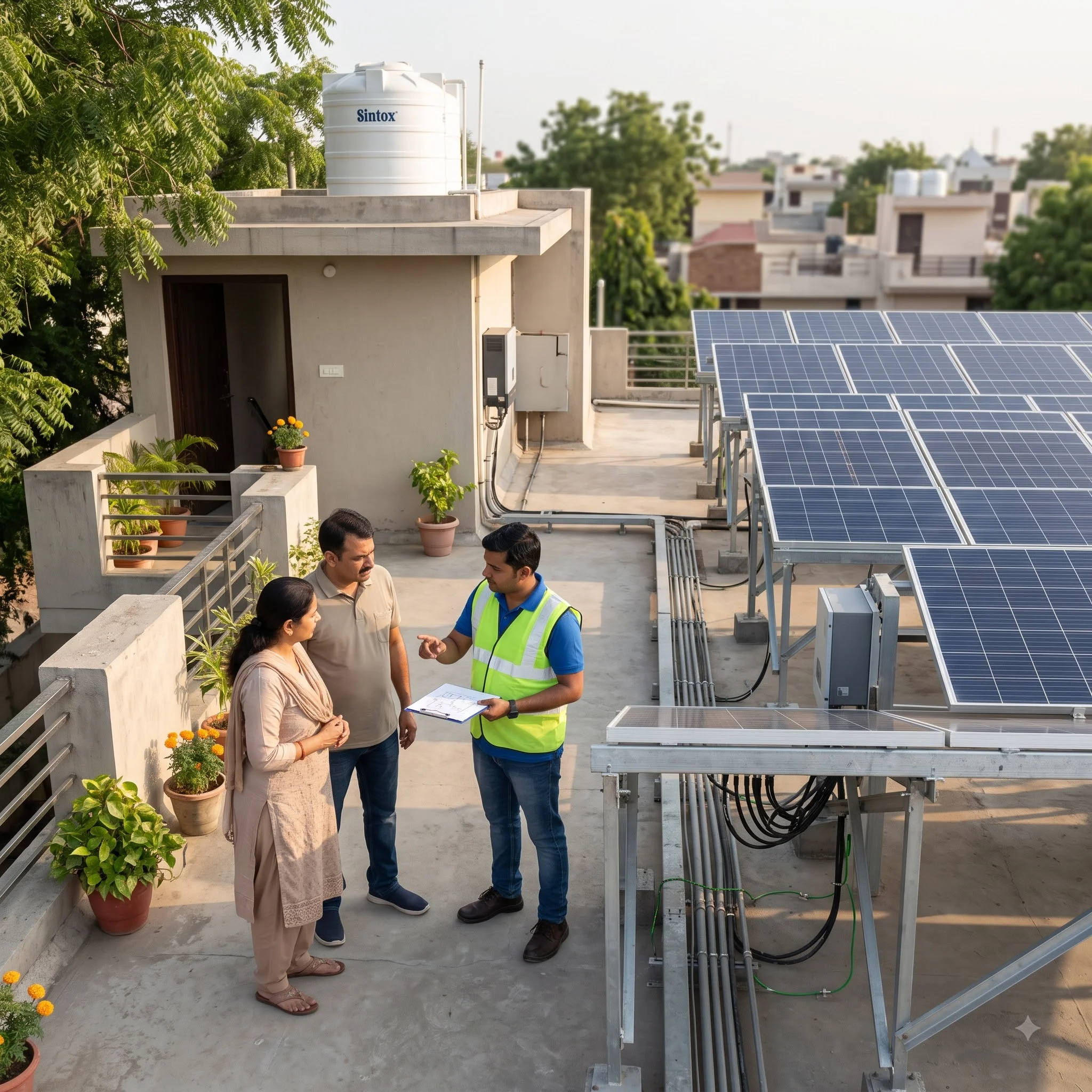
Why Are More Indian Homes Installing Rooftop Solar in 2026? 7 Reasons Behind the Solar Boom A few years ago, rooftop solar was something many homeowners considered only after receiving unusually high electricity bills. In 2026, it has become a much more visible option for households looking to manage electricity expenses and generate their own power. Government support, greater awareness, easier access to solar installers and growing interest in long-term energy savings are helping drive this change. The numbers reflect the momentum. In August 2026, the Ministry of New and Renewable Energy reported that the PM Surya Ghar: Muft Bijli Yojana had crossed 50 lakh beneficiary households, with 14.8 GW of rooftop solar capacity commissioned under the scheme at that point. <Cite refs={[“turn741126search4”]}/> But the real question is not simply why solar is becoming popular. It is why homeowners are choosing to invest in it—and whether the same reasons apply to your property. Here are seven important reasons behind the rooftop solar boom in India in 2026, along with practical considerations for homeowners. Get a Free Quote Quick Answer Rooftop solar adoption in India is growing because households are looking for lower electricity bills, government financial assistance, greater control over electricity costs, long-term savings and more sustainable energy choices. The PM Surya Ghar scheme has also made residential solar more accessible to eligible households by offering central financial assistance. However, solar is not equally beneficial for every property. Actual savings depend on electricity consumption, roof suitability, installation cost, solar generation and the applicable electricity-metering arrangement. Key Takeaways Lower electricity bills are a major motivation for residential solar adoption. Government assistance can reduce the upfront investment for eligible households. Rooftop solar allows homeowners to generate electricity at their own property. Long-term savings depend on the system’s cost, performance and household consumption. Solar can complement future needs such as EV charging. Better awareness and access to installers are helping more households evaluate solar. A suitable roof and realistic financial calculations are essential before installation. 7 Reasons Behind the Rooftop Solar Boom in India Homeowners Want to Reduce Electricity Bills For many households, the biggest reason to consider rooftop solar is straightforward: electricity is a recurring expense. Air conditioners, refrigerators, water heaters, washing machines, pumps and other appliances can contribute to substantial monthly consumption. Homes with multiple ACs or high daytime electricity use may have a particularly strong reason to evaluate solar. A rooftop solar system generates electricity from sunlight, allowing a home to use some of its own generated power instead of purchasing all its electricity from the grid. A June 2026 study by the Council on Energy, Environment and Water (CEEW) found that 81% of households interested in rooftop solar cited lower electricity bills as their primary motivation. The study also reported that surveyed adopters were generally satisfied with their bill savings. <Cite refs={[“turn741126search10”]}/> Why this matters for homeowners The potential savings depend on how much electricity your system generates and how much of that generation effectively replaces grid electricity. Before choosing a system, review your recent electricity bills and identify your average monthly consumption. This provides a better starting point than selecting a solar capacity based only on your home’s size. Practical tip: If your electricity bills are consistently high, request a solar assessment based on your actual consumption rather than relying on a generic savings estimate. Government Subsidies Have Made Residential Solar More Accessible Another important reason for increasing solar adoption in India is the PM Surya Ghar: Muft Bijli Yojana. The scheme aims to expand residential rooftop solar adoption by providing central financial assistance to eligible households. Under the commonly published central assistance structure: The first 2 kW receives assistance of ₹30,000 per kW. The additional 1 kW receives assistance of ₹18,000. The maximum central assistance for eligible systems of 3 kW or more is ₹78,000. The subsidy is subject to the scheme’s eligibility and implementation requirements. Installing a larger system does not increase the central assistance proportionally beyond the applicable 3 kW level. <Cite refs={[“turn741126search3″,”turn741126search13”]}/> How subsidy changes the decision Suppose a homeowner is comparing the upfront cost of solar with the long-term electricity savings it could deliver. If the household qualifies for assistance, the effective investment may be lower, potentially improving the payback period. However, homeowners should not assume that every installation automatically qualifies. Confirm eligibility, approved-vendor requirements and the latest application process through the official scheme portal. Official resource: PM Surya Ghar National Portal. Homeowners Are Looking at Long-Term Electricity Savings Solar is not just about reducing the next electricity bill. It is also a way to evaluate future household energy expenses. A properly designed rooftop system can generate electricity for many years. This gives homeowners an opportunity to compare an upfront investment with the potential value of the electricity generated over the system’s operating life. The financial outcome depends on several factors: Total installation cost Applicable subsidy Annual solar generation Electricity tariff Self-consumption Export compensation, where applicable Maintenance and financing costs A simple example Suppose a hypothetical household invests ₹2,50,000 after applicable assistance and estimates that its solar system will save ₹40,000 annually. Its simple payback calculation would be: [text{Payback}=frac{₹2,50,000}{₹40,000}] That gives a simple payback estimate of approximately 6.25 years. This is an illustration, not a prediction for every home. Actual savings and payback can differ because of system performance, electricity rates, maintenance, financing and metering arrangements. The important point is to evaluate solar as a long-term investment rather than judging it solely by the initial price. Homeowners Want Greater Control Over Their Electricity Supply Rooftop solar allows households to generate some of their electricity on-site. This can reduce dependence on electricity purchased from the grid, although most ordinary grid-connected systems remain connected to the utility and do not automatically provide backup during a power cut. For homeowners, the attraction is greater control over part of their electricity consumption. This may be especially relevant for: Independent houses with substantial daytime consumption Homes using several air conditioners Families with home offices Properties planning EV
Solar Panels vs Electricity Bill: What Changes After Installation?
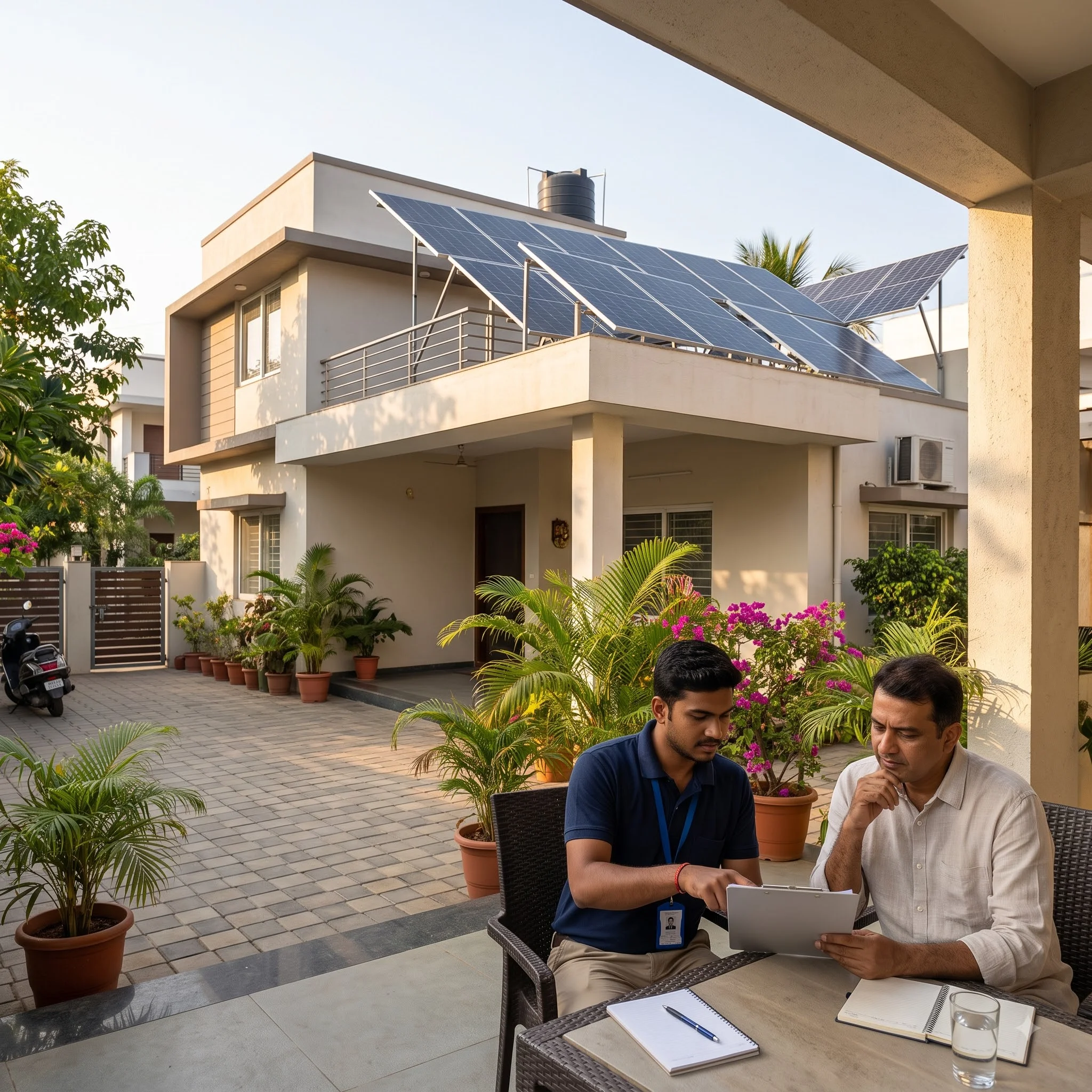
Solar Panels vs Electricity Bills: What Actually Happens After Installation? Imagine receiving an electricity bill of ₹4,000 every month. You install rooftop solar expecting your bill to drop significantly, but your next bill still shows an amount payable. Does that mean your solar panels are not working properly? Not necessarily. Understanding solar panels vs electricity bill is about more than comparing two monthly amounts. Your actual bill after installation depends on how much electricity your solar system generates, how much your household consumes during daylight hours, how much electricity you export to the grid, and the billing rules applicable to your connection. Rooftop solar can substantially reduce the electricity you purchase from your distribution company. However, the final bill may still include charges, taxes, minimum charges or the cost of electricity imported from the grid. This guide explains what changes after installation and how to evaluate your actual solar electricity bill savings. Get a Free Quote Quick Answer After installing a grid-connected rooftop solar system, your home can use solar electricity during the day and draw electricity from the grid when solar generation is insufficient. Under an approved net-metering arrangement, surplus electricity exported to the grid is accounted for according to the applicable billing rules. Your electricity bill may reduce because you purchase fewer units from the grid. However, solar installation does not automatically make every electricity bill zero. The result depends on system size, household consumption, solar generation, usage timing, metering arrangement, tariff and applicable charges. Key Takeaways Solar panels generate electricity during daylight hours, with output varying according to sunlight and system conditions. Using solar electricity directly in your home reduces the amount of grid electricity you need. Excess generation may be exported to the grid under an approved metering arrangement. Night-time usage and high-consumption periods may still require grid electricity. Electricity bills can include charges beyond the energy consumed. Comparing pre-solar and post-solar bills over several months gives a more realistic picture of savings. At-a-Glance: Solar Panels vs Electricity Bill: What Changes After Installation? How Does Your Electricity Bill Change After Solar Installation? Before solar installation, most of your household’s electricity comes from the grid. Your distribution company measures your electricity consumption and calculates the bill under the applicable tariff and billing rules. After installing a grid-connected solar system, your electricity supply can come from two sources: your rooftop solar panels and the electricity grid. Here is what changes: Before rooftop solar After rooftop solar Most electricity comes from the grid. Solar power supplies part of your electricity needs. Your bill primarily reflects grid electricity consumption and applicable charges. Your bill reflects grid imports, applicable solar-metering adjustments and other charges. Daytime appliance use relies on grid electricity. Daytime appliances can use solar electricity when it is available. There is no rooftop solar generation to offset consumption. Solar generation can reduce the amount of electricity purchased from the grid. The most important change is that your household can generate and use its own electricity rather than purchasing every unit from the grid. However, your meter configuration and approved billing arrangement determine how imported and exported electricity are recorded and settled. How Do Solar Generation and Household Consumption Work Together? Your solar system’s performance depends on the relationship between electricity generated and electricity consumed at different times of the day. During sunny daytime hours When your panels generate electricity, your home can use that power to run suitable appliances, depending on system output and household demand. For example, if your solar system generates 3 kW of power while your home is using 1.5 kW, the remaining available power may flow to the grid if the system and metering arrangement permit export. When household consumption exceeds solar generation If your home needs more electricity than the panels are producing, the shortfall can come from the grid. This can happen during cloudy weather, early mornings, late afternoons or periods of high appliance usage. At night A standard grid-connected solar system without battery storage does not generate electricity at night. Your home generally draws electricity from the grid during those hours. A battery can store some excess solar generation for later use, but the amount available depends on battery capacity, charging conditions, losses and household demand. The practical lesson: Annual solar generation alone does not tell you how much electricity you will purchase from the grid. The timing of your solar generation and energy consumption matters too. What Happens to Excess Solar Electricity? Your rooftop solar system may sometimes generate more electricity than your home immediately needs. What happens next depends on your system configuration and approved metering arrangement. Under net metering With an approved net-metering arrangement, a bidirectional meter records electricity imported from and exported to the grid. The applicable billing mechanism determines how those units are adjusted or credited. In Telangana, TGSPDCL’s published solar FAQ describes net import/export billing, carry-forward of eligible net-export units and periodic settlement of unadjusted credits under its stated process. Consumers should verify the latest applicable regulation and billing terms with their distribution company. <escape></escape> Under other metering arrangements Gross metering and other permitted arrangements may treat electricity exported from a solar system differently. Do not assume that every exported unit will offset a unit consumed later at the same retail tariff. Before installation, confirm: Which metering arrangement applies to your connection. Whether surplus units can be carried forward. How and when unused credits are settled. Which charges remain payable. Whether your system size and connection meet current eligibility requirements. For a detailed explanation, read Roof Rays’ guide to Solar Net Metering in Hyderabad. Why Do You Still Receive an Electricity Bill After Solar Installation? Receiving a bill after installation is not, by itself, evidence of a problem. Several factors can explain why an amount remains payable. You still import electricity from the grid If your home consumes more electricity than your solar system supplies at a particular time, you may import units from the grid. These imports can contribute to your bill. Solar generation
Solar Panel Prices 2026: Why Solar Quotes Differ
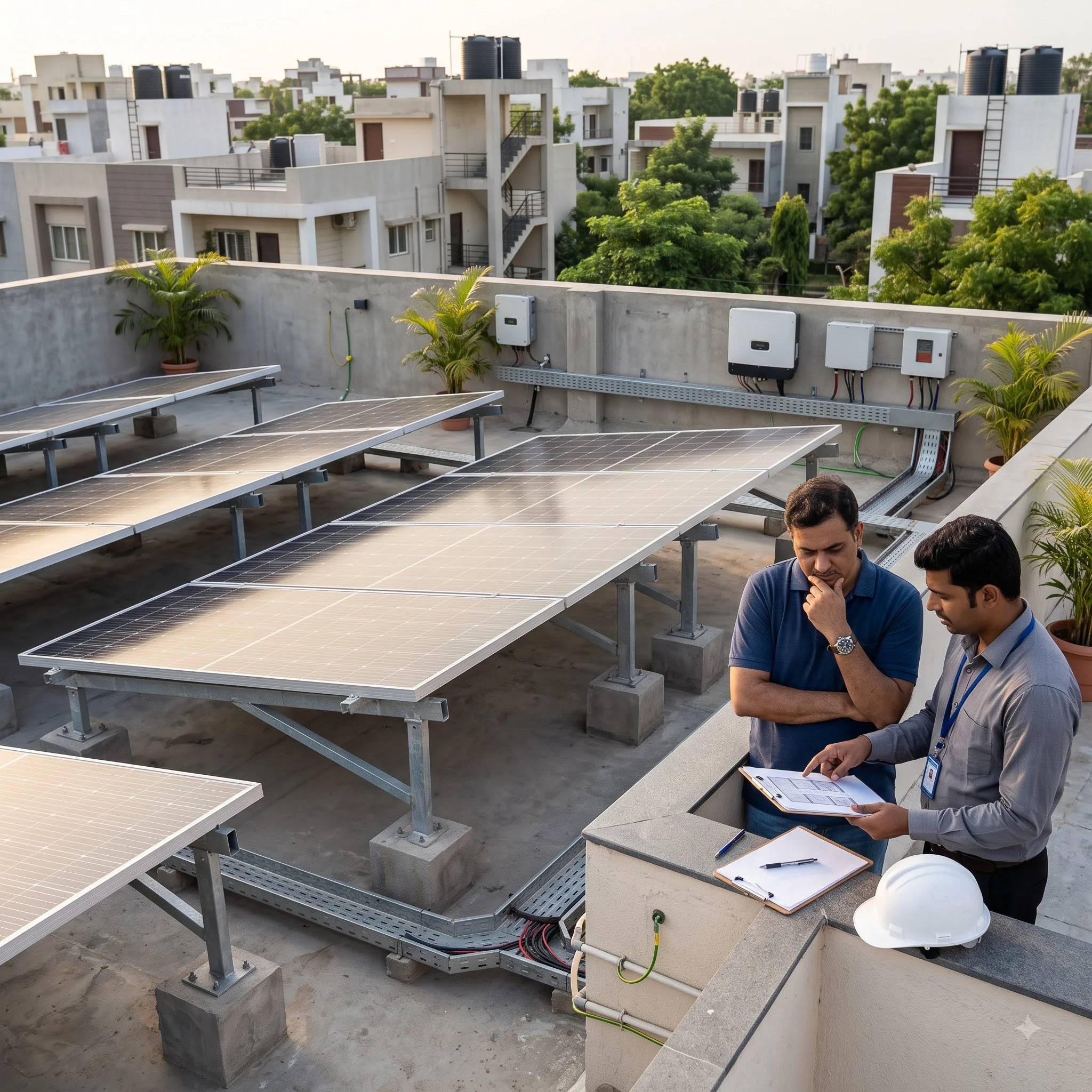
Solar Panel Prices in 2026: Why Quotes Differ So Much Between Installers Imagine asking three solar installers for a quotation for the same 5 kW rooftop solar system. One offers a significantly lower price, another quotes a moderate amount, and the third recommends a more expensive package. All three claim to provide a complete installation. Which one should you choose? The answer is not necessarily the cheapest or the most expensive. Solar panel prices in 2026 depend on more than the panels themselves. The inverter, mounting structure, electrical protection, cable requirements, installation complexity, warranties and after-sales service can all influence the final quotation. Two systems with the same advertised capacity may therefore differ considerably in equipment, installation scope and long-term ownership experience. Before deciding, you need to understand what each quotation actually includes. Get a Free Quote Quick Answer Solar installation quotes differ because installers may offer different equipment brands, component specifications, mounting structures, electrical protection, installation services and warranty support. Other factors include roof accessibility, cable distance, structural requirements, system configuration, taxes and project-specific work. To compare quotations fairly, ask every installer to quote for the same system capacity, comparable equipment specifications and clearly defined installation scope. A lower price can represent a competitive offer, but it can also reflect missing components or a narrower scope of work. The itemised quotation is what helps you determine the difference. Key Takeaways Solar panel cost is only one part of the total installation cost. The inverter, mounting structure and electrical protection can significantly affect pricing. Roof complexity and cable routing may increase installation costs. Warranty coverage and after-sales service should be compared carefully. PM Surya Ghar assistance is subject to eligibility and scheme requirements. Compare the same system specifications before judging price differences. A detailed bill of materials makes solar quotation comparison easier. At-a-Glance: What Changes a Solar Quotation? Pricing Factor Why It Matters Solar modules Brand, technology, specifications and applicable compliance requirements Inverter Capacity, features, warranty and compatibility Mounting structure Material, design and roof-specific requirements Electrical components Cables, protection devices, earthing and isolation Installation labour Roof access, complexity and project size Engineering Design, layout and site assessment Warranty and service Coverage, support and potential service costs Metering and approvals Applicable process and project-specific charges Taxes and logistics Location, transport and applicable taxes Solar Panels From Different Manufacturers Have Different Prices Solar modules are one of the most visible parts of a rooftop system, but not all modules have identical specifications. Prices can vary based on: Manufacturer and product range. Module wattage and efficiency. Cell technology. Dimensions and physical design. Product warranty. Performance warranty. Applicable quality and compliance requirements. Availability and supply arrangements. Two installers may quote the same system capacity using different module combinations. For example, one quotation may use fewer higher-wattage modules, while another uses more modules with different specifications. Both may advertise the same total kilowatt capacity, but their equipment details may not be identical. What should homeowners check? Ask for the exact module manufacturer, model, rated wattage, quantity and relevant product documentation. Also check whether the equipment meets the requirements applicable to your project, particularly if you intend to apply for government assistance or use a regulated grid-connected arrangement. Do not compare solar panel prices using wattage alone. The complete product specification matters. The Inverter Can Make a Significant Difference Solar panels generate electricity, but the inverter converts it into electricity suitable for the intended system. Different inverters can vary in capacity, features, compatibility, monitoring and warranty. A quotation may include: A conventional string inverter. An inverter with different monitoring features. Equipment designed for a particular system configuration. Additional equipment required by the proposed design. The right option depends on the property’s requirements and the system architecture. What should you ask? What is the inverter’s manufacturer and model? Is its capacity appropriate for the proposed system? What monitoring facilities are included? What warranty applies? Are any additional components required? Is the inverter suitable for the proposed electrical arrangement? An installer should explain why the selected inverter suits your system rather than simply offering the lowest-priced available model. Mounting Structures Affect the Total Solar Installation Cost The mounting structure supports the solar panels and must suit the roof. The structure required for one property may differ from that needed for another because of roof design, mounting height, wind exposure, access and installation constraints. A quotation should clearly identify the proposed mounting structure and what is included. Check: Material and specifications. Mounting method. Corrosion protection. Roof compatibility. Required supports or foundations. Installation labour. Any additional structural work. A cheaper quotation may use a different structure or exclude certain mounting-related work. That does not automatically make it inferior, but the difference should be understood before comparing prices. Electrical Protection and Cabling Can Change the Price A rooftop solar system requires more than panels and an inverter. Depending on the design, the installation may include DC and AC cables, isolation equipment, overcurrent protection, surge protection, earthing and other electrical components. The required equipment and cable quantities depend on the system design and site conditions. For example, a property with a long cable route between the rooftop and inverter location may require different materials and labour from a property with a short, straightforward route. Why this matters If one quotation includes all required electrical components and another excludes some items, comparing their headline prices is misleading. Ask the installer to specify the included components and identify any exclusions or additional charges. Electrical safety and compliance should never be compromised merely to obtain a lower quotation. Roof Conditions and Installation Complexity Matter Not every rooftop installation is equally straightforward. Two houses may both require a 5 kW system, but one may have an open, accessible terrace while the other has multiple roof levels, water tanks, shading and difficult access. These differences can affect: Panel layout and mounting design. Cable routing. Installation time. Equipment transportation. Labour requirements. Safety arrangements. Structural assessment where necessary. For this reason, a site survey is important before finalising
Is Solar Worth It in 2026? Cost, Savings & ROI Guide
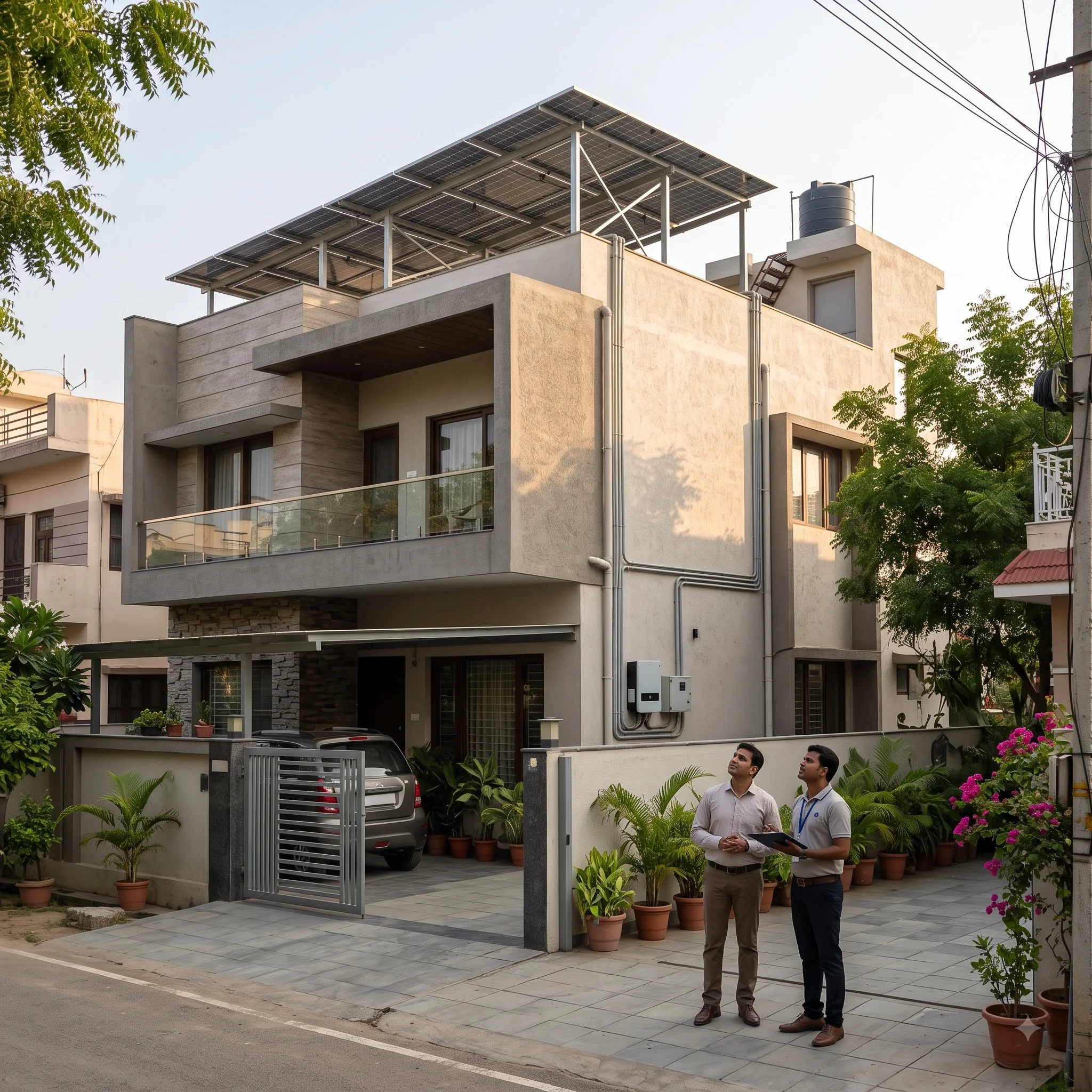
Is Solar Still Worth It in 2026? What Indian Homeowners Should Know Before Investing If you are thinking about installing rooftop solar in 2026, one question probably comes before everything else: “Will I actually save enough money to make solar worth the investment?” It is a reasonable question. Rooftop solar requires an upfront investment, and the economics vary from one home to another. The system size, installation cost, electricity consumption, roof conditions and available incentives can all change the outcome. At the same time, India’s rooftop-solar market has continued to expand. As of 31 August 2026, MNRE reported 32.59 GW of grid-connected solar rooftop capacity installed across India. The government is also continuing to support residential rooftop solar through PM Surya Ghar: Muft Bijli Yojana, which aims to support rooftop solar adoption among one crore households. So, is solar worth it in 2026? For many households, it can be—but the right answer comes from the numbers for your home, not from a generic promise of “free electricity.” Get a Free Quote Quick Answer Solar can still be a worthwhile long-term investment in 2026 if your home has suitable roof space, meaningful electricity consumption and a properly designed system at a reasonable installed cost. The strongest financial case generally comes from homes that: Have relatively high or growing electricity consumption Have a suitable shadow-free roof Can use a significant portion of solar generation Qualify for applicable residential incentives Choose a reliable system and installer Plan to use the system for many years However, solar is not automatically financially attractive for every home. A low-consumption household, heavily shaded roof or poorly priced installation can produce a very different ROI. Key Takeaways Rooftop solar remains a major part of India’s renewable-energy expansion in 2026. PM Surya Ghar continues to provide residential rooftop-solar support subject to its eligibility and implementation requirements. The maximum residential CFA under the central scheme is ₹78,000 for systems above 3 kW; additional capacity beyond 3 kW does not receive additional CFA under the cited scheme structure. Your electricity consumption matters more than simply choosing the largest system that fits on the roof. Solar ROI depends on installed cost, electricity savings, generation, tariff and system performance. A professional site assessment can be more valuable than choosing a system from a generic price list. The cheapest quotation is not necessarily the lowest long-term cost. At-a-Glance: Is Solar Worth It in 2026? Factor Why It Matters Electricity bill Higher consumption can create greater savings potential Solar system cost Determines the initial investment Subsidy Can reduce eligible residential upfront cost Roof space Determines how much solar can practically be installed Shading Can reduce generation Self-consumption Influences how much generated electricity replaces grid electricity Net-metering arrangement Can affect the value of exported electricity System quality Influences long-term performance and maintenance Future electricity use Can change the economics over time Payback period Shows how long savings may take to recover the investment Why Are Homeowners Still Considering Solar in 2026? The economics of rooftop solar are closely connected to one simple household reality: Electricity is an ongoing expense. A solar system requires a substantial payment upfront, but once installed it can generate electricity for many years. That changes the nature of the expense. Instead of treating solar only as a purchase, homeowners can evaluate it as an investment in reducing future electricity expenditure. This is why solar savings, system cost and payback period should be evaluated together. Solar Can Reduce Your Dependence on Grid Electricity A rooftop solar system generates electricity at your property. Depending on the system configuration and applicable metering arrangement, that electricity can be used by your home and, where permitted, surplus generation can be exported to the grid. The more of your generated electricity that effectively offsets electricity you would otherwise purchase, the greater the potential financial benefit. This is why understanding your consumption pattern matters. A home using substantial electricity during daylight hours may have a different savings profile from a home whose largest loads occur at night. PM Surya Ghar Changes the Upfront-Cost Equation One of the biggest factors in the solar worth it India 2026 discussion is residential financial assistance. The PM Surya Ghar scheme provides Central Financial Assistance to eligible residential consumers. Under the published scheme structure: First 2 kW: CFA based on 60% of the applicable benchmark cost Additional 1 kW: CFA based on 40% of the applicable benchmark cost Additional capacity beyond 3 kW: no additional CFA The commonly applicable maximum residential CFA is therefore ₹78,000. That does not mean every homeowner automatically receives ₹78,000. Eligibility, installation requirements, approved vendors and the applicable process must be satisfied. It also means homeowners should not assume that installing a 10 kW system produces a subsidy ten times larger than a 1 kW system. Solar ROI Depends on Your Actual Electricity Bill One of the easiest mistakes is asking: “How much does a 5 kW solar system cost?” before asking: “How much electricity does my home actually use?” Suppose two households install identical systems. Home A consumes a large amount of electricity and uses much of the solar generation. Home B consumes considerably less electricity. The financial outcome can be different even though the solar systems cost the same. That is why a meaningful solar ROI calculation should consider: Current electricity consumption Current electricity cost Solar generation estimate Self-consumption Exported energy Installed system cost Applicable subsidy Maintenance Expected system life What About Solar Payback Period? The solar payback period is the approximate time required for cumulative financial savings to recover the net investment. A simplified calculation is: Payback Period = Net Solar Investment ÷ Annual Solar-Related Savings For example, if: Net investment = ₹3,00,000 Estimated annual savings = ₹50,000 Then: ₹3,00,000 ÷ ₹50,000 = 6 years This is only a simplified illustration. Real-world payback calculations should account for changes in electricity tariffs, system degradation, maintenance, financing costs, export arrangements and actual solar generation. Therefore, a quotation promising a specific payback period should be checked against the assumptions
Elementor #3491
Solar for Apartment Residents Hyderabad: What Can Individual Homeowners Actually Install? Living in a high-rise apartment does not necessarily mean you have to miss out on rooftop solar. However, solar for apartment residents in Hyderabad works differently from solar for an independent house or villa. The biggest difference is simple: an individual flat owner usually does not have exclusive ownership of the entire rooftop. The terrace may be a common area, the available roof space may need to serve many apartments, and the building’s electrical system may involve individual flat meters as well as common-area connections. That means installing a few solar panels above your flat and connecting them directly to your electricity meter is not something an apartment owner should assume is automatically possible. Instead, apartment residents need to understand the available individual flat solar, society rooftop solar and shared-metering options before deciding what is practical. Get a Free Quote Quick Answer Living in a high-rise apartment does not necessarily mean you have to miss out on rooftop solar. However, solar for apartment residents in Hyderabad works differently from solar for an independent house or villa. The biggest difference is simple: an individual flat owner usually does not have exclusive ownership of the entire rooftop. The terrace may be a common area, the available roof space may need to serve many apartments, and the building’s electrical system may involve individual flat meters as well as common-area connections. That means installing a few solar panels above your flat and connecting them directly to your electricity meter is not something an apartment owner should assume is automatically possible. Instead, apartment residents need to understand the available individual flat solar, society rooftop solar and shared-metering options before deciding what is practical. WhatsApp Us Send Enquiry