
Imagine receiving an electricity bill of ₹4,000 every month. You install rooftop solar expecting your bill to drop significantly, but your next bill still shows an amount payable. Does that mean your solar panels are not working properly?
Not necessarily.
Understanding solar panels vs electricity bill is about more than comparing two monthly amounts. Your actual bill after installation depends on how much electricity your solar system generates, how much your household consumes during daylight hours, how much electricity you export to the grid, and the billing rules applicable to your connection.
Rooftop solar can substantially reduce the electricity you purchase from your distribution company. However, the final bill may still include charges, taxes, minimum charges or the cost of electricity imported from the grid.
This guide explains what changes after installation and how to evaluate your actual solar electricity bill savings.
After installing a grid-connected rooftop solar system, your home can use solar electricity during the day and draw electricity from the grid when solar generation is insufficient. Under an approved net-metering arrangement, surplus electricity exported to the grid is accounted for according to the applicable billing rules.
Your electricity bill may reduce because you purchase fewer units from the grid. However, solar installation does not automatically make every electricity bill zero.
The result depends on system size, household consumption, solar generation, usage timing, metering arrangement, tariff and applicable charges.
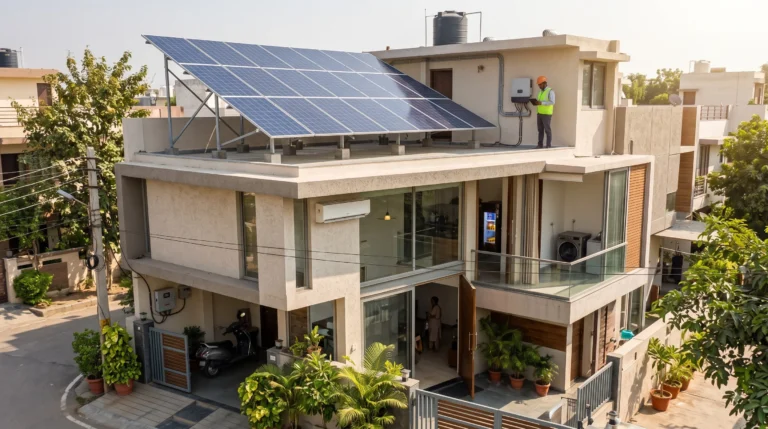
Before solar installation, most of your household’s electricity comes from the grid. Your distribution company measures your electricity consumption and calculates the bill under the applicable tariff and billing rules.
After installing a grid-connected solar system, your electricity supply can come from two sources: your rooftop solar panels and the electricity grid.
Here is what changes:
Before rooftop solar | After rooftop solar |
Most electricity comes from the grid. | Solar power supplies part of your electricity needs. |
Your bill primarily reflects grid electricity consumption and applicable charges. | Your bill reflects grid imports, applicable solar-metering adjustments and other charges. |
Daytime appliance use relies on grid electricity. | Daytime appliances can use solar electricity when it is available. |
There is no rooftop solar generation to offset consumption. | Solar generation can reduce the amount of electricity purchased from the grid. |
The most important change is that your household can generate and use its own electricity rather than purchasing every unit from the grid.
However, your meter configuration and approved billing arrangement determine how imported and exported electricity are recorded and settled.
Your solar system’s performance depends on the relationship between electricity generated and electricity consumed at different times of the day.
During sunny daytime hours
When your panels generate electricity, your home can use that power to run suitable appliances, depending on system output and household demand.
For example, if your solar system generates 3 kW of power while your home is using 1.5 kW, the remaining available power may flow to the grid if the system and metering arrangement permit export.
When household consumption exceeds solar generation
If your home needs more electricity than the panels are producing, the shortfall can come from the grid.
This can happen during cloudy weather, early mornings, late afternoons or periods of high appliance usage.
At night
A standard grid-connected solar system without battery storage does not generate electricity at night. Your home generally draws electricity from the grid during those hours.
A battery can store some excess solar generation for later use, but the amount available depends on battery capacity, charging conditions, losses and household demand.
The practical lesson: Annual solar generation alone does not tell you how much electricity you will purchase from the grid. The timing of your solar generation and energy consumption matters too.
Your rooftop solar system may sometimes generate more electricity than your home immediately needs. What happens next depends on your system configuration and approved metering arrangement.
Under net metering
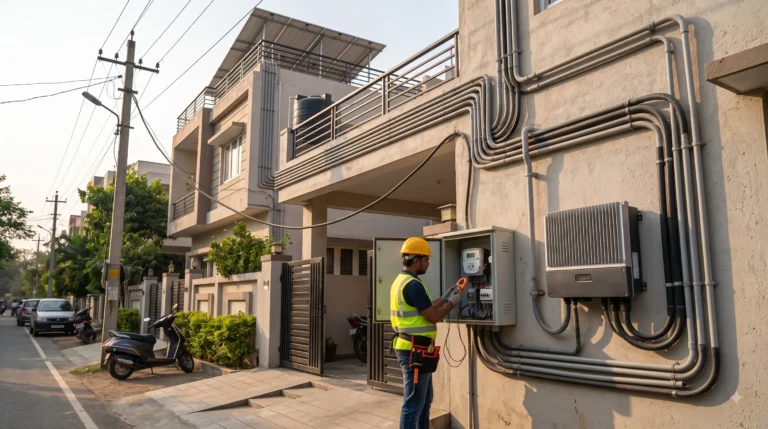
With an approved net-metering arrangement, a bidirectional meter records electricity imported from and exported to the grid. The applicable billing mechanism determines how those units are adjusted or credited.
In Telangana, TGSPDCL’s published solar FAQ describes net import/export billing, carry-forward of eligible net-export units and periodic settlement of unadjusted credits under its stated process. Consumers should verify the latest applicable regulation and billing terms with their distribution company. <escape></escape>
Under other metering arrangements
Gross metering and other permitted arrangements may treat electricity exported from a solar system differently. Do not assume that every exported unit will offset a unit consumed later at the same retail tariff.
Before installation, confirm:
For a detailed explanation, read Roof Rays’ guide to Solar Net Metering in Hyderabad.
Receiving a bill after installation is not, by itself, evidence of a problem. Several factors can explain why an amount remains payable.
If your home consumes more electricity than your solar system supplies at a particular time, you may import units from the grid. These imports can contribute to your bill.
Cloud cover, shading, dust, equipment issues, inverter downtime or other system conditions can reduce generation. Seasonal changes can also affect output.
Running additional air conditioners, water heaters, pumps or other appliances can increase household demand. If consumption grows beyond what the system can supply, grid imports may rise.
Depending on the applicable tariff and connection, bills may include fixed or customer charges, minimum charges, duties, taxes or other permitted charges. Solar generation does not necessarily eliminate these amounts.
If the bidirectional meter, solar commissioning, billing configuration or approved metering arrangement is incomplete or incorrect, your bill may not reflect the expected adjustment.
If the bill appears inconsistent, compare the meter readings with your solar monitoring data and contact your distribution company or installer for verification.
Consider a household that previously consumed 500 units of grid electricity per month. After installing rooftop solar, assume the system generates 450 units during a particular month.
The household’s final bill cannot be calculated simply by subtracting 450 from 500. Some solar electricity may be used directly, while some may be exported. The household may also import electricity at other times, and billing rules may affect the treatment of exported units.
The following scenarios demonstrate why the timing and billing arrangement matter.
Example situation | What it means for your bill |
Most solar generation is used directly at home. | Grid purchases can fall because less electricity is imported. |
A substantial amount of solar generation is exported. | Savings depend on the applicable export-credit or settlement rules. |
Household consumption rises after installation. | Higher grid imports can reduce the overall bill reduction. |
Solar generation falls because of shading or equipment issues. | The home may purchase more electricity from the grid. |
Grid imports are low but fixed charges remain. | The bill may be small without reaching zero. |
These are illustrative situations, not a prediction of savings for a specific home.
To estimate your actual solar electricity bill savings, examine your previous electricity bills, daytime consumption, expected solar generation, system capacity and applicable metering rules together.
Several factors determine how much your electricity bill changes after installation.
Solar system capacity
A properly sized system can generate more electricity than a smaller system under comparable conditions. However, installing a larger system does not automatically guarantee proportionally higher savings. Your consumption, sanctioned load, roof conditions and applicable regulations must also be considered.
Household electricity consumption
A home with consistently high daytime consumption may use a greater share of its solar generation directly. A household that consumes most of its electricity at night may rely more heavily on the grid unless it has suitable storage.
Roof direction, shading and maintenance
Panel orientation, tilt, shade from buildings or trees, dust accumulation and equipment condition influence solar generation. The expected output should be estimated using the actual roof and site conditions.
Net-metering and billing rules
The treatment of imported and exported units can affect your savings. Confirm the arrangement approved for your connection rather than relying on a generic online calculator.
Electricity tariff and remaining charges
Your savings in rupees depend not only on the number of units offset but also on the applicable tariff structure and charges. Two households with similar solar generation may therefore experience different reductions in their bills.
Seasonal variations
Solar generation and household electricity demand can change throughout the year. Air-conditioning use, weather, daylight conditions and appliance habits may all affect monthly results.
Instead of judging your installation by a single bill, follow a consistent review process.
Step 1: Record your previous electricity bills.
Collect several months of bills before installation. Note the units consumed and the amount paid, while accounting for changes in tariff or consumption.
Step 2: Review your solar generation.
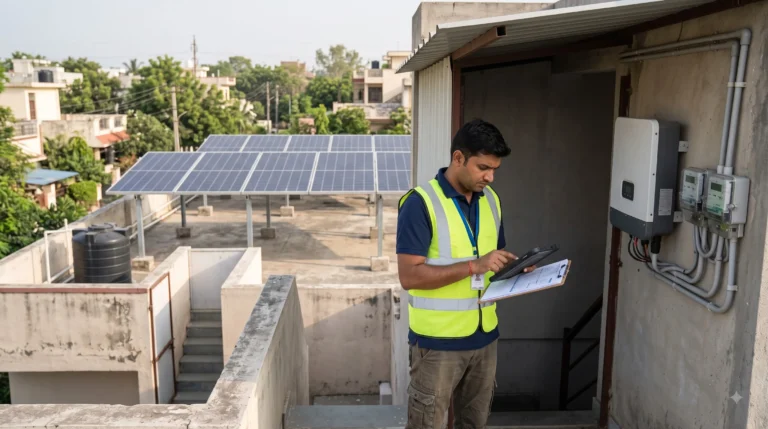
Use the inverter app or monitoring system to record how many units the solar system generates each month.
Step 3: Check import and export readings.
Where available, review the bidirectional meter readings to understand how much electricity your home draws from and supplies to the grid.
Step 4: Compare similar periods.
Compare bills across comparable months where possible. A month with heavier air-conditioning use should not automatically be compared with a cooler month without considering the difference in consumption.
Step 5: Review the final bill, not only the unit balance.
Check energy charges, credits, fixed charges and other applicable amounts.
Step 6: Investigate unexpected results.
If generation is consistently low or your bill does not reflect the expected adjustment, ask your installer to inspect system performance and confirm the billing arrangement with your distribution company.
This approach gives you a more reliable picture of the financial impact than relying on the solar system’s advertised capacity alone.
Myth 1: Solar panels always eliminate the electricity bill.
Reality: Solar can reduce grid purchases, but the final bill may still contain imported-energy charges and other applicable charges.
Myth 2: Every unit generated by solar equals one unit of bill savings.
Reality: The financial benefit depends on how the unit is used, the tariff and the rules for exported electricity.
Myth 3: A larger solar system always produces greater savings.
Reality: A larger system can generate more electricity, but its financial value depends on consumption, export treatment, installation cost and system suitability.
Myth 4: Solar panels generate the same electricity every day.
Reality: Output varies with weather, shading, orientation, temperature, maintenance and equipment performance.
Myth 5: If a bill arrives after installation, the system is faulty.
Reality: A bill may be normal. Meter readings, solar generation and billing details should be checked before drawing conclusions.
Hyderabad and Telangana context
For homes in Hyderabad and across Telangana, ask the installer to estimate generation using your actual roof conditions and household consumption. Also confirm the current metering rules, eligibility and billing treatment with the relevant distribution company.
TGSPDCL publishes rooftop solar guidance, while the Telangana Electricity Regulatory Commission’s 2025 rooftop-solar regulation sets out the regulatory framework. Check the latest requirements before finalising your installation.
Not necessarily. Your bill may become much lower, but imported electricity, minimum or fixed charges and other applicable charges can remain. The outcome depends on your consumption, generation and billing arrangement.
Possible reasons include higher household consumption, low solar generation, increased grid imports, incorrect meter configuration or charges that solar credits do not offset. Compare your generation and meter readings before identifying the cause.
Solar panels generate electricity from available sunlight, so generation falls substantially at night and can be lower during cloudy conditions. A standard grid-connected system without battery storage generally relies on the grid at night.
Net metering records electricity imported from and exported to the grid. Under the approved arrangement, eligible exported electricity is adjusted or credited according to applicable rules. This can improve the financial value of surplus generation.
No. Savings can change with solar output, weather, household consumption, seasonal appliance use, tariff changes and the treatment of exported electricity.
You may be able to improve savings by shifting flexible appliance use to sunny hours, reducing avoidable consumption, maintaining the system and investigating unexpected generation losses. Any changes should suit your household’s needs and electrical safety requirements.
Check inverter monitoring data, monthly generation and meter readings. Compare them with a site-specific generation estimate and ask your installer to investigate persistent underperformance.
A battery can store some excess solar electricity for use later, but it adds cost and has storage and conversion losses. Evaluate your night-time consumption, backup requirements, grid reliability and budget before deciding.
At Roof Rays Solar, we are committed to delivering reliable rooftop solar solutions that combine quality products, professional installation, and long-term customer support. Whether you’re a homeowner, business owner, or industrial customer, our team works closely with you to design a solar system that matches your energy goals and budget.
Why Customers Trust Roof Rays Solar
Our experts design customized solar solutions based on your electricity consumption, roof space, and future energy goals—helping you maximize savings and achieve the best possible return on investment.
Phone
Address
📍 HUDA Complex, Tellapur, Hyderabad
Contact our solar experts today for a free consultation and personalized solar savings estimate.
The real difference between solar panels and electricity bills is the amount of grid electricity your household still needs to purchase after solar generation is taken into account.
Rooftop solar can reduce electricity expenses, but the result depends on system performance, consumption patterns, export-credit rules and applicable charges. By monitoring generation, reviewing meter readings and understanding your billing arrangement, you can assess your solar investment more accurately.
The best approach is to plan your solar system around realistic energy needs and evaluate its performance using actual bills over time.
© 2025 Roof Rays Solar Solutions. All Rights Reserved. | Designed by MANI
Check whether your property qualifies for rooftop solar subsidy support.