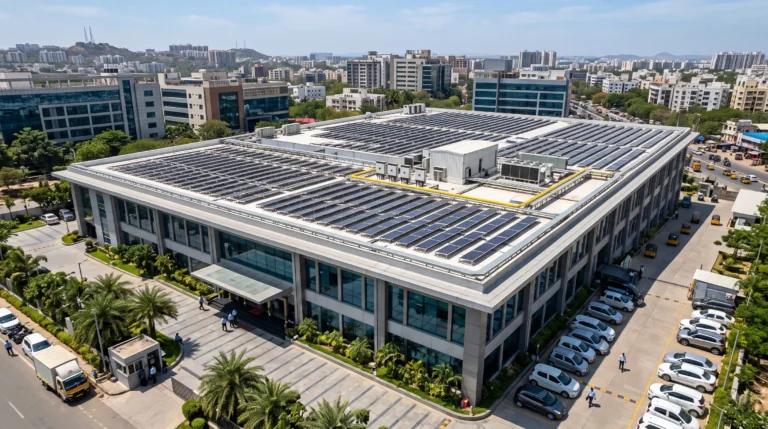
For a business considering rooftop solar, the first question is often:
“How much will the solar system cost?”
But there is another question that can be equally important:
“How should we pay for the solar system?”
Businesses generally consider two broad approaches: CAPEX and OPEX.
Under a CAPEX (Capital Expenditure) model, the business purchases and owns the solar system. The company makes the investment upfront or through its chosen financing arrangement and receives the benefits of the electricity generated by the system.
Under an OPEX (Operating Expenditure) model, the business generally avoids purchasing the solar asset upfront. A solar developer or service provider may finance, own and operate the system, while the business purchases the electricity generated under an agreed contractual arrangement, such as a solar PPA or other applicable model.
India’s rooftop solar market includes active RESCO models. For example, SECI has continued issuing 2026 tenders for grid-connected rooftop solar projects under RESCO mode, demonstrating that third-party-owned rooftop solar remains an active financing structure.
For a Hyderabad business, the right choice depends on more than the installation price.
You should compare:
This guide explains CAPEX vs OPEX solar so business owners, CFOs, facility managers and decision-makers can make a more informed choice.
Neither model is universally better.
CAPEX can be better when:
OPEX can be better when:
Simple Rule
CAPEX = You invest in and own the solar asset.
OPEX = A third party generally invests in and owns the solar asset, while you pay for the solar electricity/service under contract.
The exact contractual structure should always be reviewed carefully.
Key Takeaways
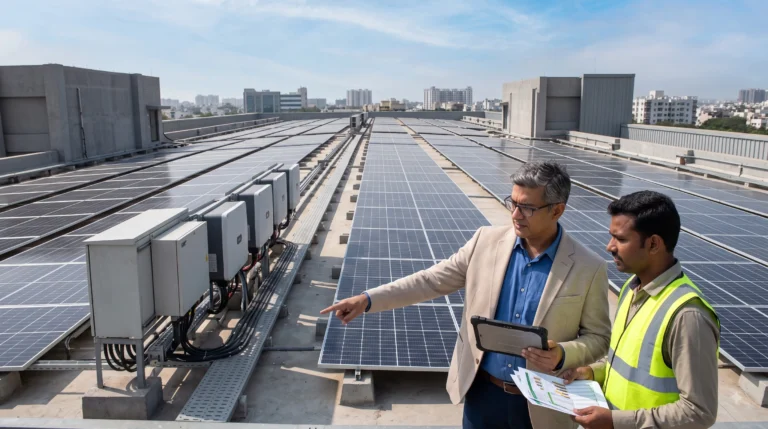
CAPEX solar means the business purchases the solar system as a capital asset.
The company typically pays for:
The business then owns the system and uses the electricity it generates.
The investment can be funded using:
The exact accounting and tax treatment depends on the company’s circumstances and should be reviewed with its finance and tax professionals.
How CAPEX Solar Works
The basic structure is:
Business → invests → owns solar system → generates electricity → reduces grid electricity purchases
For example, a commercial building may install rooftop solar to offset daytime electricity consumption.
The business bears the initial investment, while the long-term benefits of the system generally accrue to the business as owner, subject to applicable electricity and regulatory arrangements.
Advantages of CAPEX Solar
The business owns the solar installation.
Once the initial investment is recovered, the system can continue generating electricity for many years.
The owner generally has greater control over equipment selection, maintenance strategy and system decisions.
The business doesn’t necessarily need to commit to a third-party electricity purchase agreement.
If the system performs well and the business uses substantial electricity, long-term savings can be attractive.
Disadvantages of CAPEX Solar
The business needs significant upfront capital or financing.
Funds used for solar cannot simultaneously be used for other business opportunities.
The owner is responsible for ensuring appropriate maintenance and addressing equipment issues.
The business carries more of the risk if actual generation is lower than projected.
If the company moves from the building shortly after installation, the economics may be less attractive.
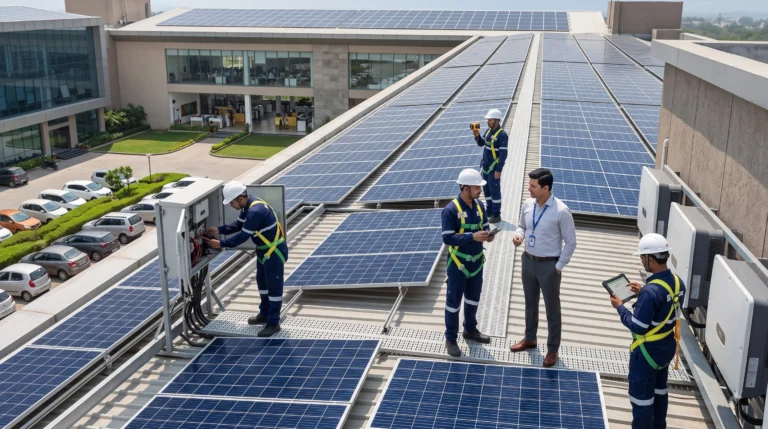
OPEX solar is a third-party-funded solar model in which the business generally avoids purchasing the solar asset upfront.
A solar developer or service provider can finance, own and operate the system.
The business then purchases electricity generated by the solar system according to the contractual arrangement.
One common structure is a Power Purchase Agreement (PPA).
The basic concept is:
Solar developer → invests & owns system → generates electricity → business purchases solar electricity
This is often associated with RESCO (Renewable Energy Service Company) models.
SECI’s 2026 rooftop-solar tenders demonstrate the continued use of RESCO structures for grid-connected rooftop solar projects.
How OPEX Solar Works
Under a typical arrangement:
The exact arrangement varies by provider and contract.
Therefore, OPEX should never be evaluated from the quoted solar tariff alone.
Advantages of OPEX Solar
The business may avoid the large initial capital expenditure associated with purchasing the system.
Capital can remain available for:
The solar provider may handle system operation and maintenance according to the agreement.
A PPA can provide a defined price structure for solar electricity for the agreed contract period.
The business does not necessarily own the solar equipment.
Disadvantages of OPEX Solar
PPAs can involve long contractual periods.
The business does not own the solar asset during the contract period in a typical third-party ownership model.
Important terms may include:
The business depends on the solar provider to fulfil contractual obligations.
If the business relocates, sells the building or changes operations, the PPA terms need to address what happens to the system.
Factor | CAPEX Solar | OPEX Solar |
Initial investment | Higher | Low/limited |
System ownership | Business | Typically solar provider |
Working capital impact | Higher | Lower |
Maintenance | Owner responsibility/contracted | Usually provider responsibility |
Long-term control | Higher | Lower |
Contract dependency | Lower | Higher |
Generation risk | More directly with owner | Contract structure may allocate some risk |
Long-term asset | Business owns it | Provider typically owns it |
Best suited for | Capital-ready businesses | Capital-preservation-focused businesses |
CAPEX vs OPEX Solar: A Simple Business Example
Consider a Hyderabad commercial facility with significant daytime electricity consumption.
The company has two choices.
CAPEX
The company pays for the solar system.
It owns the system and receives the electricity generated.
The financial model becomes:
Solar investment → electricity savings → payback → long-term savings
OPEX
A solar developer installs and owns the system.
The company purchases solar electricity under an agreed contract.
The financial model becomes:
No/low upfront investment → solar electricity payments → immediate operating-cost benefit, subject to tariff and contract terms
The better option depends on the company’s available capital, electricity tariff, property ownership and long-term strategy.
When CAPEX Is Usually More Attractive
CAPEX may be particularly suitable when:
The Business Has Available Capital
If sufficient funds are available without compromising core business requirements, direct ownership may be attractive.
Electricity Consumption Is High
Higher consumption can provide greater opportunity to utilize solar generation.
The Property Is Owned Long Term
A longer ownership horizon can support recovery of the initial investment.
The Company Wants Maximum Control
Businesses that prefer owning their infrastructure may prefer CAPEX.
Long-Term Savings Matter More Than Immediate Capital Preservation
CAPEX may require more money today but can provide attractive long-term economics.
When OPEX Is Usually More Attractive
OPEX may be suitable when:
Capital Is Better Used Elsewhere
A manufacturing company may prefer to invest available funds in production equipment rather than rooftop solar.
The Business Wants Predictable Solar Costs
A well-structured PPA can provide a defined solar electricity price.
Management Doesn’t Want Solar Asset Responsibility
The provider can handle agreed operational responsibilities.
The Business Wants to Avoid Large Upfront Spending
This can be important for companies managing working capital carefully.
What About Businesses Renting Their Building?
This is an important issue.
If the business does not own the building, the solar arrangement must address:
An OPEX arrangement can sometimes make rooftop solar easier to structure for a tenant because the solar developer owns the asset, but the building lease still needs to support the arrangement.
A solar contract should not extend beyond the practical rights the business has over the roof without appropriate contractual arrangements.
What Should Businesses Compare Before Choosing?
Don’t compare CAPEX and OPEX only using:
“Which one has the lower monthly cost?”
Instead compare:
How much will the business spend under each model?
How much grid electricity is expected to be displaced?
For OPEX, understand the contracted solar electricity price.
Check whether the solar tariff increases over time.
Understand the full contractual commitment.
Determine who pays for maintenance and major repairs.
Check how generation shortfalls are handled.
Understand what happens if the business relocates or sells the property.
Check whether the business can purchase the system and under what conditions.
Understand what happens when the OPEX agreement ends.
Solar Financing Is More Than CAPEX vs OPEX
Businesses can have different financing structures.
For example:
CAPEX + bank finance
The business owns the system but finances the investment.
OPEX / PPA
A third party owns the system and sells electricity to the business.
RESCO
A developer finances, owns and operates the rooftop solar project under a service/contractual model.
The best structure depends on the company’s financial position and property circumstances.
Government Policy & Telangana Considerations
Telangana’s Rooftop Solar PV Grid Interactive Systems Regulation, 2025 is the current state rooftop-solar regulatory framework listed by TGERC, replacing the earlier 2016 net-metering regulation and amendments.
The applicable metering arrangement depends on the consumer and project configuration. Businesses should therefore verify the current rules and utility requirements before finalizing a financing model.
It is also important not to assume that residential rooftop-solar subsidy provisions automatically apply to commercial businesses.
MNRE’s current rooftop-solar programme specifically describes CFA for the residential sector, so commercial customers should evaluate their project without automatically including residential subsidy benefits.
Solar Installation Process for Businesses
Review historical consumption and tariff structure.
Assess roof area, structural conditions and shading.
Estimate realistic annual production.
Determine the appropriate solar capacity.
Compare both financing structures.
Evaluate equipment, tariff, generation and financial assumptions.
For OPEX, review the PPA/contract carefully.
Complete applicable utility and regulatory procedures.
Install panels, inverter and associated equipment.
Test the system and complete applicable connectivity procedures.
Track generation and performance.
What Affects Commercial Solar Cost?
Project cost depends on:
For CAPEX, these costs contribute directly to the business’s investment.
For OPEX, the provider’s investment is generally recovered through the contracted electricity/service arrangement.
Expert Tips for Businesses
Lower upfront investment does not automatically mean lower lifetime cost.
Capital has an opportunity cost.
A long-term comparison can reveal differences hidden by the first-year numbers.
A low starting tariff can change over time depending on the contract.
This is particularly important for leased commercial buildings.
Understand what happens if solar generation is below expectations.
Know who pays for preventive and corrective maintenance.
If an OPEX contract offers a buyout option, understand its calculation.
Compare the solar investment with alternative uses of business capital.
A solar proposal should be based on the business’s real electricity consumption and tariff structure.
At-a-Glance Decision Guide
Business Situation | Potentially Better Starting Point |
Strong cash position | CAPEX |
Capital preservation is priority | OPEX |
Long-term building ownership | CAPEX |
Shorter property horizon | OPEX may be worth evaluating |
Wants asset ownership | CAPEX |
Doesn’t want solar asset management | OPEX |
Wants maximum long-term control | CAPEX |
Wants minimal upfront investment | OPEX |
Business rents the building | Evaluate OPEX + lease terms carefully |
Complex PPA concerns | CAPEX may be simpler |
Why is Hyderabad considered a good city for solar panels?
Hyderabad receives abundant sunshine for most of the year, making it one of the best locations in India for generating solar electricity efficiently.
Do solar panels work during the monsoon?
Yes. Solar panels continue generating electricity during the monsoon whenever sunlight is available. While output may be lower than on bright sunny days, the system remains productive.
How much can I save on electricity with solar panels?
Savings depend on your electricity consumption, system size, and local tariff rates. Homes and businesses with higher daytime energy usage typically achieve greater savings.
Are solar panels suitable for commercial buildings?
Yes. Offices, shopping complexes, hotels, hospitals, warehouses, and industrial facilities can all benefit from rooftop solar by reducing operational electricity costs.
How long do solar panels last?
High-quality solar panels generally provide reliable performance for 25 years or more, making them a long-term investment.
Do solar panels require frequent maintenance?
No. Occasional cleaning and routine inspections are usually enough to keep the system operating efficiently.
Can solar panels increase property value?
Yes. Properties with professionally installed solar systems are often more attractive because they offer lower electricity costs and long-term energy savings.
Is rooftop solar worth installing in Hyderabad?
Absolutely. Hyderabad’s favorable climate, high solar potential, and increasing electricity prices make rooftop solar a practical and cost-effective investment for homeowners and businesses.
At Roof Rays Solar, we help homeowners, businesses, and industries harness Hyderabad’s abundant sunshine with customized, high-performance solar solutions. From the initial consultation to long-term maintenance, our team focuses on delivering reliable systems that maximize energy generation and long-term savings.
Why Customers Choose Roof Rays Solar
Our experts design customized solar solutions based on your electricity consumption, roof space, and future energy goals—helping you maximize savings and achieve the best possible return on investment.
Phone
Address
📍 HUDA Complex, Tellapur, Hyderabad
Contact our solar experts today for a free consultation and personalized solar savings estimate.
Ready to take advantage of Hyderabad’s ideal climate for solar energy? Contact Roof Rays Solar today for a free rooftop assessment and personalized consultation. Our experts will evaluate your energy needs, inspect your roof, and recommend the most suitable solar solution to maximize your savings and long-term return on investment.
Book Your Free Site Survey Today
© 2025 Roof Rays Solar Solutions. All Rights Reserved. | Designed by MANI
Check whether your property qualifies for rooftop solar subsidy support.