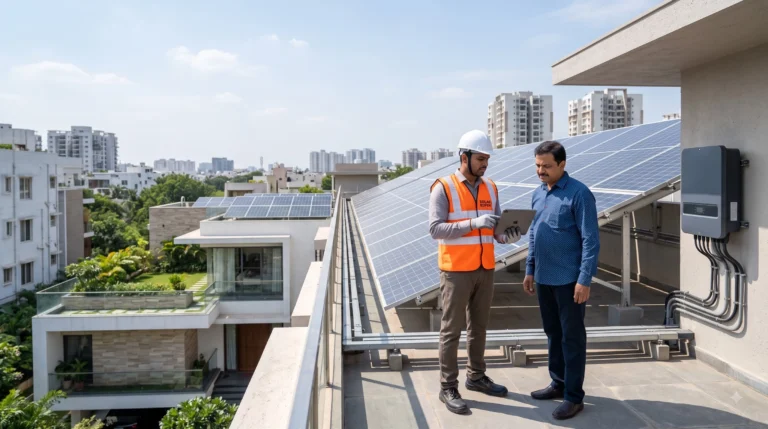
Kondapur is one of Hyderabad’s established residential and commercial areas, with independent houses, villas, apartment communities, offices, retail spaces, and other businesses requiring substantial amounts of electricity. As energy requirements increase, rooftop solar offers property owners an opportunity to generate electricity on-site and reduce their dependence on grid power.
However, choosing solar installation in Kondapur is not simply about purchasing solar panels. The right solution depends on your electricity consumption, available rooftop space, shading, property type, future energy requirements, and whether you need battery backup.
For homeowners, a properly designed rooftop solar system can help reduce electricity costs over the long term. Offices and businesses can also utilize suitable rooftops to generate electricity for their operations.
This guide explains the important factors to consider before installing rooftop solar in Kondapur, including system selection, roof assessment, installation, cost considerations, and choosing the right solar installation company.
Before installing rooftop solar in Kondapur, evaluate:
For properties with reliable grid electricity, an on-grid solar system can be a practical option for reducing grid electricity consumption. Homes and businesses that require backup power can consider a hybrid solar system with battery storage.
A professional electricity bill analysis and site survey should be completed before finalizing the system.
Key Takeaways
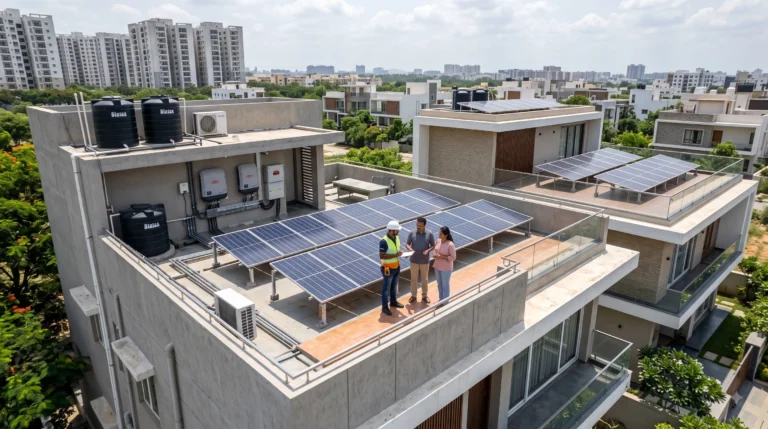
Reduce Dependence on Grid Electricity
A rooftop solar system allows your property to generate electricity during daylight hours. Using this electricity can reduce the amount of power that needs to be purchased from the grid, depending on your system design and consumption pattern.
Make Better Use of Rooftop Space
A suitable rooftop can become a productive energy-generating asset. Instead of leaving usable roof space idle, property owners can utilize it for solar generation when conditions are suitable.
Manage Long-Term Electricity Costs
Solar can help reduce electricity expenditure over the long term. The actual benefit depends on factors such as system capacity, electricity consumption, solar generation, tariff structure, and applicable utility policies.
Prepare for Future Energy Requirements
Electricity consumption can increase as households and businesses add new loads such as:
Considering these requirements during initial solar planning can help create a more future-ready system.
Rooftop Solar for Homes in Kondapur
Residential properties in Kondapur have different electricity consumption patterns, so solar system capacity should be customized to the individual property.
Independent Houses
Independent homeowners can utilize available rooftop space for a customized solar system based on their electricity consumption.
A professional site survey evaluates:
This information helps determine whether the property is suitable for the proposed solar capacity.
Villas
Villas may have higher electricity consumption because of larger living areas, multiple air conditioners, water heaters, appliances, and other electrical loads.
The recommended system should therefore be based on historical electricity consumption and expected future requirements rather than property size alone.
Apartments
Apartment communities can explore rooftop solar for suitable common-area electricity requirements where the rooftop, ownership structure, electrical configuration, and applicable regulations permit installation.
Potential applications may include:
Residential Communities
For larger residential communities, solar planning should consider the total electricity requirements of the common facilities, available rooftop space, electrical infrastructure, and the community’s future energy needs.
A professional assessment helps determine the appropriate approach.
Solar for Offices & Businesses in Kondapur
Kondapur has a significant concentration of offices and commercial properties. Businesses with suitable rooftops can consider solar to generate electricity for their operations.
Suitable Commercial Properties
Solar can be considered for:
For commercial properties, system design should consider:
Businesses that consume significant electricity during daylight hours may be able to directly utilize a substantial portion of their solar generation.
How to Choose the Right Solar System
The largest possible solar system is not automatically the best option. A properly sized system should match your electricity requirements, roof conditions, and future plans.
Analyze Your Electricity Bills
Review the previous 12 months of electricity bills before deciding on system capacity.
Look at:
The number of units consumed, measured in kWh, is more useful for solar planning than looking only at the total rupee amount of the bill.
Determine Your Actual Consumption
Solar system sizing should be based primarily on your actual electricity usage.
For example, a household with high electricity consumption may require a larger system than another home with the same roof size but significantly lower consumption.
Assess Available Roof Space
The usable roof area should be checked before finalizing the design.
The assessment should consider:
Consider Daytime Electricity Usage
Solar panels generate electricity during daylight hours.
For offices and businesses that operate mainly during the day, direct consumption of solar generation can be an important consideration.
For homes with greater evening or nighttime consumption, discuss your usage pattern with the installer when choosing the system configuration.
Plan for Future Loads
Inform your solar installer if you expect to add:
Including foreseeable future requirements in the design process can help avoid unnecessary modifications later.
On-Grid vs Hybrid Solar in Kondapur
On-Grid Solar
An on-grid system is connected to the utility grid and normally operates without battery storage.
It can be suitable for customers primarily looking for:
Where permitted and eligible, surplus electricity may be exported to the grid under applicable net-metering or other utility arrangements. Current regulations should always be verified before installation.
Hybrid Solar
A hybrid system combines solar panels, battery storage, and grid connectivity.
It can be suitable for customers who also require:
Battery storage increases the initial investment and introduces additional considerations such as battery capacity, usable storage, lifecycle, and replacement planning.
Solar Installation Process in Kondapur
A professional solar installation in Kondapur generally follows a structured process.
The installer understands your electricity usage, property type, budget, and solar objectives.
Historical electricity consumption is reviewed to estimate the appropriate system capacity.
The rooftop, shading, orientation, structural suitability, and electrical infrastructure are assessed.
A customized system is designed according to the property’s energy requirements and available roof space.
The proposal should clearly explain the recommended capacity, equipment, scope of work, pricing, and relevant project details.
Solar panels, mounting structures, inverter, wiring, and associated components are installed according to applicable standards and manufacturer guidelines.
The completed system is tested to verify that the equipment and electrical connections are operating correctly.
Applicable utility procedures and documentation are completed according to the project requirements and current regulations.
The customer receives information about system operation, monitoring, maintenance, safety, and warranty documentation.
Technical assistance and maintenance guidance remain important after the system has been commissioned.
What Affects Solar Installation Cost in Kondapur?
The cost of a rooftop solar project depends on the property’s requirements rather than a single fixed rate. Before comparing quotations, understand what is included in the proposed system.
Solar System Capacity
A larger solar system generally requires more panels, a suitably sized inverter, mounting structures, wiring, and installation work. The required capacity should be based on your electricity consumption and future requirements.
Solar Panel Brand and Technology
Panel technology, efficiency, manufacturer, warranty, and product specifications can affect the overall project cost.
Don’t compare quotations based only on the number of panels or total price. Compare the complete equipment specifications.
Inverter
The inverter converts the electricity generated by the panels into usable AC electricity for your property. Its capacity, technology, features, efficiency, and manufacturer can influence the project cost.
Mounting Structure
The mounting structure must be appropriate for the roof type and installation conditions. Material quality, design, height, and installation requirements can affect the final cost.
Roof Condition and Installation Complexity
A straightforward rooftop installation may require less work than a property with difficult access, shading obstacles, multiple roof levels, or additional electrical requirements.
Battery Storage
If you choose a hybrid solar system, battery storage adds to the initial investment. Battery capacity, technology, usable energy, and expected lifecycle should be considered when comparing hybrid quotations.
Electrical Work and Project-Specific Requirements
Additional electrical work, cable routing, protection equipment, structural requirements, and other site-specific factors can influence the final project cost.
Important: A reliable quotation should be based on a site assessment rather than a generic price advertised online.
Benefits of Professional Solar Installation
Choosing an experienced solar installer can make a significant difference to the safety, performance, and long-term reliability of your system.
Correct System Sizing
Professional analysis helps match the solar capacity to your actual electricity consumption and available roof space.
Better Roof Utilization
A properly planned layout can make efficient use of available rooftop space while maintaining suitable access for inspection and maintenance.
Safe Electrical Installation
Solar installations involve DC and AC electrical systems. Proper wiring, protection devices, earthing, isolation, and equipment installation are essential for safe operation.
Proper Panel Positioning
Panel placement should account for roof orientation, shading, structural conditions, and the overall layout of the property.
Quality Cable Management
Proper cable routing and protection help reduce exposure to unnecessary physical and environmental stress.
Manufacturer-Compliant Installation
Following manufacturer installation guidelines helps support equipment performance and warranty requirements.
Better Long-Term Reliability
Professional installation reduces the risk of avoidable installation-related issues and helps the system operate as designed.
Expert Tips for Kondapur Property Owners
A ₹5,000 or ₹10,000 electricity bill does not by itself tell you which solar capacity you need. Review the units consumed in kWh and your longer-term consumption pattern.
Summer electricity usage can be significantly different from other months, particularly when air conditioners are used regularly.
Nearby buildings, trees, water tanks, parapet walls, and other rooftop structures can affect solar generation.
If you plan to purchase an electric vehicle, discuss the expected charging requirement before finalizing the solar system.
When comparing installers, check the panel model, inverter, mounting structure, warranties, installation scope, and after-sales support—not just the final price.
Clarify whether the quoted price includes installation, electrical work, documentation, approvals, monitoring equipment, and other project requirements.
Net metering and other grid-connection arrangements are subject to applicable regulations and utility requirements. Confirm the current process for your property before installation.
A lower quotation may not represent better long-term value if it involves lower-quality equipment, limited installation scope, or inadequate after-sales support.
At-a-Glance Summary
Requirement | What to Check |
Home Solar | Monthly consumption, roof space, shading, future loads |
Office Solar | Daytime consumption, sanctioned/connected load, roof capacity |
On-Grid | Grid availability, applicable utility arrangements |
Hybrid | Backup requirements, battery capacity and lifecycle |
System Size | Annual electricity consumption + future requirements |
Cost | Equipment + structure + installation + electrical work + project requirements |
Installer | Experience, workmanship, warranties, documentation, after-sales support |
Real Kondapur Customer Scenario
A homeowner in Kondapur, Hyderabad, was considering rooftop solar after noticing higher electricity consumption during summer. The family initially wanted to choose a system based on the highest capacity that could fit on their roof.
During the consultation, the Roof Rays Solar team reviewed their electricity bills, assessed the usable rooftop area, checked shading from surrounding structures, and discussed their future plans, including possible EV charging.
Instead of recommending a system based solely on available roof space, the system design was based on their actual electricity consumption and anticipated future requirements.
Key Takeaway
The right solar system isn’t necessarily the biggest system that fits on your roof. Accurate electricity analysis, professional site assessment, and future planning are more important than simply maximizing system capacity.
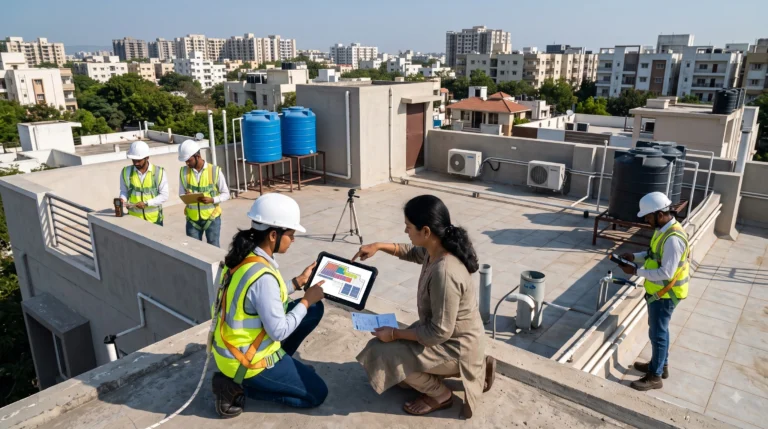
There is no single price for every property. The final cost depends on system capacity, panel and inverter specifications, mounting structure, roof conditions, electrical work, installation complexity, and whether battery storage is included.
For homes with reliable grid electricity and a primary focus on reducing electricity costs, an on-grid system can be a practical choice. A hybrid system may be more suitable when battery backup is an important requirement.
The required area depends on the system capacity, panel dimensions, panel technology, layout, shading, and access requirements. A professional site survey provides a more accurate assessment.
Yes. Offices with suitable rooftops can consider solar based on electricity consumption, operating hours, available roof space, electrical infrastructure, and applicable regulations.
Choose based on your primary objective. On-grid systems are generally focused on cost-effective solar generation and grid-connected operation, while hybrid systems add battery storage and backup capability.
Providing the previous 12 months of electricity bills gives the installer a better understanding of annual and seasonal consumption.
It depends on the extent and timing of the shading. A professional site survey can identify shading sources and determine whether panel placement or system design can be optimized.
Yes. If EV charging is part of your future plans, mention it during the initial consultation so the additional electricity requirement can be considered during system design.
System capacity, equipment quality, inverter, mounting structure, roof condition, installation complexity, electrical work, battery storage, and project-specific requirements can all affect the final price.
Contact Roof Rays Solar to schedule a consultation and site survey. Our team can review your electricity consumption and property conditions before preparing a customized solar proposal.
Choosing a solar installer is an important part of your investment. Roof Rays Solar Solutions helps homeowners and businesses across Hyderabad and Telangana plan and install rooftop solar based on their actual energy requirements and property conditions.
Why Customers Choose Roof Rays
Our approach is simple: understand your requirements first, recommend a suitable system, and provide professional support throughout the project.
Our experts design customized solar solutions based on your electricity consumption, roof space, and future energy goals—helping you maximize savings and achieve the best possible return on investment.
Phone
Address
📍 HUDA Complex, Tellapur, Hyderabad
Contact our solar experts today for a free consultation and personalized solar savings estimate.
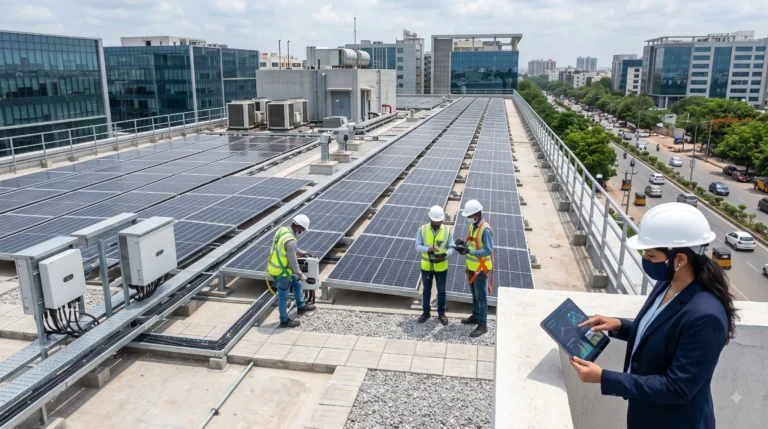
A successful solar installation in Kondapur starts with proper planning. Before choosing panels or comparing quotations, understand your electricity consumption, evaluate your available rooftop space, check shading, consider future energy requirements, and decide whether an on-grid or hybrid system better matches your needs.
For homeowners and offices, the right solar system should be sized around actual electricity consumption rather than simply choosing the largest capacity available. Equipment quality, installation workmanship, safety, warranty coverage, utility requirements, and after-sales support should also be considered when selecting an installer.
With professional system design and installation, rooftop solar can help Kondapur property owners make productive use of their available roof space while reducing dependence on conventional grid electricity. Roof Rays Solar Solutions provides consultation, electricity bill analysis, site assessment, customized system design, professional installation, and ongoing support for customers across Kondapur, Hyderabad, and Telangana.
Book Your Free Site Survey Today
© 2025 Roof Rays Solar Solutions. All Rights Reserved. | Designed by MANI
Check whether your property qualifies for rooftop solar subsidy support.
