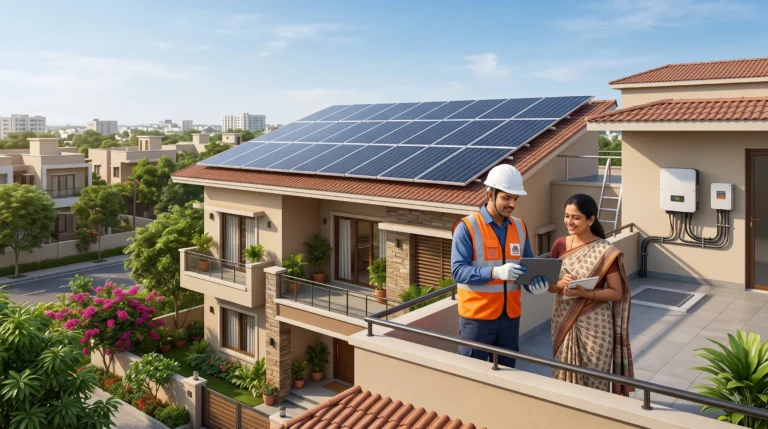
Kukatpally is a well-established residential area of Hyderabad with independent houses, villas, apartment communities, and growing electricity requirements. With air conditioners, refrigerators, water heaters, kitchen appliances, home-office equipment, and other electrical loads becoming part of everyday life, many homeowners are looking for practical ways to manage their long-term electricity expenses.
Rooftop solar can help homeowners generate electricity at their property and reduce dependence on grid electricity. However, choosing solar installation in Kukatpally should not begin with simply selecting the largest system or the cheapest quotation.
The right solar solution depends on your actual electricity consumption, available rooftop area, shading, roof condition, system type, future energy requirements, and the quality of the equipment and installation.
This guide explains the key factors homeowners should consider before installing rooftop solar in Kukatpally, including system selection, roof assessment, on-grid versus hybrid solar, installation, cost considerations, subsidy planning, and choosing a professional solar installer.
Before installing rooftop solar, evaluate:
For homes with reliable grid electricity, on-grid solar can be a practical option when the primary objective is reducing grid electricity purchases. If battery backup is important, a hybrid solar system may be considered.
A professional electricity bill analysis and site survey should be completed before finalizing the system.
Key Takeaways
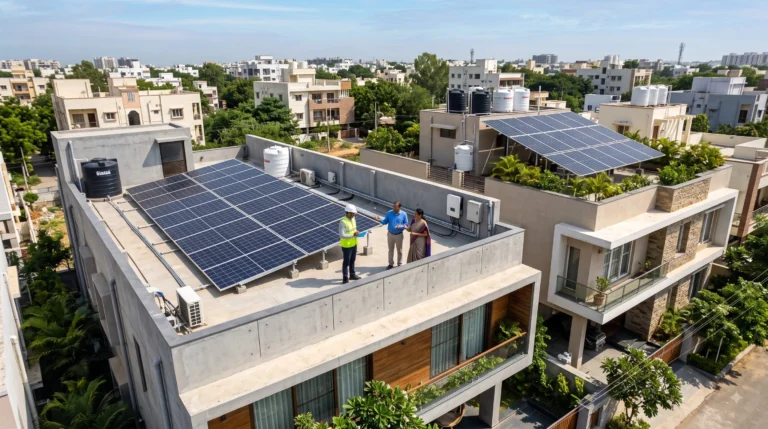
Reduce Dependence on Grid Electricity
Solar panels generate electricity from sunlight during the day. Using this electricity at your property can reduce the amount of electricity you need to purchase from the grid.
The actual reduction depends on your system capacity, electricity consumption, solar generation, usage pattern, and applicable utility arrangements.
Manage Long-Term Electricity Expenses
A properly designed rooftop solar system can help homeowners manage their electricity expenses over the long term.
The financial benefit depends on several factors, including:
Solar should therefore be evaluated as a long-term investment rather than simply as a way to reduce one month’s bill.
Make Better Use of Your Rooftop
A suitable rooftop can become an energy-generating asset.
Before installation, the roof should be evaluated for:
Prepare for Future Electricity Requirements
Your electricity consumption may increase over time.
Future requirements could include:
Discussing these requirements before installation can help create a more suitable solar system.
Residential Solar Solutions in Kukatpally
Independent Houses
Independent homes can use available rooftop space for customized solar systems based on their electricity consumption and property conditions.
A professional site survey should assess:
This helps determine whether the proposed system can be installed safely and efficiently.
Villas
Villas may have higher electricity consumption because of larger living areas, multiple air conditioners, water heaters, appliances, and other electrical loads.
The solar capacity should therefore be based on actual electricity consumption rather than simply the size of the property.
Apartment Communities
Apartment communities can explore rooftop solar for suitable common-area electricity requirements where technically feasible and permitted.
Potential applications can include:
The feasibility depends on rooftop ownership, available space, electrical configuration, community requirements, and applicable regulations.
How to Choose the Right Solar System for Your Home
The largest system that fits on your roof isn’t necessarily the best system for your home. Solar capacity should be selected according to your electricity requirements and future plans.
Analyze Your Electricity Bills
Review your previous 12 months of electricity bills.
Look for:
The electricity consumption in kWh or units is more useful for solar sizing than simply looking at the total rupee amount.
Check Your Actual Electricity Consumption
Two homes with similar roof sizes can require very different solar capacities because their electricity consumption may be different.
For example, a home with multiple air conditioners and higher appliance usage may need a larger system than a similar-sized home with lower electricity consumption.
Assess Available Roof Space
The installer should identify the usable rooftop area and account for:
A proper layout should balance panel placement with safe access for future inspection and maintenance.
Understand Your Daytime Usage
Solar panels generate electricity during daylight hours.
If your home uses significant electricity during the day, more of the generated solar power may be directly consumed by your household.
If most electricity is used during evenings or nights, discuss your consumption pattern with the installer when deciding between an on-grid and battery-backed system.
Plan for Future Loads
Tell your installer if you expect to add:
Considering foreseeable future electricity requirements during the initial design can help avoid unnecessary changes later.
On-Grid vs Hybrid Solar for Kukatpally Homes
On-Grid Solar
An on-grid system is connected to the electricity grid and generally operates without battery storage.
It can be suitable for homeowners primarily looking for:
Where applicable and eligible, surplus electricity may be exported to the grid under the relevant net-metering or utility arrangement. Current rules should be verified before installation.
Hybrid Solar
A hybrid system combines solar panels, battery storage, and grid connectivity.
It can be considered when homeowners require:
Battery storage increases the initial investment and requires consideration of battery capacity, usable storage, expected lifecycle, maintenance, and future replacement.
Solar Installation Process in Kukatpally
A professional solar installation in Kukatpally generally follows these stages:
Understand your electricity usage, property, budget, and solar objectives.
Review historical consumption and identify usage patterns.
Assess the rooftop, shading, orientation, structure, and electrical infrastructure.
Develop a customized design based on your energy requirements and available roof space.
Provide equipment specifications, project scope, pricing, and relevant details.
Complete applicable utility procedures and documentation based on current requirements.
Install panels, mounting structures, inverter, wiring, and associated electrical components according to applicable standards and manufacturer guidelines.
Test the completed system before putting it into regular operation.
Explain system operation, monitoring, maintenance, safety, and warranty documentation.
Provide technical assistance and maintenance guidance after commissioning.
Solar Installation Cost in Kukatpally
There is no single solar installation price that applies to every home in Kukatpally. The final project cost depends on the system capacity, equipment selected, roof condition, installation complexity, electrical work, and whether battery storage is included.
Key cost factors include:
A professional site survey and electricity bill analysis are therefore important before receiving a final quotation.
Tip: Don’t compare solar quotations only by total price. Compare the panel and inverter models, warranties, mounting structure, installation scope, and after-sales support included in each proposal.
Government Subsidy & Net Metering
Eligible residential homeowners may be able to benefit from the PM Surya Ghar: Muft Bijli Yojana, India’s central rooftop solar programme. Under the scheme’s published guidelines, Central Financial Assistance is available for eligible residential rooftop solar installations, with the CFA structure covering the first 2 kW and an additional 1 kW; there is no additional CFA beyond 3 kW. Eligibility and implementation requirements should be confirmed through the official portal before installation.
For grid-connected rooftop solar, applicable net-metering or other grid-export arrangements depend on current utility rules and the specific electricity connection. Homeowners should verify the latest requirements before making a financial decision.
Important: Subsidy eligibility, documentation, approved vendors, commissioning requirements, and utility procedures can change. Always confirm the current rules before applying.
Benefits of Professional Solar Installation
Correct System Sizing
Professional analysis helps match the solar capacity to your electricity consumption, roof space, and future requirements.
Better Rooftop Utilization
A properly planned layout can make efficient use of available space while maintaining suitable access for maintenance.
Safer Electrical Installation
Correct wiring, earthing, protection equipment, isolation, and equipment installation are essential for safe operation.
Proper Panel Positioning
Panel placement should account for orientation, shading, rooftop structures, and the overall layout.
Better Cable Management
Proper cable routing and protection help reduce avoidable electrical and physical issues.
Manufacturer-Compliant Installation
Following manufacturer guidelines supports proper equipment operation and applicable warranty conditions.
Professional Commissioning
Testing the complete system before handover helps identify installation issues before regular operation begins.
Expert Tips for Kukatpally Homeowners
Annual consumption gives a better picture of your energy requirements than one month’s bill.
Focus on electricity consumption in kWh/units, not only the rupee amount.
Water tanks, trees, parapet walls, nearby buildings, and other structures can affect solar generation.
If you expect to purchase an electric vehicle, discuss the additional electricity requirement before finalizing your system.
Check panel specifications, inverter, mounting structure, warranties, installation scope, and monitoring—not just the quoted price.
Confirm whether installation, electrical work, documentation, approvals, monitoring, and other project requirements are included.
If you expect to claim a government subsidy, verify eligibility and the current application and commissioning requirements before proceeding.
Lower upfront cost may not provide better long-term value if equipment quality, workmanship, or after-sales support is inadequate.
At-a-Glance Summary
Requirement | What to Consider |
Home Solar | Monthly & annual electricity consumption |
System Size | kWh consumption + future requirements |
Roof | Usable area + shading + access |
On-Grid | Grid-connected solar generation |
Hybrid | Solar + battery backup |
Subsidy | Current eligibility and government rules |
Cost | Equipment + structure + installation + electrical work |
Installer | Experience + workmanship + warranty + support |
Illustrative Kukatpally Homeowner Scenario
Consider a homeowner in Kukatpally whose electricity consumption has increased because of multiple air conditioners, water heating, and other household appliances.
Instead of choosing a solar system simply based on the monthly bill amount, a professional assessment reviews the family’s 12-month electricity consumption, available rooftop space, shading, and future EV plans.
The system is then designed around the household’s actual and expected energy requirements.
Key Lesson
The best solar system isn’t necessarily the biggest system that fits on your roof. Accurate consumption analysis and professional site assessment should come before system selection.
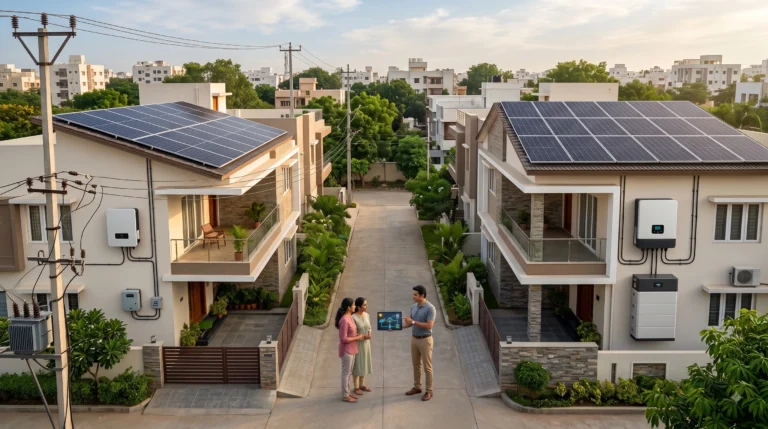
It depends on system capacity, equipment, roof conditions, installation complexity, electrical work, and whether batteries are included. A site survey is required for an accurate quotation.
For homes with reliable grid electricity and a primary goal of reducing electricity purchases, on-grid solar can be a practical option. Hybrid solar may be considered when backup power is important.
The required area depends on system capacity, panel dimensions, layout, shading, rooftop structures, and maintenance access.
It can be suitable for homes that have reliable grid supply and primarily want to generate solar electricity and reduce grid electricity consumption.
Consider hybrid solar when battery backup and stored electricity are important requirements in addition to rooftop solar generation.
The previous 12 months of electricity bills are recommended to understand annual and seasonal consumption.
It depends on the extent and timing of the shading. A professional site survey can identify shading sources and determine appropriate panel placement.
Yes. Discuss the expected EV charging requirement during the initial system design so future electricity demand can be considered.
Eligible residential consumers may qualify for applicable government rooftop solar financial assistance. Eligibility and current procedures should be verified through the official PM Surya Ghar programme and relevant utility requirements.
Contact Roof Rays Solar to arrange a consultation and site survey. The team can review your electricity consumption and rooftop conditions before preparing a customized proposal.
Roof Rays Solar Solutions helps homeowners across Kukatpally, Hyderabad, and Telangana plan rooftop solar according to their actual electricity requirements and property conditions.
Why Customers Choose Roof Rays
Our approach is simple: understand your requirements first, recommend a suitable system, and support you throughout the project.
Our experts design customized solar solutions based on your electricity consumption, roof space, and future energy goals—helping you maximize savings and achieve the best possible return on investment.
Phone
Address
📍 HUDA Complex, Tellapur, Hyderabad
Contact our solar experts today for a free consultation and personalized solar savings estimate.
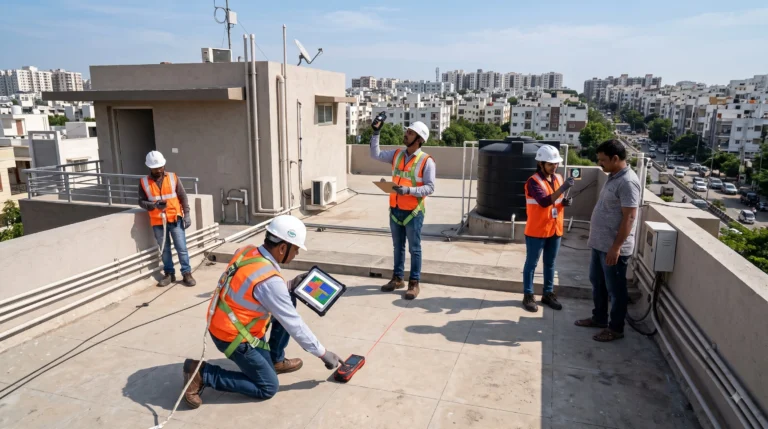
A successful solar installation in Kukatpally begins with proper planning. Before selecting panels or comparing quotations, homeowners should understand their electricity consumption, assess their rooftop, evaluate shading, consider future energy requirements, and decide whether an on-grid or hybrid system better suits their needs.
Government subsidy eligibility and utility arrangements should also be verified using the latest applicable rules rather than relying on outdated information.
Quality equipment, professional installation, appropriate system sizing, and dependable after-sales support can make a significant difference to the long-term value of your solar investment. Roof Rays Solar Solutions provides electricity bill analysis, site assessment, customized system design, professional installation, documentation guidance, and ongoing support for homeowners across Kukatpally, Hyderabad, and Telangana.
Book Your Free Site Survey Today
© 2025 Roof Rays Solar Solutions. All Rights Reserved. | Designed by MANI
Check whether your property qualifies for rooftop solar subsidy support.