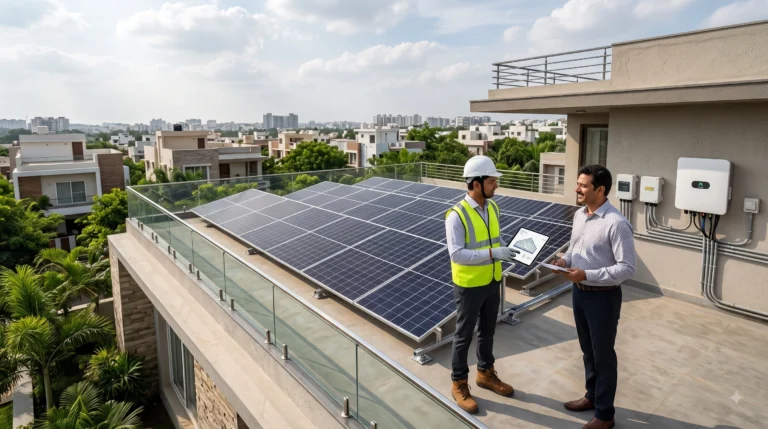
Manikonda has developed into a popular residential area around Hyderabad, with independent houses, villas, and residential communities experiencing growing electricity requirements. Multiple air conditioners, refrigerators, water heaters, kitchen appliances, home-office equipment, and other household loads can significantly influence monthly electricity consumption.
For homeowners, rooftop solar offers a way to generate electricity at the property and potentially reduce dependence on grid power. But choosing solar installation in Manikonda should begin with understanding your home’s actual electricity requirements rather than simply selecting a system based on roof size or price.
The right system depends on factors such as annual electricity consumption, usable roof area, shading, roof condition, system configuration, future energy requirements, and equipment quality.
This guide explains the important considerations for Manikonda villa and independent-house owners before investing in rooftop solar.
Before installing rooftop solar, homeowners should evaluate:
For homes with reliable grid electricity, an on-grid solar system can be a practical choice when the main objective is reducing grid electricity purchases. If battery backup is important, a hybrid solar system may be more appropriate.
A professional electricity bill analysis and rooftop site survey should be completed before finalizing the system.
Key Takeaways
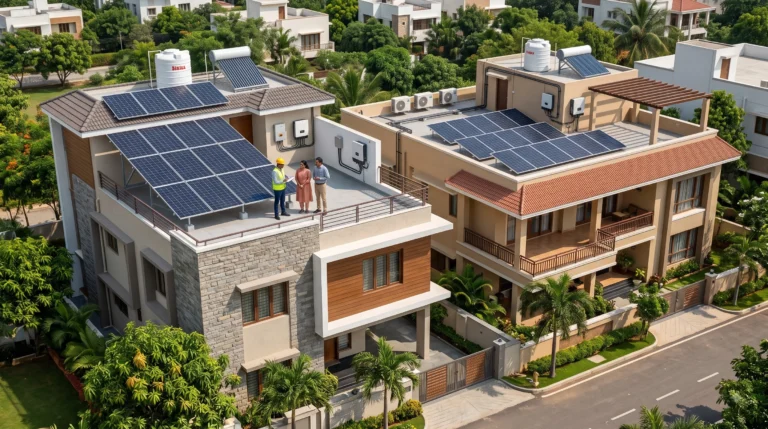
Reduce Dependence on Grid Electricity
Solar panels generate electricity during daylight hours. This electricity can be used by the home, reducing the amount of power that may otherwise need to be purchased from the grid.
The actual reduction depends on system capacity, solar generation, household consumption, usage patterns, and applicable utility arrangements.
Manage Long-Term Electricity Expenses
A properly designed solar system can help homeowners manage electricity expenses over the long term.
The financial benefit depends on factors such as:
Therefore, solar should be evaluated as a long-term energy investment rather than simply by comparing one month’s electricity bill.
Make Better Use of Your Rooftop
A suitable rooftop can become an energy-generating space.
Before installation, the available roof should be assessed for:
Prepare for Future Household Loads
Electricity requirements can change as your family and property needs grow.
Future loads may include:
Discussing these requirements before installation can help create a more suitable solar design.
Solar for Independent Houses in Manikonda
Independent houses can offer flexibility when planning rooftop solar because homeowners can assess and utilize their available roof space according to their own electricity requirements.
Customized System Design
The recommended solar capacity should be based on:
A site survey helps determine how much of the rooftop can actually be used for solar panels.
Roof Assessment
The installer should identify potential obstacles such as:
The final panel layout should also leave appropriate access for inspection and maintenance.
Solar for Villas in Manikonda
Villas may have larger rooftops but can also have higher electricity consumption.
Common residential loads include:
However, villa size alone should not determine solar capacity. Two villas of similar size can have very different electricity consumption.
The system should therefore be designed using actual electricity bills, household usage patterns, roof conditions, and future requirements.
How to Choose the Right Solar System
The largest system that can fit on your roof isn’t automatically the best system for your home.
Review 12 Months of Electricity Bills
Look at your previous year’s consumption to understand:
The kWh or units consumed are more useful for solar sizing than simply looking at the rupee amount of the bill.
Check Your Actual Electricity Consumption
A home with three air conditioners and regular water-heater usage may require considerably more electricity than a similar-sized home with fewer electrical loads.
That’s why solar capacity should be determined from consumption rather than property size alone.
Assess Available Roof Space
The usable area should be checked for:
A professional layout should balance panel capacity with safe access and practical installation requirements.
Consider Daytime Electricity Usage
Solar generation takes place during daylight hours.
If your home uses substantial electricity during the day, more of the generated solar electricity may be directly consumed by your household.
If your consumption is concentrated in the evening, discuss your usage pattern with the installer before choosing between an on-grid and battery-backed configuration.
Plan for Future Requirements
Tell your installer if you expect to add:
Considering foreseeable future loads during initial planning can help avoid unnecessary system modifications later.
On-Grid vs Hybrid Solar for Manikonda Homes
On-Grid Solar
An on-grid solar system is connected to the electricity grid and generally operates without battery storage.
It can be suitable for homeowners looking for:
Where applicable and eligible, surplus electricity may be exported to the grid under the relevant net-metering or utility arrangement. Current rules should be verified for the specific electricity connection.
Hybrid Solar
A hybrid solar system combines solar panels, battery storage, and grid connectivity.
It can be considered when homeowners need:
Battery storage increases the initial project cost and requires consideration of battery capacity, usable storage, expected lifecycle, maintenance, and eventual replacement.
Solar Installation Process in Manikonda
A professional solar installation in Manikonda generally follows these stages:
Understand your electricity consumption, property, budget, and solar objectives.
Review historical consumption and identify usage patterns.
Assess roof space, shading, orientation, structural suitability, and electrical infrastructure.
Develop a customized solar design based on your energy requirements and available rooftop area.
Provide equipment specifications, project scope, pricing, and relevant details.
Complete applicable utility procedures and documentation according to current requirements.
Install mounting structures, solar panels, inverter, wiring, and associated electrical components according to applicable standards and manufacturer guidelines.
Test the completed system before regular operation.
Explain system operation, monitoring, maintenance, safety, and warranty documentation.
Provide technical assistance and maintenance guidance after commissioning.
Solar Installation Cost in Manikonda
There is no single fixed price for every home. The final cost of solar installation in Manikonda depends on the system capacity, equipment specifications, rooftop conditions, electrical work, installation complexity, and whether battery storage is included.
Key cost factors include:
A professional site survey and electricity bill analysis are important before receiving a final quotation.
Tip: Compare the complete proposal—not just the total price. Check the panel and inverter models, warranties, mounting structure, installation scope, monitoring, and after-sales support.
Government Subsidy & Net Metering
Eligible residential consumers may be able to benefit from applicable government rooftop solar financial assistance, including the PM Surya Ghar: Muft Bijli Yojana. Eligibility, subsidy structure, approved installation requirements, documentation, and commissioning procedures should be verified using the latest official guidelines before making a purchase decision.
For grid-connected rooftop solar, surplus electricity may be eligible for applicable net-metering or other grid-export arrangements, depending on the current rules and the customer’s electricity connection.
Important: Subsidy and utility procedures can change. Always confirm the current eligibility and application requirements before installation.
Benefits of Professional Solar Installation
Correct System Sizing
Professional analysis helps match the solar capacity to household consumption, roof space, and future requirements.
Better Rooftop Utilization
A properly planned layout uses suitable roof space efficiently while maintaining practical access for inspection and maintenance.
Safer Electrical Installation
Correct wiring, earthing, isolation, protection equipment, and component installation are essential for safe operation.
Proper Panel Positioning
Panel placement should consider orientation, shading, rooftop structures, and the overall layout.
Better Cable Management
Proper cable routing and protection can reduce avoidable physical and environmental stress.
Manufacturer-Compliant Installation
Following manufacturer installation requirements supports reliable equipment operation and applicable warranty conditions.
Professional Commissioning
Testing the system before handover helps verify that the installed equipment and electrical connections are functioning correctly.
Expert Tips for Manikonda Homeowners
Annual consumption gives a clearer picture of your household’s energy requirements than a single month’s bill.
Don’t choose system capacity based only on the rupee value of your electricity bill.
Trees, nearby buildings, water tanks, parapet walls, and other structures can affect solar generation.
If an EV is part of your future plans, discuss its expected electricity requirement before finalizing the solar system.
Check panel models, inverter specifications, warranties, mounting structures, and installation scope.
Confirm whether installation, electrical work, documentation, approvals, monitoring, and other project requirements are included.
If you plan to claim a government subsidy, confirm current eligibility and application requirements before proceeding.
A lower initial quotation may not provide better long-term value if equipment quality, installation workmanship, or after-sales support is inadequate.
At-a-Glance Summary
Requirement | What to Consider |
Independent House | Consumption + usable roof area |
Villa | Higher loads + future requirements |
System Size | Annual kWh + future demand |
Roof | Usable area + shading + access |
On-Grid | Grid-connected solar |
Hybrid | Solar + battery backup |
Subsidy | Current residential eligibility |
Installer | Quality + workmanship + support |
Illustrative Manikonda Homeowner Scenario
Consider a Manikonda villa owner whose electricity consumption has increased because of multiple air conditioners, water heating, and household appliances.
Instead of selecting a system simply because it fits the available rooftop, a professional assessment reviews the family’s 12-month electricity consumption, usable roof area, shading, and future EV plans.
The solar system is then designed around actual and anticipated electricity requirements.
Key Lesson
The most suitable solar system isn’t necessarily the largest system that can fit on the roof. Consumption analysis and professional site assessment should come before system selection.
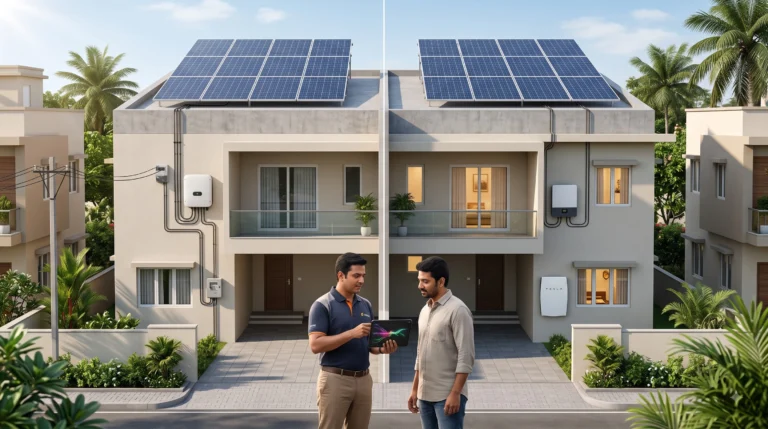
The cost depends on system capacity, panels, inverter, mounting structure, roof conditions, electrical work, installation complexity, and battery storage if required. A site survey is needed for an accurate quotation.
For a home with reliable grid electricity and a primary goal of reducing grid electricity purchases, on-grid solar can be a practical option. Hybrid solar may be considered when battery backup is important.
The required area depends on system capacity, panel dimensions, layout, shading, rooftop structures, and maintenance access.
It can be suitable for homes with reliable grid supply that primarily want rooftop solar generation and reduced grid electricity consumption.
Hybrid solar can be considered when battery-backed power is an important requirement in addition to rooftop solar generation.
The previous 12 months of electricity bills are recommended to understand annual and seasonal consumption.
It depends on the extent and timing of the shading. A professional site survey can identify shading sources and determine appropriate panel placement.
Yes. Tell the installer about your expected EV charging requirement during the initial design so future electricity demand can be considered.
Eligible residential consumers may qualify for applicable government rooftop solar financial assistance. Current eligibility and procedures should be verified through the official programme and relevant utility requirements.
Contact Roof Rays Solar to arrange a consultation and site survey. The team can review your electricity consumption and rooftop conditions before preparing a customized proposal.
Roof Rays Solar Solutions helps homeowners across Manikonda, Hyderabad, and Telangana plan rooftop solar according to their electricity requirements and property conditions.
Why Customers Choose Roof Rays
Our approach is to understand the property and energy requirements first, recommend a suitable system, and provide support throughout the project.
Our experts design customized solar solutions based on your electricity consumption, roof space, and future energy goals—helping you maximize savings and achieve the best possible return on investment.
Phone
Address
📍 HUDA Complex, Tellapur, Hyderabad
Contact our solar experts today for a free consultation and personalized solar savings estimate.
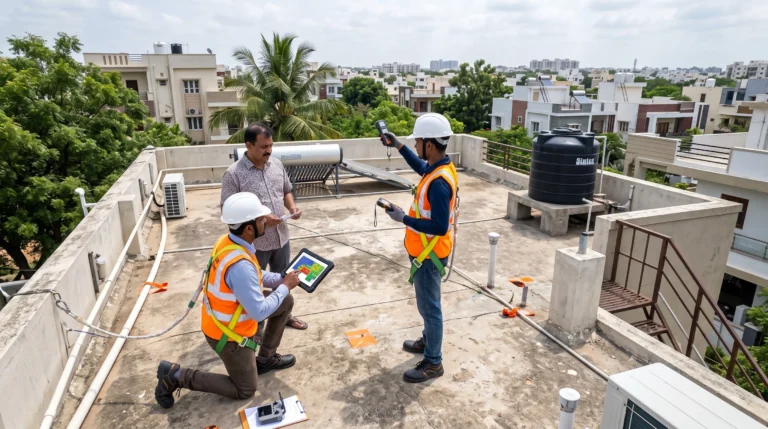
A successful solar installation in Manikonda starts with proper planning. Before selecting panels or comparing quotations, homeowners should understand their electricity consumption, evaluate their rooftop, assess shading, consider future loads, and decide whether an on-grid or hybrid system fits their requirements.
For villa and independent-house owners, the right system should be based on actual electricity consumption rather than simply choosing the largest capacity that fits on the roof. Equipment quality, professional installation, safety, warranty coverage, applicable subsidy requirements, utility procedures, and after-sales support should also be considered.
With proper system design and professional installation, rooftop solar can help Manikonda homeowners make productive use of their available roof space while reducing dependence on conventional grid electricity. Roof Rays Solar Solutions provides electricity bill analysis, site assessment, customized system design, professional installation, documentation guidance, and ongoing support for homeowners across Manikonda, Hyderabad, and Telangana.
Book Your Free Site Survey Today
© 2025 Roof Rays Solar Solutions. All Rights Reserved. | Designed by MANI
Check whether your property qualifies for rooftop solar subsidy support.