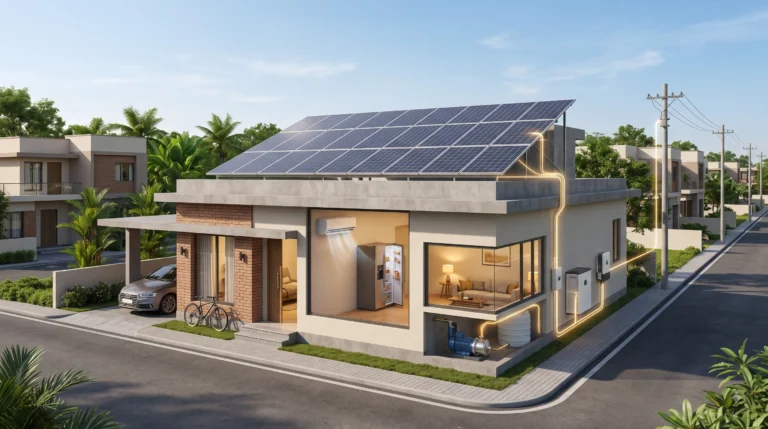
One of the most common questions homeowners ask before installing rooftop solar is, “What happens if my solar panels generate more electricity than my family uses?” It’s a valid concern, especially for homeowners in Hyderabad, where abundant sunshine allows solar systems to generate significant amounts of electricity throughout the year.
Many people assume that any unused solar power simply goes to waste. In reality, what happens to excess electricity depends on the type of solar system you have—on-grid, hybrid, or off-grid. Modern solar systems are designed to prioritize your home’s electricity needs first, and any surplus energy is managed in different ways depending on the system configuration and applicable utility regulations.
For most residential rooftop installations in Hyderabad and Telangana, surplus electricity can often be exported to the electricity grid through net metering, subject to the latest DISCOM policies and eligibility requirements. Hybrid systems may store excess energy in batteries before exporting it, while off-grid systems rely entirely on battery storage.
In this guide, we’ll explain what happens if your solar panels generate more electricity than you use, how different solar systems handle surplus energy, how net metering works, and why proper system design is essential for maximizing the value of your solar investment.
If your solar panels generate more electricity than your home is using:
A professionally designed solar system ensures that the electricity generated is used as efficiently as possible.
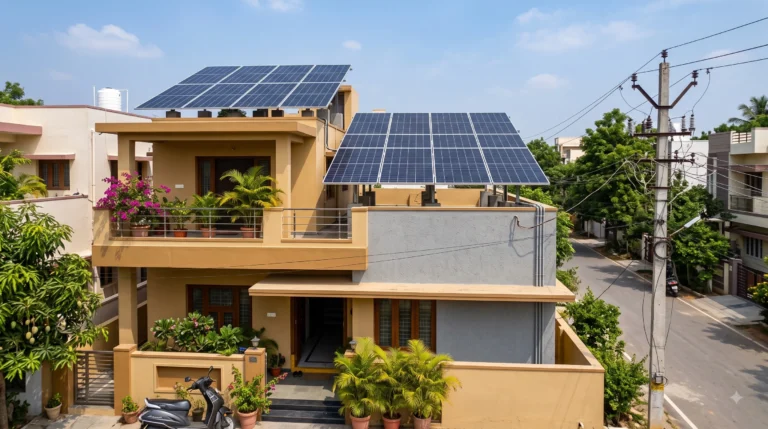
Understanding the flow of electricity makes it easier to see what happens to surplus solar power.
Step 1: Solar Panels Generate Electricity
During daylight hours, your solar panels convert sunlight into electricity.
The amount of electricity produced depends on:
Step 2: Your Home Uses Solar Power First
The electricity generated by your solar panels is first supplied to the appliances that are operating in your home.
Examples include:
Using your own solar-generated electricity first helps reduce the amount of electricity you need to purchase from the utility.
Step 3: Surplus Electricity Is Managed
If your solar panels produce more electricity than your home currently requires, the surplus energy is managed differently depending on the type of solar system installed.
The three most common system types are:
Each system handles excess electricity differently.
Step 4: Grid Electricity Is Used When Needed
During the evening, at night, or during periods of low solar generation, your home automatically draws electricity from the grid (or batteries in applicable systems) to meet your energy requirements.
This seamless transition ensures uninterrupted power for your household.
What Happens to Extra Electricity?
On-Grid Solar Systems
On-grid solar systems are the most common choice for homes in Hyderabad.
These systems are connected directly to the electricity grid and do not include battery storage.
How It Works
Benefits
Note: Net metering availability, billing methodology, and eligibility are subject to the latest DISCOM regulations and government policies.
Hybrid Solar Systems
Hybrid solar systems combine rooftop solar panels with battery storage.
This allows homeowners to store excess electricity for later use while remaining connected to the grid.
How Hybrid Systems Handle Extra Electricity
Advantages
Hybrid systems are often preferred by families seeking both energy savings and backup power.
Off-Grid Solar Systems
Off-grid solar systems operate independently of the utility grid.
These systems rely entirely on solar panels and battery storage to meet the property’s electricity requirements.
How Excess Electricity Is Managed
Because off-grid systems do not have access to the utility grid, proper system sizing is critical to ensure reliable power throughout the year.
Advantages
However, off-grid systems require careful planning to balance solar generation, battery capacity, and daily electricity consumption.
Understanding Net Metering in Hyderabad
One of the biggest advantages of an eligible on-grid solar system is the ability to export surplus electricity through net metering.
What Is Net Metering?
Net metering is a billing mechanism that allows eligible rooftop solar consumers to send excess electricity generated during the day to the utility grid.
When your solar system generates more electricity than your home consumes, the surplus may be recorded through a bidirectional meter, subject to the applicable DISCOM regulations.
Later, when your household requires electricity at night or during periods of low solar generation, electricity is imported from the grid according to the applicable billing rules.
Why Net Metering Is Helpful
Net metering can help homeowners make better use of the electricity their solar system generates by enabling surplus daytime energy to be exported rather than left unused, where permitted under current regulations.
Potential benefits include:
Eligibility and Regulations
Net metering policies are governed by the local electricity distribution company (DISCOM) and applicable government regulations.
Before installing an on-grid solar system, homeowners should confirm:
A professional solar installation company can guide you through the approval process and help ensure compliance with the latest regulations.
Benefits of Generating More Solar Power Than You Use
Generating more electricity than your household consumes during certain hours is generally a positive sign that your solar system is producing efficiently. Rather than being a problem, surplus solar energy can improve the overall value of your investment when your system is properly designed and installed.
Lower Electricity Bills
When your home uses electricity generated by your solar panels instead of purchasing it from the grid, your overall electricity costs can decrease. If your on-grid system is eligible for net metering, surplus electricity exported to the grid may further improve the utilization of the energy your system produces, subject to applicable utility policies.
Better Utilization of Hyderabad’s Sunshine
Hyderabad receives abundant sunlight for most of the year. A well-designed solar system allows homeowners to take advantage of these favorable conditions by generating clean electricity throughout the day.
Greater Energy Independence
Producing your own electricity reduces dependence on the utility grid during daylight hours. This gives homeowners greater control over their energy consumption and helps reduce exposure to future electricity tariff increases.
Improved Long-Term Return on Investment
Efficient use of the electricity generated by your solar system contributes to better long-term financial value. The more effectively your system matches your energy requirements, the greater the potential benefit over its operational life.
Cleaner and More Sustainable Energy
Every unit of electricity generated by your rooftop solar system reduces reliance on conventional power sources, supporting cleaner energy production and helping reduce environmental impact.
Does Extra Solar Power Mean Zero Electricity Bills?
Many homeowners believe that generating surplus solar electricity automatically eliminates their electricity bill. While rooftop solar can significantly reduce electricity expenses, a zero bill is not guaranteed.
Your final electricity bill depends on several factors, including:
Fixed Charges
Many electricity bills include fixed charges that may still apply regardless of how much solar electricity your system generates.
Night-Time Electricity Consumption
Solar panels generate electricity only during daylight hours. Unless you have battery storage, electricity used at night is typically supplied by the grid.
Seasonal Variations
Electricity generation changes throughout the year due to weather conditions and seasonal variations in sunlight.
System Size
A system that is too small may not generate enough electricity to meet your annual energy needs, while an appropriately sized system is more likely to maximize self-consumption.
Electricity Usage Patterns
Homes that consume more electricity during the daytime generally make better use of the electricity generated by their solar panels.
Utility Billing Policies
Billing calculations for on-grid systems depend on the applicable DISCOM regulations, tariff structure, and current net metering policies.
For these reasons, rooftop solar should be viewed as a way to significantly reduce electricity costs, rather than a guarantee of eliminating electricity bills entirely.
Common Reasons Homes Generate Surplus Electricity
There are many situations where your solar system may produce more electricity than your household is using at a particular time.
Family Members Are Away During the Day
If everyone is at work or school, household electricity consumption may be low while the solar system continues generating power.
Weekend or Holiday Homes
Properties that are occupied only on weekends often generate surplus electricity during weekdays.
Oversized Solar System
If the installed system capacity exceeds your regular electricity consumption, surplus electricity may be produced more frequently.
This is why accurate system sizing is important.
Seasonal Changes in Electricity Usage
Electricity consumption often changes throughout the year. During cooler months, reduced air conditioner usage may result in more surplus solar generation.
Energy-Efficient Appliances
Homes equipped with LED lighting, inverter air conditioners, and energy-efficient appliances may consume less electricity, allowing more of the generated solar energy to become surplus.
Lifestyle Changes
Changes such as children moving away, retirement, or reduced daytime occupancy can lower household electricity consumption, increasing surplus generation.
Common Myths vs Facts
Myth: Extra Solar Electricity Is Always Wasted
Fact: For eligible on-grid systems, surplus electricity may be exported to the grid through net metering, subject to current DISCOM regulations. Hybrid systems can store excess energy in batteries before exporting or using it later, while off-grid systems store energy until battery capacity is reached.
Myth: Bigger Solar Systems Always Save More Money
Fact: The best results come from installing a system that matches your electricity consumption and available roof space. An oversized system may increase the initial investment without providing proportional benefits.
Myth: Net Metering Means Free Electricity Forever
Fact: Net metering is governed by utility regulations and billing policies. Fixed charges, night-time consumption, and other billing components may still apply.
Myth: Solar Stops Working When Batteries Are Full
Fact: This depends on the system type. Hybrid systems may export additional electricity to the grid if configured and permitted, while off-grid systems simply cannot store additional energy once batteries are fully charged.
Myth: Solar Always Eliminates Electricity Bills
Fact: Solar can substantially reduce electricity costs, but the final bill depends on system size, electricity usage, utility policies, fixed charges, and seasonal energy generation.
Real Hyderabad Customer Story
A homeowner in Kompally, Hyderabad, installed a 5KW on-grid solar system to reduce household electricity expenses.
During the first few weeks, the family noticed that their solar system was generating more electricity than they were using during the daytime. Initially, they assumed this excess energy was being wasted.
After the Roof Rays Solar team explained how their eligible on-grid system worked with net metering, the family understood that surplus daytime electricity could be exported to the utility grid in accordance with applicable DISCOM regulations.
Benefits Experienced
This experience demonstrates why professional consultation and system design are just as important as choosing quality solar equipment.
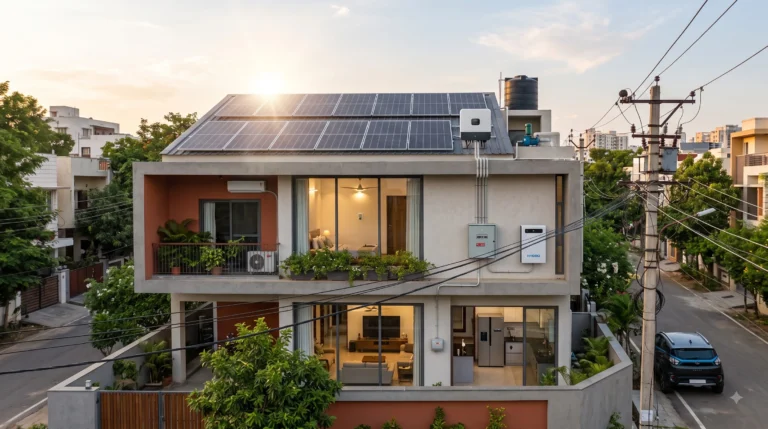
Your home uses the solar electricity first. Any surplus is managed according to the type of solar system you have. Eligible on-grid systems may export excess electricity to the utility grid through net metering, while hybrid and off-grid systems typically store surplus energy in batteries.
The treatment of surplus electricity depends on the applicable DISCOM regulations, billing policies, and your system configuration. Your installer can explain the latest rules for your location.
Yes. Hybrid and off-grid systems use batteries to store surplus electricity for later use. Standard on-grid systems generally do not include battery storage.
Net metering availability depends on current Telangana DISCOM policies and eligibility requirements. Always verify the latest regulations before installation.
Solar panels do not generate electricity at night. Your home will draw power from the grid or from battery storage if your system includes batteries.
Using more of your own solar-generated electricity and properly utilizing surplus energy can contribute to lower electricity costs, depending on your system design and applicable utility policies.
Not always. The best approach is to size the system based on your current and expected future electricity consumption rather than installing the largest possible capacity.
Properly designed systems minimize wasted energy. However, in off-grid systems with fully charged batteries and no additional electrical load, excess generation cannot be utilized.
A standard on-grid solar system typically shuts down during a grid outage for safety reasons. Hybrid systems with battery backup can continue supplying selected loads, depending on their design.
It depends on your priorities. On-grid systems are often preferred for maximizing cost savings, while hybrid systems offer the additional benefit of battery backup during power outages.
Understanding how your solar system works is just as important as installing it correctly. At Roof Rays Solar, we help homeowners and businesses across Hyderabad and Telangana choose the right solar solution, optimize system performance, and maximize long-term value.
Why Choose Roof Rays Solar?
Our experts design customized solar solutions based on your electricity consumption, roof space, and future energy goals—helping you maximize savings and achieve the best possible return on investment.
Phone
Address
📍 HUDA Complex, Tellapur, Hyderabad
Contact our solar experts today for a free consultation and personalized solar savings estimate.

Generating more electricity than you use is a normal and often beneficial part of owning a rooftop solar system. The way surplus energy is managed depends on whether your system is on-grid, hybrid, or off-grid. Eligible on-grid systems can often export excess electricity through net metering, hybrid systems can store surplus energy in batteries before exporting it when applicable, and off-grid systems rely entirely on battery storage.
The key to making the most of surplus solar generation is choosing the right system size, understanding your electricity consumption, and working with an experienced installation partner. At Roof Rays Solar, we help homeowners and businesses across Hyderabad and Telangana design efficient solar systems that maximize energy generation, improve long-term savings, and provide reliable performance for years to come.
Book Your Free Site Survey Today
© 2025 Roof Rays Solar Solutions. All Rights Reserved. | Designed by MANI
Check whether your property qualifies for rooftop solar subsidy support.
